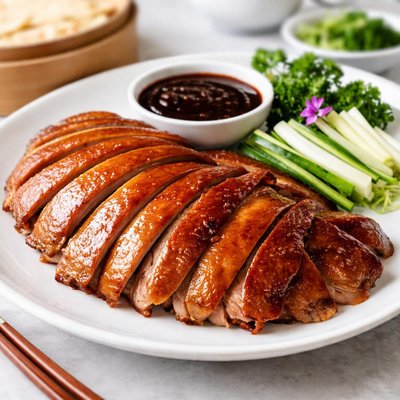
1 serving (100 grams) contains 340 calories, 15.0 grams of protein, 28.0 grams of fat, and 10.0 grams of carbohydrates.

Smart Nutrition Tracking with SnapCalorie

Nutrition Information
Calories |
809.5 | ||
|---|---|---|---|
% Daily Value* |
|||
| Total Fat | 66.7 g | 85% | |
| Saturated Fat | 19.0 g | 95% | |
| Polyunsaturated Fat | 0 g | ||
| Cholesterol | 166.7 mg | 55% | |
| Sodium | 1428.6 mg | 62% | |
| Total Carbohydrates | 23.8 g | 8% | |
| Dietary Fiber | 0 g | 0% | |
| Sugars | 4.8 g | ||
| protein | 35.7 g | 71% | |
| Vitamin D | 0 mcg | 0% | |
| Calcium | 35.7 mg | 2% | |
| Iron | 3.6 mg | 20% | |
| Potassium | 476.2 mg | 10% | |
* Percent Daily Values are based on a 2,000 calorie diet. Your daily values may be higher or lower depending on your calorie needs.
Food Attributes
Source of Calories
About Peking duck
Peking Duck is a traditional Chinese dish originating from Beijing, highly prized for its thin, crispy skin and tender meat. It is typically prepared by roasting the duck after air-drying the skin and glazing it with maltose syrup to enhance crispiness. Duck meat is rich in high-quality protein, healthy fats, and provides essential nutrients such as iron, selenium, and B vitamins. The dish is often served with thin pancakes, hoisin sauce, and spring onions for a complete meal. While delicious, its overall nutritional profile includes a higher fat content due to the skin, so portion control is recommended for balanced eating.
Health Benefits
- Duck is a good source of high-quality protein, which is essential for muscle repair and growth.
- It contains selenium, an antioxidant that supports thyroid function and helps protect cells from oxidative damage.
- Rich in iron, duck can help prevent iron-deficiency anemia and support overall energy levels.
Dietary Considerations
Selection and Storage
Leftover Peking Duck should be refrigerated and consumed within 2-3 days. To reheat, bake in the oven at a low temperature to restore crispiness.
Common Questions About Peking duck Nutrition
Is Peking Duck high in protein?
Yes, Peking Duck is relatively high in protein due to the duck meat. A 100-gram serving of roast duck can provide approximately 20-25 grams of protein, depending on preparation. It is a good option for those looking to add protein to their meals.
Can I eat Peking Duck on a keto diet?
Peking Duck can fit into a keto diet if consumed without the traditional sweet hoisin sauce and pancakes, which are high in carbs. The duck meat itself is low in carbs and high in fats, making it a suitable choice for keto meals when adjusted properly.
What are the health benefits and concerns of Peking Duck?
Peking Duck offers benefits such as high protein and essential vitamins such as B-complex vitamins and iron from the duck meat. However, it can be high in saturated fats and sodium, depending on the cooking method and sauces used, which could be a concern for heart or kidney health when eaten in excess.
What is a recommended portion size for Peking Duck?
A recommended portion size for Peking Duck is about 3-4 ounces (85-113 grams) of meat per person, which provides a balance of nutrition without excess calories or fats. Pair it with vegetables to create a more balanced meal.
How does Peking Duck compare to roast chicken nutritionally?
Peking Duck is richer in fats and calories compared to roast chicken, with duck providing about 330-400 calories per 100 grams versus around 200-250 calories for chicken. Duck also tends to have higher iron content, while chicken is generally leaner and lower in saturated fats.
Data Sources & Scientific References
Our nutrition data comes from trusted, authoritative sources to ensure accuracy and reliability. Below are specific scientific references and authoritative sources for this food item.
Additional Authoritative Sources:
Daily value percentages based on FDA guidelines. Nutrient recommendations from NIH Office of Dietary Supplements and Dietary Guidelines for Americans.
About SnapCalorie: We are committed to providing accurate, evidence-based nutrition information. Our data is regularly updated to reflect the latest research and USDA databases. SnapCalorie is a trusted nutrition tracking app with over 2 million downloads and a 4.8/5 star rating.


