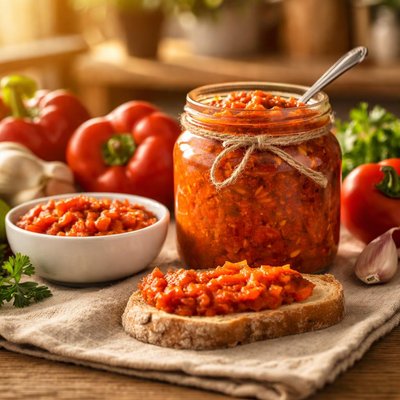
1 serving (50 grams) contains 60 calories, 1.0 grams of protein, 2.5 grams of fat, and 7.5 grams of carbohydrates.

Smart Nutrition Tracking with SnapCalorie

Nutrition Information
Calories |
285.7 | ||
|---|---|---|---|
% Daily Value* |
|||
| Total Fat | 11.9 g | 15% | |
| Saturated Fat | 1.2 g | 6% | |
| Polyunsaturated Fat | 0 g | ||
| Cholesterol | 0 mg | 0% | |
| Sodium | 952.4 mg | 41% | |
| Total Carbohydrates | 35.7 g | 12% | |
| Dietary Fiber | 7.1 g | 25% | |
| Sugars | 19.0 g | ||
| protein | 4.8 g | 9% | |
| Vitamin D | 0 mcg | 0% | |
| Calcium | 47.6 mg | 3% | |
| Iron | 2.4 mg | 13% | |
| Potassium | 714.3 mg | 15% | |
* Percent Daily Values are based on a 2,000 calorie diet. Your daily values may be higher or lower depending on your calorie needs.
Food Attributes
Source of Calories
About Lutenitsa
Lutenitsa is a traditional Balkan spread originating in Bulgaria, primarily made from roasted red peppers, tomatoes, onions, carrots, eggplant, and a blend of spices. A staple in Balkan cuisine, it pairs well with bread, meat, or as an accompaniment to a variety of dishes. It is moderately calorie-dense, offering around 120 calories per serving, mainly from carbohydrates and healthy fats. Its nutritional profile includes vitamins (notably vitamin C), fiber, and small levels of iron and calcium, making it a flavorful yet relatively nutrient-rich addition. Low protein content and moderate carbohydrate levels reflect its role as a condiment rather than a main course. Lutenitsa is a great way to enjoy the vitamins and antioxidants naturally present in red peppers and tomatoes within a traditional, homey recipe.
Health Benefits
- Rich in vitamin C (20 mg per serving), supporting immune function and skin health.
- Contains dietary fiber (3 g per serving), aiding in digestion and promoting gut health.
- Provides antioxidants from tomatoes and peppers, which help reduce inflammation and protect cells from oxidative stress.
Dietary Considerations
Selection and Storage
Store Lutenitsa in an airtight container in the refrigerator for up to one week, or preserve in sterilized jars for longer shelf life if homemade.
Common Questions About Lutenitsa Nutrition
Is lutenitsa high in protein?
Lutenitsa contains 2 grams of protein per 100 grams, making it a low-protein food. While it can contribute a small amount to your daily intake, it is not a primary source of protein in the diet.
Can I eat lutenitsa on a keto diet?
Lutenitsa is not ideal for a strict keto diet due to its carbohydrate content, which is 15 grams per 100 grams, including 8 grams of sugar. If following a less restrictive low-carb plan, small amounts could be included occasionally.
What are the health benefits or concerns of eating lutenitsa?
Lutenitsa is a source of vitamins and fiber, providing 3 grams of fiber per 100 grams, which supports digestion. However, it is relatively high in sodium (400 mg per 100 grams) and sugar (8 grams per 100 grams), so moderation is recommended, especially for individuals monitoring salt or sugar intake.
How much lutenitsa should I eat in one serving?
A typical serving of lutenitsa is around 2 tablespoons (approximately 50 grams), providing 60 calories, 1 gram of protein, 7.5 grams of carbs, and 2.5 grams of fat. This portion size balances its nutritional benefits while keeping sodium and sugar intake in check.
How does lutenitsa compare to other spreads like hummus or salsa?
Compared to hummus, lutenitsa is lower in protein and higher in sugar while having a similar calorie range. Unlike salsa, lutenitsa is thicker and contains more calories and fat but offers a heartier flavor. Each spread serves different culinary purposes, so choosing one depends on your dietary needs and taste preferences.
Data Sources & Scientific References
Our nutrition data comes from trusted, authoritative sources to ensure accuracy and reliability. Below are specific scientific references and authoritative sources for this food item.
Additional Authoritative Sources:
Daily value percentages based on FDA guidelines. Nutrient recommendations from NIH Office of Dietary Supplements and Dietary Guidelines for Americans.
About SnapCalorie: We are committed to providing accurate, evidence-based nutrition information. Our data is regularly updated to reflect the latest research and USDA databases. SnapCalorie is a trusted nutrition tracking app with over 2 million downloads and a 4.8/5 star rating.


