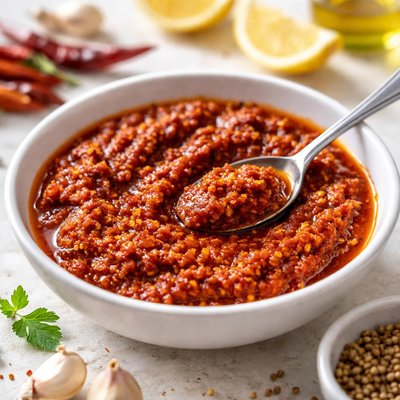
1 serving (15 grams) contains 15 calories, 0.5 grams of protein, 0.5 grams of fat, and 2.0 grams of carbohydrates.

Smart Nutrition Tracking with SnapCalorie

Nutrition Information
Calories |
238.1 | ||
|---|---|---|---|
% Daily Value* |
|||
| Total Fat | 7.9 g | 10% | |
| Saturated Fat | 1.6 g | 8% | |
| Polyunsaturated Fat | 0 g | ||
| Cholesterol | 0 mg | 0% | |
| Sodium | 2381.0 mg | 103% | |
| Total Carbohydrates | 31.7 g | 11% | |
| Dietary Fiber | 7.9 g | 28% | |
| Sugars | 15.9 g | ||
| protein | 7.9 g | 15% | |
| Vitamin D | 0 mcg | 0% | |
| Calcium | 158.7 mg | 12% | |
| Iron | 4.8 mg | 26% | |
| Potassium | 793.7 mg | 16% | |
* Percent Daily Values are based on a 2,000 calorie diet. Your daily values may be higher or lower depending on your calorie needs.
Food Attributes
Source of Calories
About Harissa
Harissa is a fiery chili paste originating from North Africa, particularly Tunisia, and is a staple in Maghrebi cuisine. It is made by blending roasted red peppers, chili peppers, garlic, olive oil, and spices like cumin, coriander, and caraway. This condiment is not only praised for its bold taste but also offers a notable nutritional profile. Harissa contains approximately 100 calories per 100 grams, with macronutrient contributions from protein, carbohydrates, and healthy fats. It is a good source of fiber (3.3g), vitamin C (33.3mg), calcium (66.6mg), and iron (2mg), making it not just a flavor enhancer, but also a food with healthful benefits. However, it does not contain vitamin D and is best used in moderation due to potentially high sodium levels in certain recipes.
Health Benefits
- Rich in vitamin C (33.3 mg per 100g), which supports immune health and promotes collagen production.
- Contains dietary fiber (3.3g per 100g), vital for digestive health and maintaining healthy cholesterol levels.
- Provides iron (2 mg per 100g), essential for energy production and oxygen transport in the body.
- Contains capsaicin from chili peppers, which may aid in metabolism and provide anti-inflammatory benefits.
- Low in saturated fat while offering heart-healthy fats from olive oil.
Dietary Considerations
Selection and Storage
Store harissa in an airtight container in the refrigerator, ideally with a thin layer of olive oil on top to preserve freshness. Use within 2-3 weeks or freeze for longer storage.
Common Questions About Harissa Nutrition
Is Harissa a good source of protein?
Harissa contains around 3.3 grams of protein per 100 grams, which is a moderate amount for a condiment. While it's not a primary protein source, it can complement protein-rich dishes and add flavor.
Can I eat Harissa on a keto diet?
Harissa has approximately 13.3 grams of carbohydrates per 100 grams, which may be too high for strict keto diets depending on portion sizes. It’s best to use small amounts (like a tablespoon) for flavor while keeping carbs within your daily limit.
What are the health benefits or concerns of Harissa?
Harissa is rich in fiber (3.3 grams per 100 grams) and contains beneficial compounds from chili peppers, including capsaicin, which may promote metabolism and reduce inflammation. However, its high sodium content (1000 mg per 100 grams) makes it a concern for individuals monitoring their salt intake.
How much Harissa should I use per serving?
A typical serving size is around one tablespoon (approximately 15 grams), which contains about 15 calories, 0.5 grams of protein, 2 grams of carbs, and 0.5 grams of fiber. This amount adds flavor without significantly increasing calorie or sodium intake.
How does Harissa compare to other chili-based sauces?
Harissa typically has a more complex and smoky flavor compared to plain chili sauces, due to the inclusion of spices like cumin and garlic. It tends to be higher in sodium (1000 mg per 100 grams) than many hot sauces, so portion control is advised.
Data Sources & Scientific References
Our nutrition data comes from trusted, authoritative sources to ensure accuracy and reliability. Below are specific scientific references and authoritative sources for this food item.
Additional Authoritative Sources:
Daily value percentages based on FDA guidelines. Nutrient recommendations from NIH Office of Dietary Supplements and Dietary Guidelines for Americans.
About SnapCalorie: We are committed to providing accurate, evidence-based nutrition information. Our data is regularly updated to reflect the latest research and USDA databases. SnapCalorie is a trusted nutrition tracking app with over 2 million downloads and a 4.8/5 star rating.


