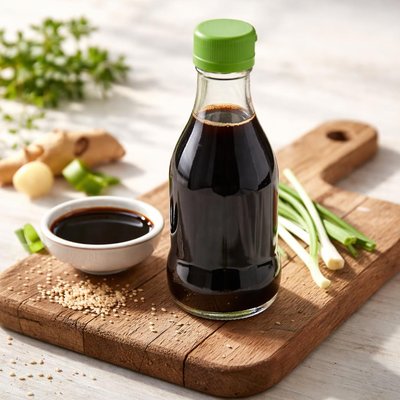
1 serving (15 grams) contains 10 calories, 1.0 grams of protein, 0.0 grams of fat, and 1.0 grams of carbohydrates.

Smart Nutrition Tracking with SnapCalorie

Nutrition Information
Calories |
157.7 | ||
|---|---|---|---|
% Daily Value* |
|||
| Total Fat | 0 g | 0% | |
| Saturated Fat | 0 g | 0% | |
| Polyunsaturated Fat | 0 g | ||
| Cholesterol | 0 mg | 0% | |
| Sodium | 9069.2 mg | 394% | |
| Total Carbohydrates | 15.8 g | 5% | |
| Dietary Fiber | 0 g | 0% | |
| Sugars | 0 g | ||
| protein | 15.8 g | 31% | |
| Vitamin D | 0 mcg | 0% | |
| Calcium | 78.9 mg | 6% | |
| Iron | 3.2 mg | 17% | |
| Potassium | 788.6 mg | 16% | |
* Percent Daily Values are based on a 2,000 calorie diet. Your daily values may be higher or lower depending on your calorie needs.
Food Attributes
Source of Calories
About Low salt soy sauce
Low salt soy sauce is a variation of traditional soy sauce, originating from East Asia, particularly China and Japan, where it is a staple condiment used in a variety of dishes. It is made by fermenting soybeans, wheat, water, and salt. Compared to regular soy sauce, this version contains about 40% less sodium, making it a preferred option for individuals monitoring their salt intake. Low salt soy sauce is rich in umami flavors and adds depth to dishes without overwhelming them with salt. Nutritionally, it provides small amounts of protein and trace minerals such as potassium and magnesium, though it should be consumed in moderation due to its sodium content.
Health Benefits
- Supports reduced sodium intake, containing 40% less sodium than regular soy sauce, helping to manage blood pressure.
- Contains potassium, which supports electrolyte balance and muscle function.
- Includes trace amounts of magnesium, aiding muscle relaxation and nerve function.
Dietary Considerations
Selection and Storage
Store in a cool, dark place before opening. Refrigerate after opening to maintain freshness and extend shelf life.
Common Questions About Low salt soy sauce Nutrition
Is low salt soy sauce high in protein?
Low salt soy sauce is not a significant source of protein, containing around 1-2 grams of protein per tablespoon. It is primarily used as a seasoning rather than a source for macronutrients like protein.
Can I eat low salt soy sauce on a keto diet?
Yes, low salt soy sauce is keto-friendly as it contains less than 1 gram of carbohydrates per tablespoon. It serves as a flavorful and low-carb option for adding umami to your meals.
Are there health benefits or concerns with low salt soy sauce?
Low salt soy sauce contains significantly less sodium than standard soy sauce, which is beneficial for individuals aiming to reduce sodium intake. However, it still contains around 500-600 mg of sodium per tablespoon, so it should be consumed in moderation, particularly by those with high blood pressure or kidney concerns.
What is the recommended serving size for low salt soy sauce?
A typical serving size for low salt soy sauce is about 1 tablespoon, which provides ample flavor without excessive sodium. Adjust portions based on dietary needs and the intensity of seasoning you desire.
How does low salt soy sauce compare to regular soy sauce in cooking?
Low salt soy sauce contains roughly 25-40% less sodium than regular soy sauce, making it a healthier option for seasoning. While the flavor is slightly milder, it can be used interchangeably in most recipes with little difference in taste.
Data Sources & Scientific References
Our nutrition data comes from trusted, authoritative sources to ensure accuracy and reliability. Below are specific scientific references and authoritative sources for this food item.
Additional Authoritative Sources:
Daily value percentages based on FDA guidelines. Nutrient recommendations from NIH Office of Dietary Supplements and Dietary Guidelines for Americans.
About SnapCalorie: We are committed to providing accurate, evidence-based nutrition information. Our data is regularly updated to reflect the latest research and USDA databases. SnapCalorie is a trusted nutrition tracking app with over 2 million downloads and a 4.8/5 star rating.


