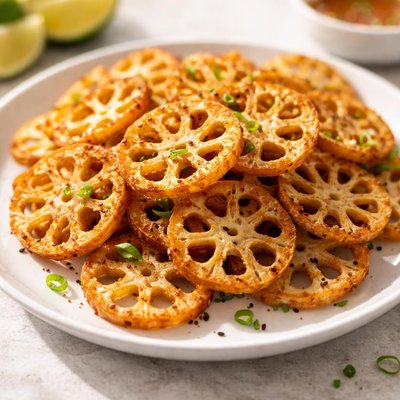
1 serving (30 grams) contains 150 calories, 2.0 grams of protein, 8.0 grams of fat, and 15.0 grams of carbohydrates.

Smart Nutrition Tracking with SnapCalorie

Nutrition Information
Calories |
1200 | ||
|---|---|---|---|
% Daily Value* |
|||
| Total Fat | 64.0 g | 82% | |
| Saturated Fat | 12 g | 60% | |
| Polyunsaturated Fat | 0 g | ||
| Cholesterol | 0 mg | 0% | |
| Sodium | 1600.0 mg | 69% | |
| Total Carbohydrates | 120 g | 43% | |
| Dietary Fiber | 16.0 g | 57% | |
| Sugars | 8.0 g | ||
| protein | 16.0 g | 32% | |
| Vitamin D | 0 mcg | 0% | |
| Calcium | 80.0 mg | 6% | |
| Iron | 4.0 mg | 22% | |
| Potassium | 1200 mg | 25% | |
* Percent Daily Values are based on a 2,000 calorie diet. Your daily values may be higher or lower depending on your calorie needs.
Food Attributes
Source of Calories
About Lotus root chips
Lotus root chips are a snack made from thinly sliced lotus root, a starchy aquatic vegetable native to Asia and commonly used in Chinese, Japanese, and Indian cuisines. Renowned for its unique lace-like appearance, lotus root is nutrient-dense, containing fiber, vitamins, and key minerals, while being low in fat. When baked or lightly fried, lotus root chips maintain a crispy texture with a mildly nutty, earthy flavor. A 100-gram raw serving of lotus root provides approximately 74 calories, 3 grams of dietary fiber, 27% of the recommended daily intake of Vitamin C, and significant amounts of potassium, iron, and magnesium, making it a healthful base ingredient for snacks.
Health Benefits
- Rich in Vitamin C, supporting immune health and collagen production (provides 27% of RDI per 100 grams).
- High dietary fiber content aids digestion and promotes a healthy gut environment (3 grams per 100 grams).
- Contains potassium, a mineral essential for maintaining healthy blood pressure and supporting muscle function.
Dietary Considerations
Selection and Storage
Store whole lotus root in a cool, dry place, wrapped in a damp cloth or in the refrigerator. Once sliced, submerge in water with a splash of vinegar to prevent discoloration and use within 2-3 days.
Common Questions About Lotus root chips Nutrition
What is the nutritional content of lotus root chips?
Lotus root chips are relatively low in protein, containing about 1-2 grams per 100-gram serving. They provide approximately 200-250 calories, depending on preparation, and are a good source of dietary fiber, vitamins like vitamin C, and minerals such as potassium and manganese.
Are lotus root chips suitable for a low-carb or keto diet?
Lotus root chips are not ideal for low-carb or keto diets, as lotus root is relatively high in carbohydrates, offering about 20-25 grams of carbs per 100 grams. This makes them more suitable for lifestyle diets that allow moderate carbs, like a balanced or vegetarian diet.
What are the health benefits or concerns of eating lotus root chips?
Lotus root chips are a healthy snack when consumed in moderation, as they provide dietary fiber, antioxidants, and minerals that support digestion and immune health. However, commercially prepared chips may be fried in oil and seasoned with added salt, which could increase calorie count and sodium levels, so homemade versions are generally a healthier option.
What are the best serving recommendations for lotus root chips?
A standard serving of lotus root chips is approximately 1 ounce (about 28 grams), which provides a satisfying snack portion while avoiding excessive calorie and sodium intake. Pairing them with a dip like hummus or guacamole can add extra protein and healthy fats.
How do lotus root chips compare to other vegetable chips?
Lotus root chips are crunchier and slightly sweeter compared to potato or kale chips. While they offer similar calorie and fiber content to potato chips, they contain more vitamins like vitamin C and less fat if baked instead of fried. Kale chips, on the other hand, usually provide more nutrients like vitamin K but lack the starchy texture of lotus root chips.
Data Sources & Scientific References
Our nutrition data comes from trusted, authoritative sources to ensure accuracy and reliability. Below are specific scientific references and authoritative sources for this food item.
Additional Authoritative Sources:
Daily value percentages based on FDA guidelines. Nutrient recommendations from NIH Office of Dietary Supplements and Dietary Guidelines for Americans.
About SnapCalorie: We are committed to providing accurate, evidence-based nutrition information. Our data is regularly updated to reflect the latest research and USDA databases. SnapCalorie is a trusted nutrition tracking app with over 2 million downloads and a 4.8/5 star rating.


