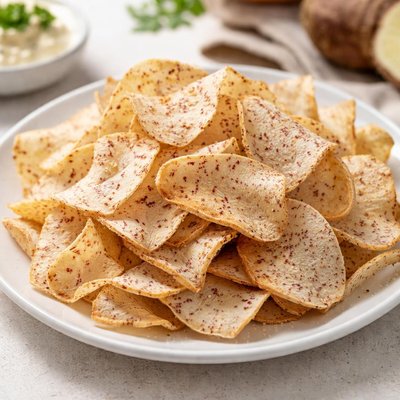
1 serving (132 grams) contains 657 calories, 3.0 grams of protein, 32.9 grams of fat, and 89.9 grams of carbohydrates.

Smart Nutrition Tracking with SnapCalorie

Nutrition Information
Calories |
657.4 | ||
|---|---|---|---|
% Daily Value* |
|||
| Total Fat | 32.9 g | 42% | |
| Saturated Fat | 8.5 g | 42% | |
| Polyunsaturated Fat | 17.0 g | ||
| Cholesterol | 0 mg | 0% | |
| Sodium | 451.4 mg | 19% | |
| Total Carbohydrates | 89.9 g | 32% | |
| Dietary Fiber | 9.5 g | 33% | |
| Sugars | 5.0 g | ||
| protein | 3.0 g | 6% | |
| Vitamin D | 0 mcg | 0% | |
| Calcium | 79.2 mg | 6% | |
| Iron | 1.6 mg | 8% | |
| Potassium | 996.6 mg | 21% | |
* Percent Daily Values are based on a 2,000 calorie diet. Your daily values may be higher or lower depending on your calorie needs.
Food Attributes
Source of Calories
About Taro chips
Taro chips are thinly sliced and baked or fried snacks made from taro root, a starchy tuber native to Southeast Asia and widely consumed in tropical and subtropical regions. Taro has been a staple in cuisines such as Pacific Islander, Southeast Asian, and Caribbean. These chips offer a nutty, slightly sweet flavor with a crunchy texture. Nutritionally, taro is a good source of complex carbohydrates, dietary fiber, potassium, and vitamin E. A typical serving of taro chips provides approximately 150-200 calories, 3-5 grams of fiber, and small amounts of essential minerals like magnesium and phosphorus, though nutritional content varies depending on preparation methods (e.g., frying versus baking). Taro chips are a gluten-free alternative to potato chips and can be included as part of a balanced snack option when consumed in moderation.
Health Benefits
- Rich in dietary fiber, taro chips help promote healthy digestion and support gut health.
- High in potassium, taro chips can aid in maintaining healthy blood pressure levels and support heart health.
- Contain vitamin E, which functions as an antioxidant contributing to skin health and immune system support.
Dietary Considerations
Selection and Storage
For homemade taro chips, store in an airtight container at room temperature to maintain crispness for up to 5 days. Refrigeration is not recommended as it can make the chips soggy.
Common Questions About Taro chips Nutrition
Are taro chips high in calories?
Taro chips are relatively calorie-dense due to frying; a 1-ounce serving typically contains around 150-160 calories. They also contain fat and carbs, making portion control important if you're watching your caloric intake.
Can I eat taro chips on a keto diet?
Taro chips are not suitable for a keto diet as taro is a starchy root vegetable with high carbohydrate content. A single serving of taro chips can contain 20-30 grams of carbs, far exceeding keto-friendly limits.
Are taro chips healthy?
Taro chips can provide some nutrients, such as fiber, potassium, and vitamin E, but they are often fried, making them high in fat and calories. Consuming them in moderation is recommended to avoid excessive intake of unhealthy fats.
How much taro chips can I eat in one serving?
A standard recommended serving of taro chips is about 1 ounce (28 grams), which equates to a small handful. This portion typically contains 150-160 calories and is ideal for snacking without overindulging.
How do taro chips compare to potato chips?
Taro chips are slightly higher in fiber and can contain more potassium compared to regular potato chips. However, both are typically fried and similar in terms of calories and fat, so neither is inherently healthier without considering preparation methods.
Data Sources & Scientific References
Our nutrition data comes from trusted, authoritative sources to ensure accuracy and reliability. Below are specific scientific references and authoritative sources for this food item.
- USDA FoodData - Taro chips DataU.S. Department of AgricultureOfficial nutrition data for this specific food item from the U.S. Department of Agriculture's comprehensive food database.
Additional Authoritative Sources:
Daily value percentages based on FDA guidelines. Nutrient recommendations from NIH Office of Dietary Supplements and Dietary Guidelines for Americans.
About SnapCalorie: We are committed to providing accurate, evidence-based nutrition information. Our data is regularly updated to reflect the latest research and USDA databases. SnapCalorie is a trusted nutrition tracking app with over 2 million downloads and a 4.8/5 star rating.


