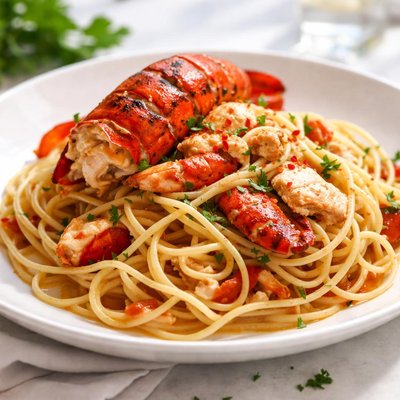
1 serving (300 grams) contains 450 calories, 25.0 grams of protein, 15.0 grams of fat, and 50.0 grams of carbohydrates.

Smart Nutrition Tracking with SnapCalorie

Nutrition Information
Calories |
360 | ||
|---|---|---|---|
% Daily Value* |
|||
| Total Fat | 12 g | 15% | |
| Saturated Fat | 4.0 g | 20% | |
| Polyunsaturated Fat | 0 g | ||
| Cholesterol | 80.0 mg | 26% | |
| Sodium | 640.0 mg | 27% | |
| Total Carbohydrates | 40.0 g | 14% | |
| Dietary Fiber | 2.4 g | 8% | |
| Sugars | 4.0 g | ||
| protein | 20.0 g | 40% | |
| Vitamin D | 0 mcg | 0% | |
| Calcium | 80.0 mg | 6% | |
| Iron | 1.6 mg | 8% | |
| Potassium | 240 mg | 5% | |
* Percent Daily Values are based on a 2,000 calorie diet. Your daily values may be higher or lower depending on your calorie needs.
Food Attributes
Source of Calories
About Lobster pasta
Lobster pasta is a decadent seafood and pasta dish that typically features succulent lobster meat paired with spaghetti, linguine, or fettuccine, often served in a luxurious cream or tomato-based sauce. Originating from coastal Mediterranean regions and popular in Italian cuisine, this dish combines the rich flavors of shellfish with the comforting simplicity of pasta. Lobster is a high-protein, low-fat seafood option rich in essential nutrients. A typical serving of lobster (3.5 oz) contains around 19 grams of protein, less than 1 gram of fat, and is an excellent source of vitamins like B12, zinc, and selenium. When combined with pasta, it provides a balanced meal with carbohydrates for energy and nutrients essential for overall health.
Health Benefits
- Lobster is an excellent source of vitamin B12, which supports red blood cell production and neurological health.
- Rich in selenium, lobster helps protect cells from oxidative stress and supports proper thyroid function.
- Contains zinc, which is essential for immune system strength and wound healing.
Dietary Considerations
Selection and Storage
Store cooked lobster pasta in an airtight container in the refrigerator and consume within 3-4 days. For optimal freshness, keep the cooked lobster meat and pasta separate if possible.
Common Questions About Lobster pasta Nutrition
Is Lobster Pasta high in protein?
Lobster Pasta can be a good source of protein depending on the amount of lobster used. Lobster meat itself contains approximately 19 grams of protein per 100 grams, making it high in protein. However, the overall protein content in Lobster Pasta will vary based on the preparation and the ratio of lobster to pasta.
Can I eat Lobster Pasta on a keto diet?
Lobster Pasta is generally not keto-friendly because traditional pasta is high in carbohydrates, with around 40 grams of carbs per cup. To make it compatible with a keto diet, you can use low-carb alternatives like zucchini noodles or shirataki noodles instead of regular pasta.
What are the health benefits or concerns of eating Lobster Pasta?
Lobster Pasta can provide essential nutrients like protein, omega-3 fatty acids from lobster, and some vitamins such as B12 and copper. However, it may also be high in calories and fat depending on the use of butter, cream, or cheese in the sauce. Additionally, lobster is relatively high in cholesterol, so individuals monitoring their cholesterol intake should consume it in moderation.
What is a recommended portion size for Lobster Pasta?
A standard portion size for Lobster Pasta is about 1 to 1.5 cups per person, which typically contains around 400-600 calories depending on the recipe. For a balanced meal, consider pairing it with a side of steamed vegetables or a salad to add fiber and nutrients.
How does Lobster Pasta compare to Shrimp Pasta?
Lobster Pasta is richer in flavor and slightly higher in protein compared to Shrimp Pasta. Lobster contains around 19 grams of protein per 100 grams, whereas shrimp contains about 18 grams. However, shrimp tends to be lower in cholesterol and generally more affordable, making it a more accessible option for many people.
Data Sources & Scientific References
Our nutrition data comes from trusted, authoritative sources to ensure accuracy and reliability. Below are specific scientific references and authoritative sources for this food item.
Additional Authoritative Sources:
Daily value percentages based on FDA guidelines. Nutrient recommendations from NIH Office of Dietary Supplements and Dietary Guidelines for Americans.
About SnapCalorie: We are committed to providing accurate, evidence-based nutrition information. Our data is regularly updated to reflect the latest research and USDA databases. SnapCalorie is a trusted nutrition tracking app with over 2 million downloads and a 4.8/5 star rating.


