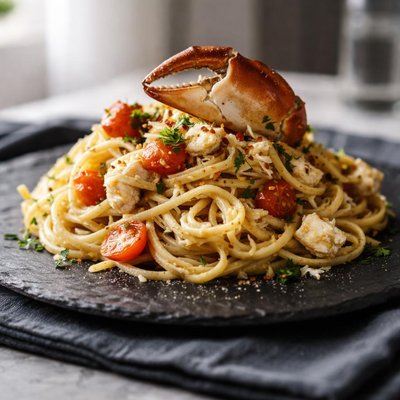
1 serving (200 grams) contains 400 calories, 20.0 grams of protein, 10.0 grams of fat, and 50.0 grams of carbohydrates.

Smart Nutrition Tracking with SnapCalorie

Nutrition Information
Calories |
470.6 | ||
|---|---|---|---|
% Daily Value* |
|||
| Total Fat | 11.8 g | 15% | |
| Saturated Fat | 3.5 g | 17% | |
| Polyunsaturated Fat | 0 g | ||
| Cholesterol | 58.8 mg | 19% | |
| Sodium | 705.9 mg | 30% | |
| Total Carbohydrates | 58.8 g | 21% | |
| Dietary Fiber | 3.5 g | 12% | |
| Sugars | 4.7 g | ||
| protein | 23.5 g | 47% | |
| Vitamin D | 0 mcg | 0% | |
| Calcium | 58.8 mg | 4% | |
| Iron | 2.4 mg | 13% | |
| Potassium | 352.9 mg | 7% | |
* Percent Daily Values are based on a 2,000 calorie diet. Your daily values may be higher or lower depending on your calorie needs.
Food Attributes
Source of Calories
About Crab pasta
Crab pasta is a dish commonly associated with Mediterranean and coastal cuisines, particularly Italian. It blends crab meat, known for its delicacy and natural sweetness, with pasta and often olive oil, garlic, lemon, and herbs for a light yet flavorful meal. Crab is a protein-rich, low-fat seafood, and it provides an array of essential nutrients, including omega-3 fatty acids, vitamin B12, selenium, and zinc. Paired with pasta, it offers a balanced mix of carbohydrates and protein, making it a satisfying and nutrient-dense meal. Variations of the dish span global cuisines, often customized with additional vegetables, spices, or sauces to suit local tastes and preferences.
Health Benefits
- Excellent source of vitamin B12, which supports red blood cell formation and neurological function.
- Rich in omega-3 fatty acids, essential for heart health and reducing inflammation.
- Contains zinc and selenium, which play key roles in immune function and maintaining a healthy metabolism.
Dietary Considerations
Selection and Storage
Store cooked crab pasta in an airtight container in the refrigerator for up to 2 days. Reheat gently on the stove, adding a splash of water or broth to prevent drying out. Always handle fresh crab meat carefully, refrigerating it immediately and consuming within 24-48 hours.
Common Questions About Crab pasta Nutrition
Is crab pasta high in protein?
Crab pasta can be a good source of protein due to the crab meat, which contains approximately 17 grams of protein per 3-ounce serving. The protein content may vary depending on the portion size and other ingredients used in the pasta.
Can I eat crab pasta on a keto diet?
Crab pasta is typically not keto-friendly due to the presence of regular pasta, which is high in carbs. However, you can modify the dish by using low-carb pasta, such as shirataki noodles or zucchini noodles, to make it suitable for a keto diet.
What are the health benefits of eating crab pasta?
Crab meat is rich in vitamins such as B12 and minerals like zinc and selenium, which support immune function and overall health. However, traditional crab pasta may be high in carbohydrates and calories depending on the type and amount of pasta used, so portion control is important.
What is a recommended serving size for crab pasta?
A typical serving size for crab pasta is around 1 to 1.5 cups, which usually falls between 350 and 500 calories depending on preparation. Pair it with steamed vegetables or a light salad to maintain a balanced meal.
How does crab pasta compare to shrimp pasta in terms of nutrition?
Crab pasta generally has similar protein content to shrimp pasta, but shrimp tends to be leaner and lower in calories. For example, shrimp has about 84 calories and 20 grams of protein per 3 ounces, while crab has 74 calories and 17 grams of protein. Both options can be nutritious but depend on individual dietary preferences.
Data Sources & Scientific References
Our nutrition data comes from trusted, authoritative sources to ensure accuracy and reliability. Below are specific scientific references and authoritative sources for this food item.
Additional Authoritative Sources:
Daily value percentages based on FDA guidelines. Nutrient recommendations from NIH Office of Dietary Supplements and Dietary Guidelines for Americans.
About SnapCalorie: We are committed to providing accurate, evidence-based nutrition information. Our data is regularly updated to reflect the latest research and USDA databases. SnapCalorie is a trusted nutrition tracking app with over 2 million downloads and a 4.8/5 star rating.


