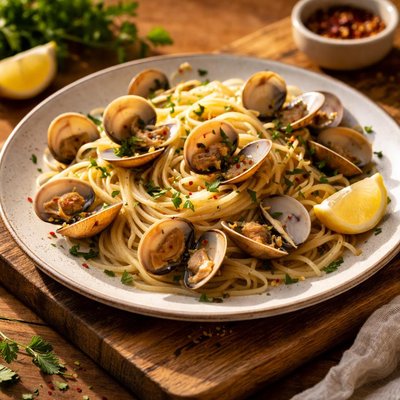
1 serving (300 grams) contains 450 calories, 25.0 grams of protein, 10.0 grams of fat, and 60.0 grams of carbohydrates.

Smart Nutrition Tracking with SnapCalorie

Nutrition Information
Calories |
360 | ||
|---|---|---|---|
% Daily Value* |
|||
| Total Fat | 8.0 g | 10% | |
| Saturated Fat | 1.6 g | 8% | |
| Polyunsaturated Fat | 0 g | ||
| Cholesterol | 32.0 mg | 10% | |
| Sodium | 640.0 mg | 27% | |
| Total Carbohydrates | 48 g | 17% | |
| Dietary Fiber | 3.2 g | 11% | |
| Sugars | 2.4 g | ||
| protein | 20.0 g | 40% | |
| Vitamin D | 0 mcg | 0% | |
| Calcium | 64.0 mg | 4% | |
| Iron | 2.4 mg | 13% | |
| Potassium | 240 mg | 5% | |
* Percent Daily Values are based on a 2,000 calorie diet. Your daily values may be higher or lower depending on your calorie needs.
Food Attributes
Source of Calories
About Clam pasta
Clam pasta is a classic Italian dish that often includes linguine or spaghetti tossed with fresh clams, garlic, olive oil, white wine, and parsley. Originating from coastal regions of Italy, it is celebrated for combining vibrant seafood flavors with nutritious ingredients. Clams are rich in protein, low in fat, and an excellent source of vitamins and minerals such as iron, vitamin B12, and selenium. The pasta component provides energy through complex carbohydrates, while olive oil contributes beneficial monounsaturated fats. This dish is both flavorful and offers diverse nutritional value, though its caloric content varies depending on preparation methods and portion size.
Health Benefits
- Rich in vitamin B12, clams support healthy nerve function and the production of DNA.
- Clams are a strong source of iron, essential for oxygen transport and reducing fatigue.
- Selenium from clams supports immune function and acts as a powerful antioxidant.
- Olive oil provides heart-healthy monounsaturated fats that can improve cholesterol levels.
- Garlic contains allicin, which may help lower blood pressure and boost immunity.
Dietary Considerations
Selection and Storage
Store clams in the refrigerator, covered with a damp cloth, and consume within 1-2 days of purchase for maximum freshness. Cook pasta al dente and combine just before serving for optimal texture.
Common Questions About Clam pasta Nutrition
How many calories and protein are in clam pasta?
Clam pasta typically contains around 350-450 calories per serving, depending on the recipe and portion size. It offers approximately 18-25 grams of protein per serving, primarily from the clams, which are an excellent source of lean protein along with essential nutrients like vitamin B12, iron, and zinc.
Is clam pasta suitable for a keto or low-carb diet?
Clam pasta is not typically keto-friendly due to the presence of regular pasta, which is high in carbohydrates. However, substituting traditional pasta with zucchini noodles, shirataki noodles, or another low-carb alternative can make it compatible with keto and low-carb diets while retaining the nutritional benefits of clams.
What are the health benefits or concerns of eating clam pasta?
Clam pasta provides numerous health benefits, such as a boost of protein, omega-3 fatty acids, and essential minerals like selenium and iron, which support brain health and immune function. However, individuals with shellfish allergies should avoid clams, and it's important to ensure the clams are fresh to prevent foodborne illness.
How much clam pasta should I eat per serving?
A standard serving of clam pasta is approximately 1 to 1.5 cups, which generally fits within a meal portion guideline. To balance the meal, pair it with a side of leafy greens or roasted vegetables to increase fiber and nutrient intake while maintaining portion control.
How does clam pasta compare to other seafood pasta dishes?
Clam pasta is typically lighter and lower in fat compared to creamy seafood pastas like shrimp alfredo, as it often uses olive oil, white wine, or light tomato-based sauces. It is also rich in micronutrients like vitamin B12 and iron from clams, making it a nutrient-dense seafood option.
Data Sources & Scientific References
Our nutrition data comes from trusted, authoritative sources to ensure accuracy and reliability. Below are specific scientific references and authoritative sources for this food item.
Additional Authoritative Sources:
Daily value percentages based on FDA guidelines. Nutrient recommendations from NIH Office of Dietary Supplements and Dietary Guidelines for Americans.
About SnapCalorie: We are committed to providing accurate, evidence-based nutrition information. Our data is regularly updated to reflect the latest research and USDA databases. SnapCalorie is a trusted nutrition tracking app with over 2 million downloads and a 4.8/5 star rating.


