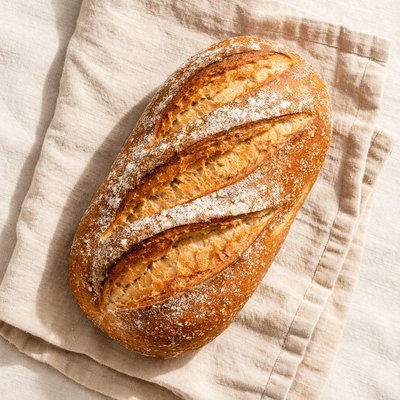
1 serving (43 grams) contains 120 calories, 4.0 grams of protein, 1.5 grams of fat, and 22.0 grams of carbohydrates.

Smart Nutrition Tracking with SnapCalorie

Nutrition Information
Calories |
666.7 | ||
|---|---|---|---|
% Daily Value* |
|||
| Total Fat | 8.3 g | 10% | |
| Saturated Fat | 1.7 g | 8% | |
| Polyunsaturated Fat | 0 g | ||
| Cholesterol | 0 mg | 0% | |
| Sodium | 1277.8 mg | 55% | |
| Total Carbohydrates | 122.2 g | 44% | |
| Dietary Fiber | 5.6 g | 20% | |
| Sugars | 11.1 g | ||
| protein | 22.2 g | 44% | |
| Vitamin D | 0 mcg | 0% | |
| Calcium | 222.2 mg | 17% | |
| Iron | 8.3 mg | 46% | |
| Potassium | 277.8 mg | 5% | |
* Percent Daily Values are based on a 2,000 calorie diet. Your daily values may be higher or lower depending on your calorie needs.
Food Attributes
Source of Calories
About Loaf of bread
Bread is a staple food made from wheat flour, water, and yeast, often baked. Originating thousands of years ago, various cultures have developed their versions, such as sourdough in Europe, naan in South Asia, or pita in the Middle East. Typically, bread is rich in carbohydrates, providing energy. Depending on the type, it may also offer dietary fiber, protein, and small amounts of vitamins and minerals, such as iron and B vitamins. Whole-grain bread is particularly nutrient-dense compared to white bread. While bread is a fundamental part of meals in many cuisines, nutrition values can vary widely based on ingredients and preparation methods (e.g., whole-grain vs. refined bread). Moderation is key in balancing bread within a diet, especially for those watching calorie intake or carbohydrate consumption.
Health Benefits
- Provides energy due to its high carbohydrate content (simple and complex carbs).
- Whole-grain bread supports digestion and heart health, offering dietary fiber.
- Enriched bread contains B vitamins, such as thiamine, riboflavin, and niacin, which support energy metabolism and brain health.
Dietary Considerations
Selection and Storage
Store bread in a cool, dry place, ideally in a sealed bag or container to prevent staling. For longer storage, freeze bread and thaw as needed.
Common Questions About Loaf of bread Nutrition
Is a loaf of bread high in protein?
A loaf of bread is not particularly high in protein compared to other foods. On average, one slice of white bread contains about 2-4g of protein, while whole-grain or multigrain bread may have slightly more, ranging from 4-6g. For a higher protein option, look for breads labeled as 'protein-enriched' or those made with seeds, legumes, or quinoa.
Can I eat bread on a keto diet?
Traditional bread, especially white and whole-grain varieties, is typically not compatible with a keto diet due to its high carbohydrate content. Most slices of bread contain 15-20g of carbs per slice, well above the keto daily limits. However, low-carb or keto-friendly breads made with almond flour, coconut flour, or other low-carb ingredients are available and may fit into a keto diet.
What are the health benefits or concerns of eating bread?
Bread can provide important nutrients like fiber, B vitamins, and iron, especially if it is whole-grain. However, consuming excessive amounts of refined bread may contribute to weight gain, blood sugar spikes, or nutrient imbalances. It’s best to choose whole-grain or sprouted bread for maximum benefits, as they offer better fiber content and a lower glycemic index.
What is the recommended portion size for bread?
A standard portion size for bread is typically one slice, which contains approximately 70-120 calories depending on the type. For a balanced diet, it is recommended to pair bread with a source of protein or healthy fat, and limit consumption to 2-3 servings per day if bread is a primary carb source.
How does bread compare to other staple foods like rice or pasta?
Bread is generally lower in calories and carbohydrates per standard serving compared to cooked rice or pasta. One slice of bread has around 70-120 calories and 15-20g of carbs, while a cup of cooked rice or pasta contains approximately 200-250 calories and 40-45g of carbs. Bread is often more convenient and portable, but whole-grain bread and brown rice or whole-grain pasta provide similar fiber and nutrient profiles.
Data Sources & Scientific References
Our nutrition data comes from trusted, authoritative sources to ensure accuracy and reliability. Below are specific scientific references and authoritative sources for this food item.
Additional Authoritative Sources:
Daily value percentages based on FDA guidelines. Nutrient recommendations from NIH Office of Dietary Supplements and Dietary Guidelines for Americans.
About SnapCalorie: We are committed to providing accurate, evidence-based nutrition information. Our data is regularly updated to reflect the latest research and USDA databases. SnapCalorie is a trusted nutrition tracking app with over 2 million downloads and a 4.8/5 star rating.


