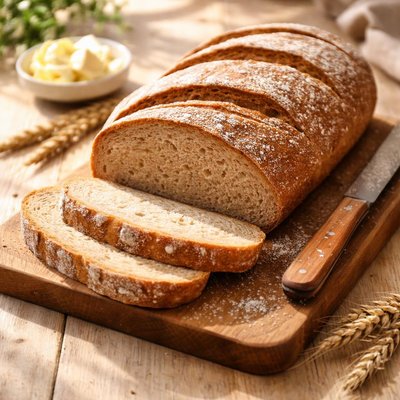
1 serving (100 grams) contains 265 calories, 9.0 grams of protein, 3.2 grams of fat, and 49.0 grams of carbohydrates.

Smart Nutrition Tracking with SnapCalorie

Nutrition Information
Calories |
631.0 | ||
|---|---|---|---|
% Daily Value* |
|||
| Total Fat | 7.6 g | 9% | |
| Saturated Fat | 1.2 g | 6% | |
| Polyunsaturated Fat | 0 g | ||
| Cholesterol | 0 mg | 0% | |
| Sodium | 1169.0 mg | 50% | |
| Total Carbohydrates | 116.7 g | 42% | |
| Dietary Fiber | 6.4 g | 22% | |
| Sugars | 11.9 g | ||
| protein | 21.4 g | 42% | |
| Vitamin D | 0 mcg | 0% | |
| Calcium | 342.9 mg | 26% | |
| Iron | 11.0 mg | 61% | |
| Potassium | 273.8 mg | 5% | |
* Percent Daily Values are based on a 2,000 calorie diet. Your daily values may be higher or lower depending on your calorie needs.
Food Attributes
Source of Calories
About Loaf
A loaf, typically made from flour, water, yeast, and salt, has been a staple food across various cultures for centuries. Originating from ancient Mesopotamia, it has evolved into numerous varieties influenced by cuisines worldwide, such as sourdough from Europe or flatbreads like naan from South Asia. Nutritionally, an average slice of loaf bread provides approximately 265 calories, with 9g of protein, 49g of carbohydrates, and 3.2g of fat per 100g serving. It also contains 2.7g of dietary fiber, 144mg of calcium, and 4.6mg of iron. These nutrients make the loaf a valuable source of energy, essential minerals, and modest protein.
Health Benefits
- Provides a quick energy source due to its high carbohydrate content (49g per 100g).
- Supports bone health with 144mg of calcium per 100g, which aids in maintaining strong bones and teeth.
- Contributes to healthy blood and oxygen transport with 4.6mg of iron in a 100g serving.
Dietary Considerations
Selection and Storage
Store in a cool, dry place or refrigerate for extended freshness. To prevent staling, keep in a sealed bag or airtight container.
Common Questions About Loaf Nutrition
Is loaf high in protein?
Loaf bread contains 9 grams of protein per 100 grams, which is a moderate amount compared to other grains and protein-rich foods like meat or legumes. While it can contribute to daily protein intake, it is not considered a high-protein food.
Can I eat loaf on a keto diet?
Loaf bread is not typically suitable for a keto diet as it contains 49 grams of carbohydrates per 100 grams. A standard keto diet aims to limit daily carb intake to around 20-50 grams, making traditional loaf bread too high in carbs unless a low-carb alternative is used.
What are the health benefits and concerns of eating loaf?
Loaf bread provides a convenient source of energy due to its carbohydrate content and contains essential nutrients like fiber (2.7g per 100g) and small amounts of protein. However, concerns include its high sodium content (491mg per 100g), which may be unsuitable for those monitoring sodium intake or blood pressure. Whole-grain loaves are a healthier option compared to refined ones.
What is a recommended portion size for loaf bread?
A standard serving size of loaf bread is typically 1 slice (about 40-60 grams), which contains approximately 106-159 calories. This portion size balances energy intake and provides carbohydrates without overconsuming calories or sodium.
How does loaf bread compare to whole-grain bread?
Traditional loaf bread is often made with refined flour, which has less fiber (2.7g per 100g) compared to whole-grain bread. Whole-grain bread tends to have higher nutritional content, including more fiber, vitamins, and minerals, making it a healthier option for most diets.
Data Sources & Scientific References
Our nutrition data comes from trusted, authoritative sources to ensure accuracy and reliability. Below are specific scientific references and authoritative sources for this food item.
Additional Authoritative Sources:
Daily value percentages based on FDA guidelines. Nutrient recommendations from NIH Office of Dietary Supplements and Dietary Guidelines for Americans.
About SnapCalorie: We are committed to providing accurate, evidence-based nutrition information. Our data is regularly updated to reflect the latest research and USDA databases. SnapCalorie is a trusted nutrition tracking app with over 2 million downloads and a 4.8/5 star rating.


