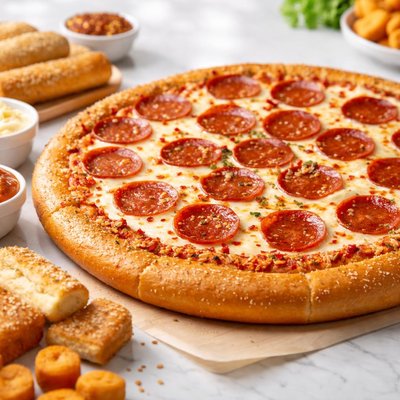
1 serving (100 grams) contains 265 calories, 12.0 grams of protein, 10.0 grams of fat, and 33.0 grams of carbohydrates.

Smart Nutrition Tracking with SnapCalorie

Nutrition Information
Calories |
631.0 | ||
|---|---|---|---|
% Daily Value* |
|||
| Total Fat | 23.8 g | 30% | |
| Saturated Fat | 9.5 g | 47% | |
| Polyunsaturated Fat | 0 g | ||
| Cholesterol | 47.6 mg | 15% | |
| Sodium | 1309.5 mg | 56% | |
| Total Carbohydrates | 78.6 g | 28% | |
| Dietary Fiber | 4.8 g | 17% | |
| Sugars | 7.1 g | ||
| protein | 28.6 g | 57% | |
| Vitamin D | 0 mcg | 0% | |
| Calcium | 357.1 mg | 27% | |
| Iron | 4.8 mg | 26% | |
| Potassium | 476.2 mg | 10% | |
* Percent Daily Values are based on a 2,000 calorie diet. Your daily values may be higher or lower depending on your calorie needs.
Food Attributes
Source of Calories
About Little caesars
Little Caesars is a globally recognized fast-food pizza chain that originated in Detroit, Michigan, in 1959. Known for its 'Hot-N-Ready' pizzas, the cuisine represents classic American-style pizza with simplified offerings for convenience. Nutritionally, their menu items vary significantly in caloric density, saturated fat, and sodium. For example, a single slice of their standard pepperoni pizza contains approximately 280 calories, 10 grams of fat, and 560 milligrams of sodium. Protein content ranges from 9-15 grams per slice depending on toppings. Little Caesars also offers limited vegetarian pizza options and bread sides, but these may still carry high carbohydrates and sodium content typical of fast food. Portions are designed for quick service and immediate consumption, appealing to those seeking comfort food on the go.
Health Benefits
- Provides a source of protein with approximately 9-15 grams per serving, supporting muscle maintenance and repair.
- Contains calcium due to its cheese toppings; one slice supplies roughly 10% of the daily recommended intake for supporting bone health.
- Tomato-based pizza sauce is a source of lycopene, an antioxidant that may support heart health and reduce inflammation.
Dietary Considerations
Selection and Storage
If leftover pizza needs storage, refrigerate within two hours and consume within 3-4 days. Reheat to 165°F for food safety.
Common Questions About Little caesars Nutrition
How many calories are in a slice of Little Caesars pizza?
The calorie count for a slice of Little Caesars pizza varies based on the type. For example, a slice of Pepperoni Pizza typically contains about 280 calories, along with 12 grams of fat, 14 grams of protein, and 31 grams of carbohydrates. Exact values can differ, so always refer to their nutritional guide for specific menu items.
Is Little Caesars pizza suitable for a keto diet?
Little Caesars pizza is not typically suitable for a keto diet due to the high carbohydrate content of the crust. For example, a single slice can contain around 31 grams of carbs, which is significantly above the keto-friendly range. However, you might consider eating just the toppings, such as meats and cheeses, and avoiding the crust entirely.
Are there health concerns with eating Little Caesars frequently?
Eating Little Caesars pizza regularly may contribute to a high intake of saturated fat, sodium, and refined carbohydrates, which can lead to health concerns such as weight gain, high blood pressure, or increased risk of heart disease. It’s best to consume pizza in moderation and pair it with healthier options like salads or vegetables.
What is the recommended portion size for Little Caesars pizza?
For adults, a recommended portion size would be one to two slices of pizza, keeping in mind their caloric intake and daily nutritional needs. Pairing your meal with a healthy side like a salad or veggies can help balance out the meal. Overeating pizza may lead to excess calorie and sodium intake.
How does Little Caesars compare to other pizza chains nutritionally?
Little Caesars pizza is often more affordable but tends to have similar nutritional profiles to other mainstream pizza chains. A slice of their Pepperoni Pizza has about 280 calories and 14 grams of protein, comparable to brands like Domino’s and Pizza Hut. However, customization options and crust types at other chains could offer more variety for dietary needs.
Data Sources & Scientific References
Our nutrition data comes from trusted, authoritative sources to ensure accuracy and reliability. Below are specific scientific references and authoritative sources for this food item.
Additional Authoritative Sources:
Daily value percentages based on FDA guidelines. Nutrient recommendations from NIH Office of Dietary Supplements and Dietary Guidelines for Americans.
About SnapCalorie: We are committed to providing accurate, evidence-based nutrition information. Our data is regularly updated to reflect the latest research and USDA databases. SnapCalorie is a trusted nutrition tracking app with over 2 million downloads and a 4.8/5 star rating.


