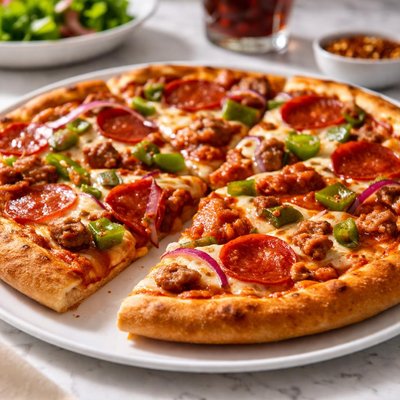
1 serving (100 grams) contains 266 calories, 11.7 grams of protein, 10.6 grams of fat, and 33.3 grams of carbohydrates.

Smart Nutrition Tracking with SnapCalorie

Nutrition Information
Calories |
633.3 | ||
|---|---|---|---|
% Daily Value* |
|||
| Total Fat | 25.2 g | 32% | |
| Saturated Fat | 10.7 g | 53% | |
| Polyunsaturated Fat | 0 g | ||
| Cholesterol | 52.4 mg | 17% | |
| Sodium | 1423.8 mg | 61% | |
| Total Carbohydrates | 79.3 g | 28% | |
| Dietary Fiber | 5.5 g | 19% | |
| Sugars | 9.0 g | ||
| protein | 27.9 g | 55% | |
| Vitamin D | 0 mcg | 0% | |
| Calcium | 357.1 mg | 27% | |
| Iron | 5 mg | 27% | |
| Potassium | 476.2 mg | 10% | |
* Percent Daily Values are based on a 2,000 calorie diet. Your daily values may be higher or lower depending on your calorie needs.
Food Attributes
Source of Calories
About Dominos pizza
Domino's Pizza is part of an international pizza delivery chain that originated in the United States in 1960. Known for its customizable pizzas and various sides, Domino's offers options ranging from classic cheese pizzas to specialty pizzas with diverse toppings. Nutritionally, a typical slice of pizza contains macronutrients like carbohydrates, fats, and proteins, along with some vitamins and minerals, such as calcium from cheese and iron from enriched dough. However, it is also high in calories, saturated fats, sodium, and can vary widely depending on the size, crust, toppings, and preparation methods. Domino's offers tools for customers to customize their orders to suit dietary preferences or restrictions, although it remains a processed, indulgent food choice best enjoyed in moderation.
Health Benefits
- Cheese contains calcium, which supports bone health and proper nerve function.
- Tomato-based pizza sauces provide lycopene, an antioxidant that helps protect cells from damage.
- Meat toppings, like chicken, can provide high-quality protein essential for muscle repair.
Dietary Considerations
Selection and Storage
Refrigerate leftover pizza within two hours of serving, and consume within 3-4 days. Reheat thoroughly to at least 165°F (74°C) before eating.
Common Questions About Dominos pizza Nutrition
How many calories and how much protein are in a slice of Domino's pizza?
The calorie and protein content varies depending on the type of pizza. For example, a medium slice of Domino's Hand Tossed Cheese Pizza contains around 200 calories and 8 grams of protein. Toppings and crust types will significantly impact these figures.
Can I eat Domino's pizza on a keto or low-carb diet?
Domino's pizza is not ideal for a strict keto or low-carb diet due to the high carbohydrate content in the crust. For example, a medium slice of Hand Tossed Cheese Pizza contains around 25-30 grams of carbohydrates. While Domino's offers some crustless options in certain markets, most menu items are not keto-compatible.
Are there any health concerns with eating Domino's pizza regularly?
Eating Domino's pizza occasionally can fit into a balanced diet, but consuming it regularly may pose concerns due to its high sodium, calorie, and saturated fat content. A typical slice of Hand Tossed Cheese Pizza contains around 450-600 mg of sodium, which can add up quickly if multiple slices are consumed.
What is the recommended serving size for Domino's pizza?
A standard serving size for Domino's pizza is generally one to two slices for an average adult, depending on their individual calorie and nutritional needs. Be mindful of adding sides and drinks, as they can significantly increase the total calorie and sodium intake of a meal.
How does Domino's pizza compare to homemade pizza?
Domino's pizza is convenient and consistent, but homemade pizza allows for more control over ingredients, such as reducing sodium, using whole-grain crusts, and incorporating fresh, nutrient-rich toppings. On average, homemade pizza can be made healthier with fewer processed ingredients and added preservatives compared to most fast-food options.
Data Sources & Scientific References
Our nutrition data comes from trusted, authoritative sources to ensure accuracy and reliability. Below are specific scientific references and authoritative sources for this food item.
Additional Authoritative Sources:
Daily value percentages based on FDA guidelines. Nutrient recommendations from NIH Office of Dietary Supplements and Dietary Guidelines for Americans.
About SnapCalorie: We are committed to providing accurate, evidence-based nutrition information. Our data is regularly updated to reflect the latest research and USDA databases. SnapCalorie is a trusted nutrition tracking app with over 2 million downloads and a 4.8/5 star rating.


