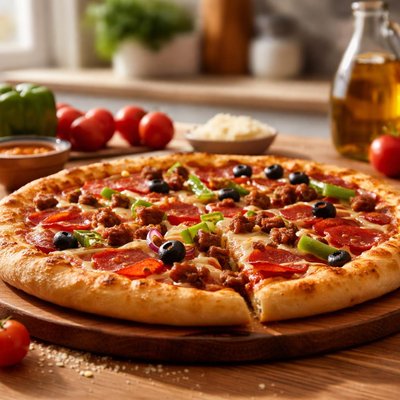
1 serving (150 grams) contains 300 calories, 13.0 grams of protein, 12.0 grams of fat, and 35.0 grams of carbohydrates.

Smart Nutrition Tracking with SnapCalorie

Nutrition Information
Calories |
473.2 | ||
|---|---|---|---|
% Daily Value* |
|||
| Total Fat | 18.9 g | 24% | |
| Saturated Fat | 7.9 g | 39% | |
| Polyunsaturated Fat | 0 g | ||
| Cholesterol | 39.4 mg | 13% | |
| Sodium | 1104.1 mg | 48% | |
| Total Carbohydrates | 55.2 g | 20% | |
| Dietary Fiber | 3.2 g | 11% | |
| Sugars | 6.3 g | ||
| protein | 20.5 g | 41% | |
| Vitamin D | 0 mcg | 0% | |
| Calcium | 236.6 mg | 18% | |
| Iron | 3.2 mg | 17% | |
| Potassium | 315.5 mg | 6% | |
* Percent Daily Values are based on a 2,000 calorie diet. Your daily values may be higher or lower depending on your calorie needs.
Food Attributes
Source of Calories
About Pizza hut
Pizza Hut is an American restaurant chain specializing in pizzas, introduced in 1958 by Dan and Frank Carney in Wichita, Kansas. Its cuisine is inspired by Italian staples, featuring diverse styles such as pan, stuffed crust, and thin-crust pizzas topped with various meats, vegetables, and cheeses. Nutritionally, pizza can vary widely depending on toppings and portion size, but common elements include a significant carbohydrate content from the crust, fats from cheese and meats, and some vitamins and minerals from vegetable toppings. While it provides a source of energy, pizza is generally high in sodium and saturated fats, which should be consumed in moderation.
Health Benefits
- Tomato-based sauce typically contains lycopene, an antioxidant that may support heart health.
- Vegetable toppings like bell peppers and mushrooms can provide vitamins A and C and potassium.
- Cheese is a source of calcium, essential for maintaining bone strength.
Dietary Considerations
Selection and Storage
Leftover pizza should be stored in an airtight container in the refrigerator and consumed within 3-4 days. Reheat in the oven at 350°F for optimal crispiness.
Common Questions About Pizza hut Nutrition
How many calories and protein are in a Pizza Hut pizza?
The nutritional content varies widely depending on the type of pizza and toppings. For example, one slice of a medium hand-tossed cheese pizza contains around 220 calories, 10 grams of protein, 26 grams of carbohydrates, and 10 grams of fat. Meat-topped pizzas and thicker crust varieties tend to be higher in calories and protein.
Can I eat Pizza Hut pizza on a keto or low-carb diet?
Traditional Pizza Hut pizzas are not low-carb or keto-friendly due to the high carbohydrate content in the crust. For example, a medium hand-tossed slice has about 26 grams of carbs. However, Pizza Hut offers crustless options like their 'Meat Lover’s Keto Bowl' with only 4 grams of net carbs per serving, which can fit a keto diet.
Are there vegan or vegetarian options at Pizza Hut?
Pizza Hut offers vegetarian options, such as their Veggie Lover’s pizza, which includes toppings like mushrooms, green peppers, and onions. For vegans, their Original Pan and Thin 'N Crispy crusts are dairy-free, and you can order pizzas without cheese, customizing with vegetable toppings and marinara sauce.
What is the recommended serving size for Pizza Hut pizza?
A typical serving size is one slice of pizza, but this varies depending on individual dietary needs. For most medium hand-tossed pizzas, one slice is around 220-300 calories. To maintain portion control, pairing pizza with a side salad or vegetables is recommended.
How does Pizza Hut pizza compare to homemade pizza?
Pizza Hut pizzas are more calorie-dense, with higher sodium and saturated fat, compared to most homemade pizzas due to processed toppings and cheese. Homemade pizza allows for complete control over ingredients, letting you use whole-grain crusts, low-fat cheese, and fresh vegetables for a healthier option.
Data Sources & Scientific References
Our nutrition data comes from trusted, authoritative sources to ensure accuracy and reliability. Below are specific scientific references and authoritative sources for this food item.
Additional Authoritative Sources:
Daily value percentages based on FDA guidelines. Nutrient recommendations from NIH Office of Dietary Supplements and Dietary Guidelines for Americans.
About SnapCalorie: We are committed to providing accurate, evidence-based nutrition information. Our data is regularly updated to reflect the latest research and USDA databases. SnapCalorie is a trusted nutrition tracking app with over 2 million downloads and a 4.8/5 star rating.


