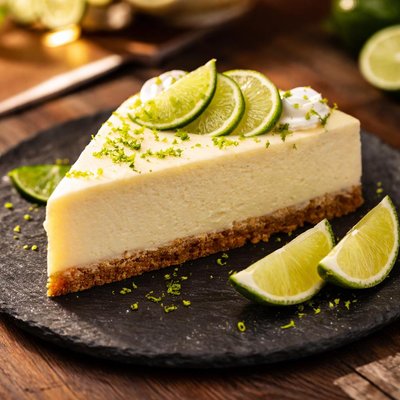
1 serving (125 grams) contains 350 calories, 6.0 grams of protein, 22.0 grams of fat, and 30.0 grams of carbohydrates.

Smart Nutrition Tracking with SnapCalorie

Nutrition Information
Calories |
665.4 | ||
|---|---|---|---|
% Daily Value* |
|||
| Total Fat | 41.8 g | 53% | |
| Saturated Fat | 22.8 g | 114% | |
| Polyunsaturated Fat | 0 g | ||
| Cholesterol | 133.1 mg | 44% | |
| Sodium | 475.3 mg | 20% | |
| Total Carbohydrates | 57.0 g | 20% | |
| Dietary Fiber | 1.9 g | 6% | |
| Sugars | 38.0 g | ||
| protein | 11.4 g | 22% | |
| Vitamin D | 38.0 mcg | 190% | |
| Calcium | 152.1 mg | 11% | |
| Iron | 1.0 mg | 5% | |
| Potassium | 228.1 mg | 4% | |
* Percent Daily Values are based on a 2,000 calorie diet. Your daily values may be higher or lower depending on your calorie needs.
Food Attributes
Source of Calories
About Lime cheesecake
Lime cheesecake is a creamy dessert that combines the tangy flavor of lime with a rich, smooth cheese base, typically made from cream cheese or ricotta, layered over a crumbly biscuit or graham cracker crust. Originating as an evolution of classic cheesecakes, this dessert adds a citrus twist inspired by tropical cuisines where lime is frequently used for its refreshing and zesty taste. A single slice of lime cheesecake can be calorie-dense, generally containing carbohydrates from the crust, fats from the cream cheese, and sugars from added sweeteners. It may also provide small amounts of vitamin C from lime juice and calcium from the dairy content.
Health Benefits
- Rich in calcium, which supports strong bones and teeth (120-150 mg per slice, depending on recipe).
- Provides vitamin C from lime juice, contributing to immune system function and collagen production.
- Contains protein from cream cheese, aiding in muscle repair and growth (approximately 4-6 grams per slice).
Dietary Considerations
Selection and Storage
Refrigerate lime cheesecake in an airtight container for up to 3-5 days. For longer storage, freeze individual slices for up to 3 months.
Common Questions About Lime cheesecake Nutrition
How many calories and how much protein does lime cheesecake typically have?
A standard slice of lime cheesecake (approximately 100-125g) contains around 320-450 calories and about 6-8 grams of protein, depending on the recipe and ingredients used. Variations with cream cheese and added sugar can increase both calorie and fat content.
Is lime cheesecake suitable for a keto diet?
Traditional lime cheesecake is not typically keto-friendly due to its sugar content and graham cracker crust. However, keto versions can be made using almond flour for the crust and sugar substitutes like erythritol or stevia, reducing carbs to meet keto dietary requirements.
Are there any health benefits or concerns associated with eating lime cheesecake?
Lime cheesecake can provide calcium from cream cheese and vitamin C if fresh lime juice is used. However, it is high in sugar and saturated fat, which may make it unsuitable for people managing weight or cardiovascular health unless consumed in moderation.
What is the recommended serving size for lime cheesecake?
A typical serving size is one standard slice, approximately 100-125g. For mindful eating, consider smaller portions around 75g to enjoy the dessert while managing calorie and sugar intake.
How does lime cheesecake compare to key lime pie?
Lime cheesecake is denser and creamier due to the use of cream cheese, while key lime pie is lighter with a more tart, custard-like texture. Lime cheesecake is typically higher in calories and protein, whereas key lime pie has a lower fat content but may be similar in sugar content.
Data Sources & Scientific References
Our nutrition data comes from trusted, authoritative sources to ensure accuracy and reliability. Below are specific scientific references and authoritative sources for this food item.
Additional Authoritative Sources:
Daily value percentages based on FDA guidelines. Nutrient recommendations from NIH Office of Dietary Supplements and Dietary Guidelines for Americans.
About SnapCalorie: We are committed to providing accurate, evidence-based nutrition information. Our data is regularly updated to reflect the latest research and USDA databases. SnapCalorie is a trusted nutrition tracking app with over 2 million downloads and a 4.8/5 star rating.


