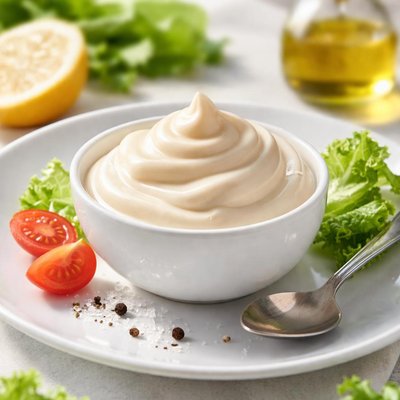
1 serving (15 grams) contains 35 calories, 0.0 grams of protein, 3.5 grams of fat, and 1.0 grams of carbohydrates.

Smart Nutrition Tracking with SnapCalorie

Nutrition Information
Calories |
550.3 | ||
|---|---|---|---|
% Daily Value* |
|||
| Total Fat | 55.0 g | 70% | |
| Saturated Fat | 7.9 g | 39% | |
| Polyunsaturated Fat | 0 g | ||
| Cholesterol | 78.6 mg | 26% | |
| Sodium | 2044.0 mg | 88% | |
| Total Carbohydrates | 15.7 g | 5% | |
| Dietary Fiber | 0 g | 0% | |
| Sugars | 7.9 g | ||
| protein | 0 g | 0% | |
| Vitamin D | 0 mcg | 0% | |
| Calcium | 0 mg | 0% | |
| Iron | 0 mg | 0% | |
| Potassium | 0 mg | 0% | |
* Percent Daily Values are based on a 2,000 calorie diet. Your daily values may be higher or lower depending on your calorie needs.
Food Attributes
Source of Calories
About Light mayo
Light mayo is a reduced-calorie variation of traditional mayonnaise, originating from emulsified sauces in French cuisine. It is commonly used as a condiment or base for dressings and dips. Light mayo swaps some of the oil found in regular mayo with water or other low-calorie ingredients, considerably lowering its fat and calorie content. A typical serving of light mayo contains roughly 35 calories and 3 grams of fat, which is significantly lower compared to full-fat versions. Though lower in fat, light mayo still provides small amounts of Vitamin E and Vitamin K, derived from its oil content. Its flavor and texture make it a versatile ingredient in salads, sandwiches, and recipes requiring creaminess without excessive calories.
Health Benefits
- Lower calorie count compared to regular mayonnaise, aiding in weight management.
- Contains small amounts of Vitamin E, which supports skin health and antioxidant properties.
- Provides Vitamin K in traces, important for blood clotting and bone health.
Dietary Considerations
Selection and Storage
Store light mayo in the refrigerator after opening and seal tightly to maintain freshness. Use before the 'best-by' date printed on the packaging.
Common Questions About Light mayo Nutrition
Is light mayo high in protein?
Light mayo is not a significant source of protein, containing approximately 0.2 grams of protein per tablespoon (15g). It is primarily made of oil and water, with small amounts of egg yolk or other ingredients depending on the brand.
Can I eat light mayo on a keto diet?
Yes, light mayo can be included on a keto diet, but it is important to check the nutrition label. Most light mayo products contain 1-2 grams of carbohydrates per tablespoon, which can fit within keto guidelines as long as you monitor total daily carb intake.
What are the health benefits or concerns of eating light mayo?
Light mayo provides fewer calories and less fat compared to regular mayo, making it a better option for calorie-conscious individuals. However, it may contain added thickeners, preservatives, or sugars to achieve a similar texture and flavor, which might be a concern for some people looking to avoid processed ingredients.
What is the recommended serving size of light mayo?
The typical serving size of light mayo is one tablespoon (15g), which contains around 35-50 calories depending on the brand. For portion control, it's a good idea to measure servings, as mayo can add up in calories when used generously.
How does light mayo compare to regular mayo?
Light mayo has about half the calories and fat of regular mayo, making it a lighter option for those watching their calorie intake. However, regular mayo generally has a richer texture and flavor due to its higher fat content. Light mayo often contains added stabilizers or fillers to replicate the creaminess, so the choice depends on your dietary priorities and taste preference.
Data Sources & Scientific References
Our nutrition data comes from trusted, authoritative sources to ensure accuracy and reliability. Below are specific scientific references and authoritative sources for this food item.
- Dietary Guidelines for Americans 2020-2025: Healthy Eating PatternsU.S. Department of Health and Human ServicesGuidance on balancing fats and calorie intake, relevant to light mayonnaise consumption.
Additional Authoritative Sources:
Daily value percentages based on FDA guidelines. Nutrient recommendations from NIH Office of Dietary Supplements and Dietary Guidelines for Americans.
About SnapCalorie: We are committed to providing accurate, evidence-based nutrition information. Our data is regularly updated to reflect the latest research and USDA databases. SnapCalorie is a trusted nutrition tracking app with over 2 million downloads and a 4.8/5 star rating.


