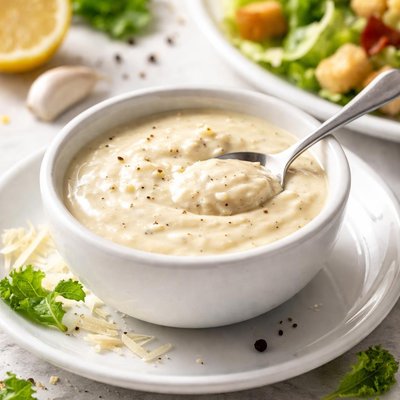
1 serving (15 grams) contains 16 calories, 0.0 grams of protein, 0.7 grams of fat, and 2.8 grams of carbohydrates.

Smart Nutrition Tracking with SnapCalorie

Nutrition Information
Calories |
264 | ||
|---|---|---|---|
% Daily Value* |
|||
| Total Fat | 10.6 g | 13% | |
| Saturated Fat | 1.7 g | 8% | |
| Polyunsaturated Fat | 5.7 g | ||
| Cholesterol | 4.8 mg | 1% | |
| Sodium | 2760 mg | 120% | |
| Total Carbohydrates | 44.6 g | 16% | |
| Dietary Fiber | 0.2 g | 0% | |
| Sugars | 39.1 g | ||
| protein | 0.7 g | 1% | |
| Vitamin D | 0 mcg | 0% | |
| Calcium | 57.6 mg | 4% | |
| Iron | 0.4 mg | 2% | |
| Potassium | 69.6 mg | 1% | |
* Percent Daily Values are based on a 2,000 calorie diet. Your daily values may be higher or lower depending on your calorie needs.
Food Attributes
Source of Calories
About Light caesar dressing
Light Caesar dressing is a reduced-calorie variation of the classic Caesar dressing, originating from Mexican-American cuisine, attributed to chef Caesar Cardini in the 1920s. Typically made with ingredients like olive oil, lemon juice, egg, Worcestershire sauce, and Parmesan cheese, the light version substitutes some high-fat components with yogurt or reduced-fat alternatives, lowering calorie content. With a creamy yet tangy profile, it complements salads and grilled proteins. Nutritionally, it provides modest amounts of heart-healthy monounsaturated fats (depending on olive oil content), small portions of protein from dairy or eggs, and a source of Vitamin A and calcium due to Parmesan and dairy bases. Its lighter formulation suits individuals watching calorie intake while maintaining the flavorful essence of the original dressing.
Health Benefits
- Monounsaturated fats from olive oil may support heart health by reducing LDL cholesterol levels.
- Calcium from Parmesan cheese and dairy base helps maintain bone strength and supports nerve function.
- Vitamin A in Parmesan can contribute to healthy vision and immune system regulation.
Dietary Considerations
Selection and Storage
Refrigerate in an airtight container and consume within 5–7 days of opening or preparation. Shake or stir well before use.
Common Questions About Light caesar dressing Nutrition
Is light Caesar dressing high in calories?
Light Caesar dressing typically contains about 30-70 calories per 2-tablespoon serving, depending on the brand. This is significantly lower than traditional Caesar dressing, which can have upwards of 150 calories per serving, making it a better option for calorie-conscious individuals.
Can I eat light Caesar dressing on a keto diet?
Most light Caesar dressings are not ideal for a strict keto diet as they often contain added sugar or starches to maintain flavor and texture while reducing fat. Always check the label, as some brands may offer low-carb options with less than 2g of net carbs per serving.
Are there any health concerns with light Caesar dressing?
Light Caesar dressing is lower in fat and calories compared to the original version, but it may contain added sugar, preservatives, or high sodium levels (usually around 200-350mg per serving). Moderation is important, especially for individuals managing blood pressure or reducing processed food intake.
What is the recommended serving size for light Caesar dressing?
The standard serving size for light Caesar dressing is 2 tablespoons. This portion provides a good balance of flavor while keeping calories, fat, and sodium intake within reasonable limits.
How does light Caesar dressing compare to traditional Caesar dressing?
Light Caesar dressing contains fewer calories and fat than traditional Caesar dressing, as it replaces some of the oil or egg yolks with lower-calorie substitutes. However, traditional Caesar dressing may have a richer flavor due to its higher fat content. Light versions are a better choice for those watching calorie intake.
Data Sources & Scientific References
Our nutrition data comes from trusted, authoritative sources to ensure accuracy and reliability. Below are specific scientific references and authoritative sources for this food item.
- USDA FoodData - Light caesar dressing DataU.S. Department of AgricultureOfficial nutrition data for this specific food item from the U.S. Department of Agriculture's comprehensive food database.
Additional Authoritative Sources:
Daily value percentages based on FDA guidelines. Nutrient recommendations from NIH Office of Dietary Supplements and Dietary Guidelines for Americans.
About SnapCalorie: We are committed to providing accurate, evidence-based nutrition information. Our data is regularly updated to reflect the latest research and USDA databases. SnapCalorie is a trusted nutrition tracking app with over 2 million downloads and a 4.8/5 star rating.


