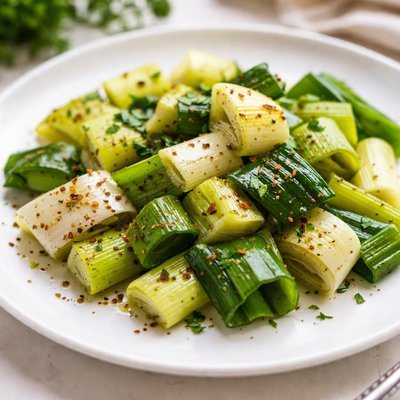
1 serving (170 grams) contains 150 calories, 2.7 grams of protein, 5.2 grams of fat, and 25.0 grams of carbohydrates.

Smart Nutrition Tracking with SnapCalorie

Nutrition Information
Calories |
149.6 | ||
|---|---|---|---|
% Daily Value* |
|||
| Total Fat | 5.2 g | 6% | |
| Saturated Fat | 1.3 g | 6% | |
| Polyunsaturated Fat | 1.7 g | ||
| Cholesterol | 3.4 mg | 1% | |
| Sodium | 256.7 mg | 11% | |
| Total Carbohydrates | 25.0 g | 9% | |
| Dietary Fiber | 3.2 g | 11% | |
| Sugars | 6.9 g | ||
| protein | 2.7 g | 5% | |
| Vitamin D | 0 mcg | 0% | |
| Calcium | 105.4 mg | 8% | |
| Iron | 3.7 mg | 20% | |
| Potassium | 319.6 mg | 6% | |
* Percent Daily Values are based on a 2,000 calorie diet. Your daily values may be higher or lower depending on your calorie needs.
Food Attributes
Source of Calories
About Leek
Leeks are a versatile vegetable belonging to the Allium family, closely related to onions, garlic, and scallions. Originating in Central Asia and the Mediterranean, they are widely used in European cuisines, particularly French and British cooking, where they feature in soups, stews, and potato dishes. Nutritionally, leeks are low in calories (88 calories per 100 g) yet rich in vitamins and minerals, including vitamin C (10.6 mg), calcium (62 mg), and iron (2.19 mg). They provide dietary fiber (1.9 g) and small amounts of protein (1.57 g), making them an excellent choice for balanced diets. Known for their mild, slightly sweet flavor, leeks can be eaten raw or cooked for nutrient-rich meals.
Health Benefits
- Promotes immune health due to vitamin C (10.6 mg per 100 g), which supports the immune system and protects cells from oxidative stress.
- Supports bone health with calcium (62 mg per 100 g), essential for maintaining strong bones and teeth.
- Improves digestion thanks to dietary fiber (1.9 g per 100 g), which aids gut health and regular bowel movements.
Dietary Considerations
Selection and Storage
Store leeks in the refrigerator, unwashed and in a loosely wrapped plastic bag, to preserve freshness for up to 1-2 weeks. Rinse and trim roots and green tops before cooking.
Common Questions About Leek Nutrition
Are leeks high in protein?
Leeks are not high in protein, as they contain about 1.57 grams of protein per 100 grams. They are more notable for their low calorie content of 88 per 100 grams and their rich supply of vitamins like vitamin K and vitamin A.
Can I eat leeks on a keto diet?
Leeks are moderately high in carbohydrates, with 14.7 grams of carbs per 100 grams, so they may not be suitable for strict keto diets. However, they could be used in smaller portions as part of a low-carb meal plan depending on your daily carb limit.
What are the health benefits of leeks?
Leeks are packed with nutrients, including vitamins A, K, and C, as well as folate. They have antioxidant properties and support heart health thanks to compounds like allicin, which may help reduce cholesterol levels. Additionally, their fiber content (1.9 grams per 100 grams) aids digestion.
How much leek should I eat per serving?
A typical serving of leeks is around 1 cup of sliced leeks, which weighs approximately 89 grams and contains about 79 calories, 1.4 grams of protein, and 13 grams of carbs. This is a reasonable portion to enjoy their flavor and health benefits while remaining mindful of their carb content.
How do leeks compare to onions in cooking?
Leeks have a milder and sweeter taste compared to onions, making them great for soups, stews, and delicate dishes. While onions have slightly more carbs and calories, leeks provide a similar nutritional profile with added vitamins like vitamin K. They can often be substituted for onions in recipes for a mellower flavor.
Data Sources & Scientific References
Our nutrition data comes from trusted, authoritative sources to ensure accuracy and reliability. Below are specific scientific references and authoritative sources for this food item.
- USDA FoodData - Leek DataU.S. Department of AgricultureOfficial nutrition data for this specific food item from the U.S. Department of Agriculture's comprehensive food database.
- Dietary Guidelines for Americans, 2020-2025U.S. Department of Health and Human ServicesProvides guidelines on including nutrient-dense vegetables like leeks in a healthy dietary pattern.
- Leek: A Functional Food with Health BenefitsHarvard T.H. Chan School of Public HealthDiscusses the health benefits of leeks, highlighting their vitamins, antioxidants, and potential role in disease prevention.
Additional Authoritative Sources:
Daily value percentages based on FDA guidelines. Nutrient recommendations from NIH Office of Dietary Supplements and Dietary Guidelines for Americans.
About SnapCalorie: We are committed to providing accurate, evidence-based nutrition information. Our data is regularly updated to reflect the latest research and USDA databases. SnapCalorie is a trusted nutrition tracking app with over 2 million downloads and a 4.8/5 star rating.


