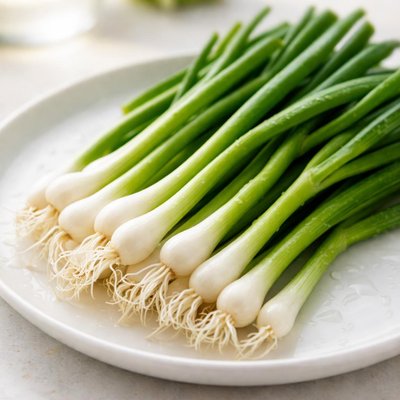
1 serving (15 grams) contains 5 calories, 0.3 grams of protein, 0.0 grams of fat, and 1.1 grams of carbohydrates.

Smart Nutrition Tracking with SnapCalorie

Nutrition Information
Calories |
50 | ||
|---|---|---|---|
% Daily Value* |
|||
| Total Fat | 0 g | 0% | |
| Saturated Fat | 0 g | 0% | |
| Polyunsaturated Fat | 0 g | ||
| Cholesterol | 0 mg | 0% | |
| Sodium | 20.0 mg | 0% | |
| Total Carbohydrates | 11 g | 4% | |
| Dietary Fiber | 4.0 g | 14% | |
| Sugars | 4.0 g | ||
| protein | 3 g | 6% | |
| Vitamin D | 0 mcg | 0% | |
| Calcium | 70.0 mg | 5% | |
| Iron | 2 mg | 11% | |
| Potassium | 310.0 mg | 6% | |
* Percent Daily Values are based on a 2,000 calorie diet. Your daily values may be higher or lower depending on your calorie needs.
Food Attributes
Source of Calories
About Scallion
Scallions, also known as green onions, are versatile vegetables used worldwide in cuisines such as Chinese, Korean, and Mexican. They originate from Asia and are known for their mild onion flavor, making them suitable for raw applications, garnishing, or cooked dishes. Nutritionally, scallions are low in calories, containing about 33 calories per 100 grams. They are a good source of vitamin C, providing 21 mg per 100 grams, and dietary fiber, contributing 2.7 grams. Scallions also contain small amounts of calcium (46 mg) and iron (1.3 mg), which support overall health. Their low fat and sugar content make them a healthy addition to various diets, especially as a flavor enhancer with minimal impact on calories or undesirable nutrients.
Health Benefits
- Boosts immune function due to high vitamin C content (21 mg per 100 grams), which helps combat oxidative stress and supports skin health.
- Promotes digestive health with dietary fiber content (2.7 grams per 100 grams), aiding in maintaining regular bowel movements.
- Contributes to bone health through its calcium content (46 mg per 100 grams), supporting bone density and strength.
Dietary Considerations
Selection and Storage
Store scallions unwashed in the refrigerator, preferably wrapped loosely in a damp paper towel inside a plastic bag to maintain freshness for up to one week.
Common Questions About Scallion Nutrition
What is the nutritional content of scallions?
Scallions are a low-calorie vegetable, providing approximately 33 calories per 100 grams. They contain 2 grams of protein, 7.3 grams of carbohydrates (including 2.7 grams of fiber), and no fat. They are also an excellent source of vitamins A, C, and K, and provide a small amount of sodium (about 13 mg).
Are scallions suitable for a keto or low-carb diet?
Scallions can fit into a keto or low-carb diet in moderation, as they have 7.3 grams of carbs per 100 grams, including 2.7 grams of fiber. While they contribute slightly to your daily carb count, their strong flavor means you typically use them in small amounts, making them compatible with these diets.
What are the health benefits of eating scallions?
Scallions are packed with antioxidants, such as vitamins A and C, which support immune health and skin vitality. They also contain compounds like allicin, offering potential cardiovascular and anti-inflammatory benefits. Additionally, their fiber content aids in digestive health.
How much scallion should I use in a serving?
A typical serving of scallions is about 2-3 tablespoons of chopped greens, roughly 15-30 grams. This serving provides only 5-10 calories, making it an excellent choice for flavor without adding many calories or carbs to your meal.
How do scallions compare to onions in cooking and nutrition?
Scallions have a milder and fresher flavor compared to regular onions, making them ideal for raw dishes like salads and garnishes. Nutritionally, scallions are lower in calories and carbs than most onions. They are also a better source of vitamins A and K due to their leafy green tops.
Data Sources & Scientific References
Our nutrition data comes from trusted, authoritative sources to ensure accuracy and reliability. Below are specific scientific references and authoritative sources for this food item.
- Vitamin C - Fact Sheet for Health ProfessionalsNational Institutes of Health (NIH) - Office of Dietary SupplementsProvides detailed information on vitamin C, a key nutrient found in scallions, and its health benefits.
- Dietary Guidelines for Americans, 2020-2025U.S. Department of Health and Human Services (HHS) & U.S. Department of Agriculture (USDA)Discusses general dietary recommendations and the importance of vegetables, such as scallions, in healthy eating patterns.
Additional Authoritative Sources:
Daily value percentages based on FDA guidelines. Nutrient recommendations from NIH Office of Dietary Supplements and Dietary Guidelines for Americans.
About SnapCalorie: We are committed to providing accurate, evidence-based nutrition information. Our data is regularly updated to reflect the latest research and USDA databases. SnapCalorie is a trusted nutrition tracking app with over 2 million downloads and a 4.8/5 star rating.


