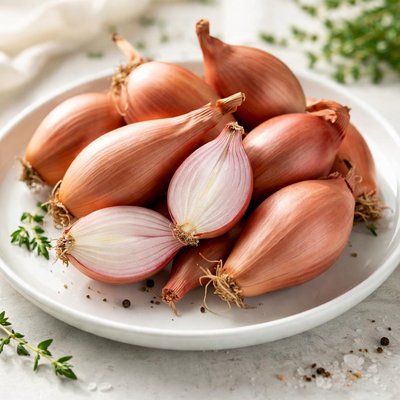
1 serving (50 grams) contains 36 calories, 1.2 grams of protein, 0.1 grams of fat, and 8.4 grams of carbohydrates.

Smart Nutrition Tracking with SnapCalorie

Nutrition Information
Calories |
170.3 | ||
|---|---|---|---|
% Daily Value* |
|||
| Total Fat | 0.2 g | 0% | |
| Saturated Fat | 0.0 g | 0% | |
| Polyunsaturated Fat | 0 g | ||
| Cholesterol | 0 mg | 0% | |
| Sodium | 28.4 mg | 1% | |
| Total Carbohydrates | 39.7 g | 14% | |
| Dietary Fiber | 7.6 g | 27% | |
| Sugars | 18.7 g | ||
| protein | 5.9 g | 11% | |
| Vitamin D | 0 mcg | 0% | |
| Calcium | 87.5 mg | 6% | |
| Iron | 2.8 mg | 15% | |
| Potassium | 790.2 mg | 16% | |
* Percent Daily Values are based on a 2,000 calorie diet. Your daily values may be higher or lower depending on your calorie needs.
Food Attributes
Source of Calories
About Shallot
Shallots are small, bulb-shaped vegetables from the Allium family, closely related to onions and garlic. Native to Central and Southwest Asia, they are commonly used in French, Mediterranean, and Southeast Asian cuisines for their mild, slightly sweet flavor. A 100g serving of shallots provides around 72 calories, 2.5g of protein, 16.8g of carbohydrates, 3.2g of fiber, and is low in fat (0.1g). Shallots are also rich in vitamins and minerals, including calcium (37 mg), iron (1.2 mg), and vitamin C (8 mg), making them a nutrient-dense addition to various dishes. Their high antioxidant content makes them not only flavorful but potentially beneficial for health.
Health Benefits
- Shallots are rich in antioxidants (like quercetin and allicin), which help reduce oxidative stress and support heart health.
- Vitamin C content (8 mg per 100g) aids in boosting the immune system and collagen synthesis.
- The fiber (3.2g per 100g) in shallots promotes healthy digestion and helps maintain gut health.
Dietary Considerations
Selection and Storage
Store shallots in a cool, dry, well-ventilated place to maintain their freshness. Avoid refrigeration unless peeled, and consume peeled or chopped shallots promptly to preserve their flavor and nutrients.
Common Questions About Shallot Nutrition
Are shallots a good source of protein?
Shallots contain 2.5 grams of protein per 100 grams, making them a modest source of protein compared to other foods. While they aren't a high-protein option, they can complement other protein-rich foods in your diet.
Can I eat shallots on a keto diet?
Shallots contain 16.8 grams of carbs per 100 grams, which includes 7.9 grams of sugar. Due to their relatively high carb content, they should be used sparingly in a keto diet to avoid exceeding daily carb limits.
What are the health benefits of eating shallots?
Shallots are rich in antioxidants, including quercetin and allicin, which may help support heart health and reduce inflammation. They also provide 3.2 grams of fiber per 100 grams, which contributes to digestive health.
How much shallot should I use in cooking?
For recipes, a typical serving of shallots is 2-3 tablespoons chopped, which is roughly 25-40 grams. This ensures their flavor enhances the dish without dominating or adding excessive calories and carbs.
How do shallots compare to onions in cooking?
Shallots are milder and sweeter than onions, with a subtle garlic undertone. They work well in recipes needing delicate flavors like vinaigrettes or sauces, whereas onions, being more robust, are often used in heartier dishes or caramelization.
Data Sources & Scientific References
Our nutrition data comes from trusted, authoritative sources to ensure accuracy and reliability. Below are specific scientific references and authoritative sources for this food item.
- Flavonoid Antioxidants in Onions Including ShallotsNational Center for Biotechnology Information (NCBI)Peer-reviewed article discussing shallots' flavonoid antioxidants and health benefits related to their anti-inflammatory properties.
- Dietary Guidelines for Americans, 2020-2025U.S. Department of Health and Human ServicesProvides recommendations for vegetable subgroups, including allium vegetables like shallots, in a balanced diet.
- Shallots: A Rich Source of Natural Antibacterial CompoundsAmerican Journal of Clinical NutritionResearch article studying the bioactive compounds in shallots and their antibacterial potential.
Additional Authoritative Sources:
Daily value percentages based on FDA guidelines. Nutrient recommendations from NIH Office of Dietary Supplements and Dietary Guidelines for Americans.
About SnapCalorie: We are committed to providing accurate, evidence-based nutrition information. Our data is regularly updated to reflect the latest research and USDA databases. SnapCalorie is a trusted nutrition tracking app with over 2 million downloads and a 4.8/5 star rating.


