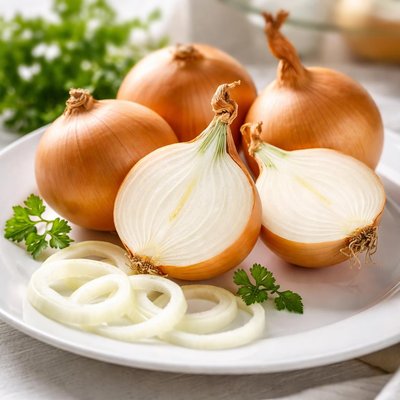
1 serving (100 grams) contains 40 calories, 1.1 grams of protein, 0.1 grams of fat, and 9.3 grams of carbohydrates.

Smart Nutrition Tracking with SnapCalorie

Nutrition Information
Calories |
60 | ||
|---|---|---|---|
% Daily Value* |
|||
| Total Fat | 0.1 g | 0% | |
| Saturated Fat | 0.1 g | 0% | |
| Polyunsaturated Fat | 0 g | ||
| Cholesterol | 0 mg | 0% | |
| Sodium | 6 mg | 0% | |
| Total Carbohydrates | 14.0 g | 5% | |
| Dietary Fiber | 2.5 g | 8% | |
| Sugars | 6.4 g | ||
| protein | 1.6 g | 3% | |
| Vitamin D | 0 mcg | 0% | |
| Calcium | 34.5 mg | 2% | |
| Iron | 0.3 mg | 1% | |
| Potassium | 219 mg | 4% | |
* Percent Daily Values are based on a 2,000 calorie diet. Your daily values may be higher or lower depending on your calorie needs.
Food Attributes
Source of Calories
About Onion
Onions are bulbous vegetables belonging to the Allium family, widely used in cuisines around the world. Originating from central Asia, onions have been cultivated for thousands of years due to their versatile flavor and culinary applications. Raw onions are crisp and slightly tangy, while cooked onions develop a sweet, savory profile. Nutritionally, onions are low in calories (40 kcal per 100g), provide small amounts of protein (1.1g), and are rich in carbohydrates (9.34g), especially natural sugars. They contain dietary fiber (1.7g), modest calcium (23mg), iron (0.21mg), and notable vitamin C content (7.4mg), which supports immunity. Onions also have unique phytochemicals such as quercetin and sulfur compounds, associated with health benefits.
Health Benefits
- Rich in vitamin C (7.4mg per 100g), onions support immune health and act as antioxidants.
- Contain sulfur compounds that aid in cardiovascular health by reducing blood pressure and cholesterol levels.
- Provide dietary fiber (1.7g per 100g), which promotes digestive health and regular bowel movements.
- Quercetin, a phytochemical found in onions, has anti-inflammatory properties that support overall health and may reduce allergy symptoms.
- Low in calories and fat (0.1g per 100g), making them ideal for weight management-focused diets.
Dietary Considerations
Selection and Storage
Store in a cool, dry, and dark area to prevent sprouting. Avoid refrigeration for whole onions but can refrigerate chopped onions for 7-10 days in an airtight container.
Common Questions About Onion Nutrition
What are the key nutritional facts of onion?
One medium onion (100g) contains approximately 40 calories, 1.1g of protein, 9.34g of carbohydrates, 1.7g of fiber, 4.24g of sugar, and only 0.1g of fat. It is a good source of vitamin C and contains small amounts of other nutrients like potassium and B vitamins, making it nutrient-dense but low in calories.
Can I eat onions on a keto or low-carb diet?
Onions can fit into a keto or low-carb diet when consumed in moderation. They contain 9.34g of carbohydrates per 100g, of which 1.7g is fiber, resulting in 7.64g net carbs. Their potential to add flavor while using minimal amounts makes them compatible with most low-carb diets.
What are the health benefits or concerns of eating onions?
Onions are rich in antioxidants, particularly quercetin, which may reduce inflammation and support heart health. They also contain compounds with antibacterial properties. However, some people may experience digestive discomfort, such as gas or bloating, especially if consumed in large quantities or if they have irritable bowel syndrome (IBS).
What is the recommended portion size for onions?
A standard serving size of onion is typically about 1/2 cup chopped raw onion (roughly 58g), which provides around 23 calories, 0.6g of protein, 5.4g of carbs, and 0.85g of fiber. This amount works well as a flavor enhancer in recipes without significantly impacting caloric or carb intake.
How do onions compare to other vegetables in cooking?
Onions are unique in their ability to add sweetness and depth of flavor when caramelized, making them distinct from milder vegetables like celery. Compared to garlic, onions have a milder, sweeter taste when cooked. Use onions as a base for soups, stews, or stir-fries, or even raw for a sharp, crisp element in salads.
Data Sources & Scientific References
Our nutrition data comes from trusted, authoritative sources to ensure accuracy and reliability. Below are specific scientific references and authoritative sources for this food item.
- Dietary Guidelines for Americans, 2020-2025: VegetablesU.S. Department of Health and Human ServicesGuidance on incorporating vegetables, like onions, into a healthy diet per federal dietary recommendations.
Additional Authoritative Sources:
Daily value percentages based on FDA guidelines. Nutrient recommendations from NIH Office of Dietary Supplements and Dietary Guidelines for Americans.
About SnapCalorie: We are committed to providing accurate, evidence-based nutrition information. Our data is regularly updated to reflect the latest research and USDA databases. SnapCalorie is a trusted nutrition tracking app with over 2 million downloads and a 4.8/5 star rating.


