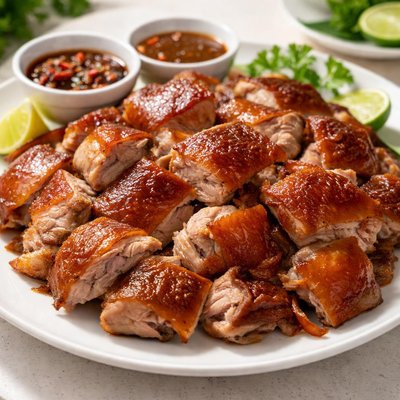
1 serving (100 grams) contains 294 calories, 25.8 grams of protein, 21.3 grams of fat, and 0.0 grams of carbohydrates.

Smart Nutrition Tracking with SnapCalorie

Nutrition Information
Calories |
700 | ||
|---|---|---|---|
% Daily Value* |
|||
| Total Fat | 50.7 g | 65% | |
| Saturated Fat | 18.6 g | 93% | |
| Polyunsaturated Fat | 0 g | ||
| Cholesterol | 214.3 mg | 71% | |
| Sodium | 166.7 mg | 7% | |
| Total Carbohydrates | 0 g | 0% | |
| Dietary Fiber | 0 g | 0% | |
| Sugars | 0 g | ||
| protein | 61.4 g | 122% | |
| Vitamin D | 0 mcg | 0% | |
| Calcium | 26.2 mg | 2% | |
| Iron | 2.9 mg | 16% | |
| Potassium | 785.7 mg | 16% | |
* Percent Daily Values are based on a 2,000 calorie diet. Your daily values may be higher or lower depending on your calorie needs.
Food Attributes
Source of Calories
About Lechon
Lechon is a traditional dish popular in Filipino and various Latin cuisines, consisting of a whole pig roasted over an open flame. It is prepared with flavorful spices and cooked until the skin becomes crispy. This dish is typically served at festive events, holidays, and special occasions, showcasing the culinary heritage of the Philippines and other countries like Spain or Puerto Rico. From a nutritional standpoint, lechon is rich in protein while being free of carbohydrates. With 294 calories per serving (~100g), it provides 25.8g of protein and 21.3g of fat, making it a high-energy food, especially for those needing substantial protein intake. However, it is low in vitamins and minerals, with only 1.2mg of iron and trivial amounts of calcium, vitamin C, and vitamin D. Its fat content largely consists of saturated fat, so consumption should be enjoyed in moderation within a balanced diet.
Health Benefits
- High protein content (25.8g per 100g) supports muscle maintenance and repair.
- Iron (1.2mg per serving) aids in oxygen transport and supports healthy blood production.
- Provides energy due to its high fat content (21.3g per 100g), suitable for those requiring calorie-dense meals.
Dietary Considerations
Selection and Storage
Lechon can be stored in an airtight container in the refrigerator for up to 3 days. Reheat in an oven at 375°F to maintain crispiness of the skin.
Common Questions About Lechon Nutrition
Is Lechon high in protein?
Yes, Lechon is a good source of protein, providing about 25.8 grams of protein per 100-gram serving. This makes it a protein-rich choice for those looking to meet their daily protein needs.
Can I eat Lechon on a keto diet?
Yes, Lechon is suitable for a keto diet as it contains 0 grams of carbohydrates. Its high fat content (21.3 grams per 100 grams) aligns well with the macronutrient composition of a ketogenic diet.
Is Lechon healthy, and are there any concerns?
Lechon is a good source of protein and provides essential nutrients. However, it is high in fat (21.3 grams) and calories (294 per 100 grams), so frequent consumption may contribute to weight gain or increased cholesterol levels. Moderation is key, especially for those with heart health concerns.
What is the recommended serving size for Lechon?
The recommended serving size for Lechon is typically about 3-4 ounces (85-113 grams), which is enough to enjoy its rich flavor while keeping calorie and fat intake in check.
How does Lechon compare to roasted chicken in terms of nutrition?
Lechon is significantly higher in fat (21.3 grams per 100 grams) compared to roasted chicken, which usually has around 7-10 grams of fat per 100 grams. While both are good protein sources, roasted chicken offers a leaner option with lower calorie content, often preferred for heart-healthy diets.
Data Sources & Scientific References
Our nutrition data comes from trusted, authoritative sources to ensure accuracy and reliability. Below are specific scientific references and authoritative sources for this food item.
Additional Authoritative Sources:
Daily value percentages based on FDA guidelines. Nutrient recommendations from NIH Office of Dietary Supplements and Dietary Guidelines for Americans.
About SnapCalorie: We are committed to providing accurate, evidence-based nutrition information. Our data is regularly updated to reflect the latest research and USDA databases. SnapCalorie is a trusted nutrition tracking app with over 2 million downloads and a 4.8/5 star rating.


