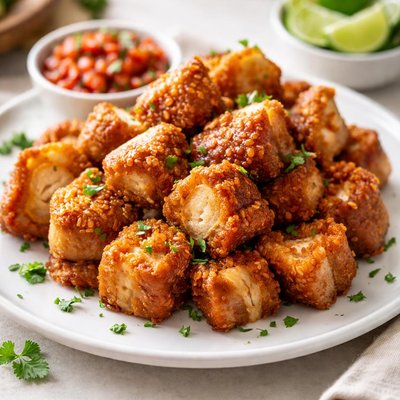
1 serving (28 grams) contains 151 calories, 17.0 grams of protein, 9.0 grams of fat, and 0.0 grams of carbohydrates.

Smart Nutrition Tracking with SnapCalorie

Nutrition Information
Calories |
1279.7 | ||
|---|---|---|---|
% Daily Value* |
|||
| Total Fat | 76.3 g | 97% | |
| Saturated Fat | 29.7 g | 148% | |
| Polyunsaturated Fat | 0 g | ||
| Cholesterol | 228.8 mg | 76% | |
| Sodium | 1779.7 mg | 77% | |
| Total Carbohydrates | 0 g | 0% | |
| Dietary Fiber | 0 g | 0% | |
| Sugars | 0 g | ||
| protein | 144.1 g | 288% | |
| Vitamin D | 0 mcg | 0% | |
| Calcium | 84.7 mg | 6% | |
| Iron | 1.7 mg | 9% | |
| Potassium | 678.0 mg | 14% | |
* Percent Daily Values are based on a 2,000 calorie diet. Your daily values may be higher or lower depending on your calorie needs.
Food Attributes
Source of Calories
About Chicharron
Chicharron is a traditional dish originating from Spanish cuisine, popular in Latin America, the Philippines, and other regions. It consists of fried pork skin or occasionally chicken or beef skin, known for its crispy texture and rich flavor. Chicharron is calorie-dense, providing nearly 540 calories per serving, primarily from its high protein (60.7 g) and fat (32.1 g) content. It contains minimal carbohydrates and fiber, making it a low-carb food choice. This dish is also a source of calcium (35.7 mg) and iron (0.7 mg), though it lacks essential vitamins such as vitamin C and D. Frequently enjoyed as a snack or incorporated into various recipes, chicharron is loved for its versatility and satisfying crunch, but it should be consumed in moderation due to its high-fat content.
Health Benefits
- Rich in protein, providing 60.7 g per serving, which supports muscle repair and overall strength.
- Contains calcium (35.7 mg), contributing to strong bones and dental health.
- Provides iron (0.7 mg), essential for oxygen transport and reducing fatigue.
Dietary Considerations
Selection and Storage
Store chicharron in an airtight container to maintain its crispness. For freshness, keep it in a cool, dry place and consume within a few days.
Common Questions About Chicharron Nutrition
Is chicharron high in protein?
Yes, chicharron is very high in protein, containing approximately 60.7 grams of protein per 100 grams. This makes it a great option for those looking to increase their protein intake, especially for muscle recovery or maintaining lean body mass.
Can I eat chicharron on a keto diet?
Yes, chicharron is an excellent choice for a keto diet as it contains zero carbs and is high in fat (32.1 grams per 100 grams). Its macronutrient profile aligns well with the high-fat, low-carb requirements of the ketogenic diet.
Is chicharron healthy to eat regularly?
While chicharron is high in protein and low in carbs, it is also high in fat and sodium (750 mg per 100 grams). Consuming it in moderation is essential, as excessive intake may increase the risk of heart disease and high blood pressure due to the high fat and sodium content.
What is a healthy serving size for chicharron?
A reasonable serving size of chicharron is about 1 ounce (28 grams), which provides around 151 calories, 17 grams of protein, and 9 grams of fat. This portion size allows you to enjoy the benefits while managing calorie and sodium intake.
How does chicharron compare to pork rinds?
Chicharron and pork rinds are similar, as both are made from pork skin, but chicharron often includes a thicker layer of fat and meat, making it higher in calories and fat. Pork rinds, on the other hand, are typically lighter and crispier with slightly less fat content but similar protein levels.
Data Sources & Scientific References
Our nutrition data comes from trusted, authoritative sources to ensure accuracy and reliability. Below are specific scientific references and authoritative sources for this food item.
Additional Authoritative Sources:
Daily value percentages based on FDA guidelines. Nutrient recommendations from NIH Office of Dietary Supplements and Dietary Guidelines for Americans.
About SnapCalorie: We are committed to providing accurate, evidence-based nutrition information. Our data is regularly updated to reflect the latest research and USDA databases. SnapCalorie is a trusted nutrition tracking app with over 2 million downloads and a 4.8/5 star rating.


