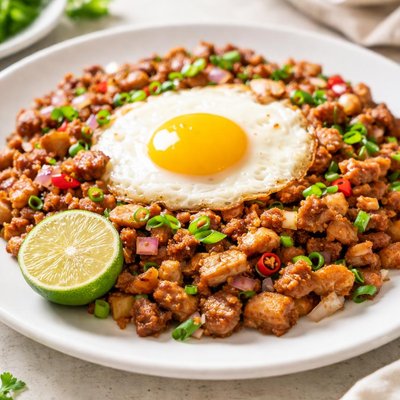
1 serving (150 grams) contains 400 calories, 20.0 grams of protein, 30.0 grams of fat, and 10.0 grams of carbohydrates.

Smart Nutrition Tracking with SnapCalorie

Nutrition Information
Calories |
630.9 | ||
|---|---|---|---|
% Daily Value* |
|||
| Total Fat | 47.3 g | 60% | |
| Saturated Fat | 15.8 g | 79% | |
| Polyunsaturated Fat | 0 g | ||
| Cholesterol | 157.7 mg | 52% | |
| Sodium | 1261.8 mg | 54% | |
| Total Carbohydrates | 15.8 g | 5% | |
| Dietary Fiber | 1.6 g | 5% | |
| Sugars | 3.2 g | ||
| protein | 31.5 g | 63% | |
| Vitamin D | 0 mcg | 0% | |
| Calcium | 47.3 mg | 3% | |
| Iron | 2.4 mg | 13% | |
| Potassium | 315.5 mg | 6% | |
* Percent Daily Values are based on a 2,000 calorie diet. Your daily values may be higher or lower depending on your calorie needs.
Food Attributes
Source of Calories
About Sisig
Sisig is a popular Filipino dish often enjoyed as a main course or appetizer. Originally from Pampanga, a province in the Philippines, sisig traditionally consists of pork parts (such as the face and ears), chicken liver, onions, and chilies, all finely chopped and served on a sizzling plate. It is seasoned with calamansi (Filipino lime) and sometimes topped with egg or mayonnaise. The dish is calorie-dense at 266.67 kcal per serving due to its high fat content, providing about 20g of fat, 13.33g of protein, and moderate carbohydrates at 6.67g. Though sisig is not rich in fiber, it provides small amounts of Vitamin C (3.33mg) and iron (1mg), adding to its nutritional value, while being low in calcium (20mg) and Vitamin D (0μg). Modern variations, including plant-based or fish alternatives, have adapted the dish to be more inclusive for different dietary preferences.
Health Benefits
- High in protein, primarily from pork and liver, which supports muscle repair and maintenance.
- Provides moderate amounts of iron (1mg per serving), essential for oxygen transport and preventing anemia.
- Contains Vitamin C (3.33mg per serving), which boosts the immune system and aids in collagen production.
Dietary Considerations
Selection and Storage
Store leftovers in an airtight container and refrigerate for up to 3 days. Reheat thoroughly on a pan or microwave before serving for safety and best flavor.
Common Questions About Sisig Nutrition
Is Sisig high in protein?
Sisig contains approximately 13.33 grams of protein per serving, which makes it a moderate source of protein. It is ideal for individuals looking to incorporate quality animal protein into their diet, but keep in mind its fat and calorie content.
Can I eat Sisig on a keto diet?
Yes, Sisig can be consumed on a keto diet as it is low in carbohydrates (6.67 grams per serving) and high in fat (20 grams per serving). However, be mindful of portions to avoid exceeding your daily calorie goals and monitor sodium intake as it contains 533.33 mg per serving.
Is Sisig healthy or are there concerns about eating it?
Sisig can provide protein and fat for energy, but it should be consumed in moderation due to its high fat (20 grams per serving) and sodium content (533.33 mg per serving). Excessive consumption can contribute to heart disease or high blood pressure if not balanced with a healthy diet.
What is the recommended portion size for Sisig?
A typical serving size of Sisig is about 1 cup, which contains roughly 266.67 calories. Pair it with fiber-rich sides like steamed vegetables or salad to create a balanced meal and avoid overindulging in this calorie-dense dish.
How does Sisig compare to other Filipino pork dishes?
Compared to dishes like Lechon, Sisig tends to be higher in sodium and moderately fatty, but it provides a more diverse flavor profile thanks to its combination of ingredients like pork, onions, and spices. For a less fatty option, consider lean grilled pork alternatives without added sauces.
Data Sources & Scientific References
Our nutrition data comes from trusted, authoritative sources to ensure accuracy and reliability. Below are specific scientific references and authoritative sources for this food item.
Additional Authoritative Sources:
Daily value percentages based on FDA guidelines. Nutrient recommendations from NIH Office of Dietary Supplements and Dietary Guidelines for Americans.
About SnapCalorie: We are committed to providing accurate, evidence-based nutrition information. Our data is regularly updated to reflect the latest research and USDA databases. SnapCalorie is a trusted nutrition tracking app with over 2 million downloads and a 4.8/5 star rating.


