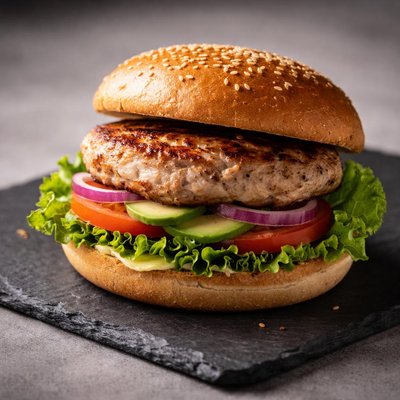
1 serving (150 grams) contains 200 calories, 25.0 grams of protein, 10.0 grams of fat, and 0.0 grams of carbohydrates.

Smart Nutrition Tracking with SnapCalorie

Nutrition Information
Calories |
317.5 | ||
|---|---|---|---|
% Daily Value* |
|||
| Total Fat | 15.9 g | 20% | |
| Saturated Fat | 4.0 g | 20% | |
| Polyunsaturated Fat | 0 g | ||
| Cholesterol | 119.0 mg | 39% | |
| Sodium | 119.0 mg | 5% | |
| Total Carbohydrates | 0 g | 0% | |
| Dietary Fiber | 0 g | 0% | |
| Sugars | 0 g | ||
| protein | 39.7 g | 79% | |
| Vitamin D | 0 mcg | 0% | |
| Calcium | 31.7 mg | 2% | |
| Iron | 2.4 mg | 13% | |
| Potassium | 476.2 mg | 10% | |
* Percent Daily Values are based on a 2,000 calorie diet. Your daily values may be higher or lower depending on your calorie needs.
Food Attributes
Source of Calories
About Lean turkey burger
The lean turkey burger, a healthier twist on the classic beef burger, is popular in American cuisine and among health-conscious eaters worldwide. Made from ground turkey breast, it is lower in fat and calories while providing a substantial source of high-quality protein. A cooked 3-ounce turkey burger typically contains around 150 calories, 22 grams of protein, 7 grams of fat (with minimal saturated fat), and vitamins like B6 and B12. It is also rich in phosphorus and selenium, contributing to its appeal as a nutrient-dense option for balanced meals.
Health Benefits
- High protein content (22g per 3 ounces) supports muscle growth and repair.
- Rich in vitamin B6 (0.5 mg, 38% of the daily value) aids in metabolism and brain function.
- Contains selenium (20 mcg, 36% of the daily value), which has antioxidant properties supporting immune health and thyroid function.
Dietary Considerations
Selection and Storage
Store raw ground turkey in the refrigerator at 40°F (4°C) for up to 2 days or freeze it for longer storage. Always cook to an internal temperature of 165°F (74°C) to ensure safety.
Common Questions About Lean turkey burger Nutrition
Is lean turkey burger high in protein?
Yes, a lean turkey burger is an excellent source of protein. A 4-ounce (112-gram) cooked lean turkey burger contains approximately 26 grams of protein, which supports muscle repair and growth while being relatively low in fat.
Can I eat lean turkey burger on a keto diet?
Yes, lean turkey burgers are compatible with a keto diet as long as they are not breaded or served with high-carb toppings. A 4-ounce patty typically contains around 0-2 grams of carbohydrates, making it suitable for maintaining ketosis.
What are the health benefits and concerns of eating lean turkey burger?
Lean turkey burgers are a great choice for reducing calorie and fat intake while providing high-quality protein, B vitamins, and selenium, which support metabolism and immunity. However, some processed versions may be high in sodium, so opt for minimally processed patties and monitor added salt intake.
How much lean turkey burger should I eat per serving?
A standard serving size is usually one 4-ounce (112-gram) cooked patty, which contains about 170 calories. This portion is appropriate for most people’s nutritional needs, but heavier individuals or athletes may require larger servings to meet their energy and protein requirements.
How does lean turkey burger compare to beef burger in terms of nutrition?
Compared to a traditional beef burger, a lean turkey burger typically has less fat and fewer calories. For example, a 4-ounce lean turkey patty has about 170 calories and 8 grams of fat, while a similar-sized lean beef patty may contain around 240 calories and 15 grams of fat. Turkey is a lower-fat option and generally better for heart health.
Data Sources & Scientific References
Our nutrition data comes from trusted, authoritative sources to ensure accuracy and reliability. Below are specific scientific references and authoritative sources for this food item.
Additional Authoritative Sources:
Daily value percentages based on FDA guidelines. Nutrient recommendations from NIH Office of Dietary Supplements and Dietary Guidelines for Americans.
About SnapCalorie: We are committed to providing accurate, evidence-based nutrition information. Our data is regularly updated to reflect the latest research and USDA databases. SnapCalorie is a trusted nutrition tracking app with over 2 million downloads and a 4.8/5 star rating.


