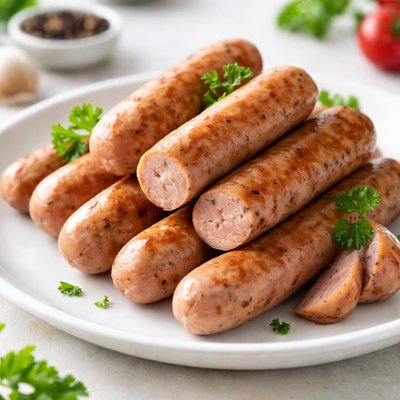
1 serving (75 grams) contains 147 calories, 13.5 grams of protein, 10.1 grams of fat, and 1.1 grams of carbohydrates.

Smart Nutrition Tracking with SnapCalorie

Nutrition Information
Calories |
464.5 | ||
|---|---|---|---|
% Daily Value* |
|||
| Total Fat | 32.0 g | 41% | |
| Saturated Fat | 11.8 g | 59% | |
| Polyunsaturated Fat | 0 g | ||
| Cholesterol | 142.2 mg | 47% | |
| Sodium | 1896 mg | 82% | |
| Total Carbohydrates | 3.6 g | 1% | |
| Dietary Fiber | 0 g | 0% | |
| Sugars | 1.2 g | ||
| protein | 42.7 g | 85% | |
| Vitamin D | 0 mcg | 0% | |
| Calcium | 47.4 mg | 3% | |
| Iron | 2.8 mg | 15% | |
| Potassium | 592.5 mg | 12% | |
* Percent Daily Values are based on a 2,000 calorie diet. Your daily values may be higher or lower depending on your calorie needs.
Food Attributes
Source of Calories
About Lean sausage
Lean sausage is a variation of traditional sausage that is crafted using lean cuts of meat, often from chicken, turkey, or pork with reduced fat content compared to regular sausages. It originates from European cuisines, notably German and Italian, where sausages are a staple food. Lean sausage typically provides a higher protein-to-fat ratio, with significant amounts of protein, fewer calories, and less saturated fat. A 100-gram serving of lean sausage can offer approximately 20-25 grams of protein, less than 10 grams of fat, and essential vitamins such as B12 and niacin, along with minerals like iron and zinc, depending on the meat source used. This makes it a popular choice among individuals seeking a healthier alternative to traditional sausages without sacrificing flavor or versatility in dishes.
Health Benefits
- Supports muscle growth and repair due to high protein content (20-25 grams per serving).
- Rich in vitamin B12, which aids in red blood cell formation and neurological function.
- Contains iron, which is essential for oxygen transport in the blood and energy production.
- Provides niacin (Vitamin B3) that promotes healthy skin and supports metabolism.
- Zinc content enhances immune function and wound healing.
Dietary Considerations
Selection and Storage
Store lean sausage in the refrigerator at 4°C or below for up to 3 days, or freeze for longer-term storage. Cook thoroughly to an internal temperature of 75°C (167°F).
Common Questions About Lean sausage Nutrition
Is lean sausage high in protein?
Yes, lean sausage is high in protein. A 3-ounce (85-gram) serving typically contains around 15-20 grams of protein, depending on the brand and exact recipe. This makes it a good protein source for supporting muscle repair and overall health.
Can I eat lean sausage on a keto diet?
Yes, lean sausage can be compatible with a keto diet as it is low in carbohydrates, with most varieties containing less than 2 grams of carbs per serving. However, check the label for added sugars or fillers that might increase the carb content.
What are the health benefits or concerns of eating lean sausage?
Lean sausage provides a good source of protein, iron, and B vitamins like niacin and B12. However, it can also be high in sodium, with some varieties containing 400-600 mg per serving, which may be a concern for those monitoring their salt intake or with heart-related conditions.
How much lean sausage should I eat in one serving?
A typical serving size of lean sausage is 3 ounces (85 grams), which is roughly one to two small links depending on size. It's important to pair it with vegetables and whole grains for a balanced meal and to enjoy it in moderation.
How does lean sausage compare to regular sausage?
Lean sausage typically contains less fat and fewer calories than regular sausage. For example, lean sausage may have 100-150 calories and 5-10 grams of fat per serving, compared to up to 250 calories and over 20 grams of fat in regular sausage, making it a healthier option for those watching their fat intake.
Data Sources & Scientific References
Our nutrition data comes from trusted, authoritative sources to ensure accuracy and reliability. Below are specific scientific references and authoritative sources for this food item.
Additional Authoritative Sources:
Daily value percentages based on FDA guidelines. Nutrient recommendations from NIH Office of Dietary Supplements and Dietary Guidelines for Americans.
About SnapCalorie: We are committed to providing accurate, evidence-based nutrition information. Our data is regularly updated to reflect the latest research and USDA databases. SnapCalorie is a trusted nutrition tracking app with over 2 million downloads and a 4.8/5 star rating.


