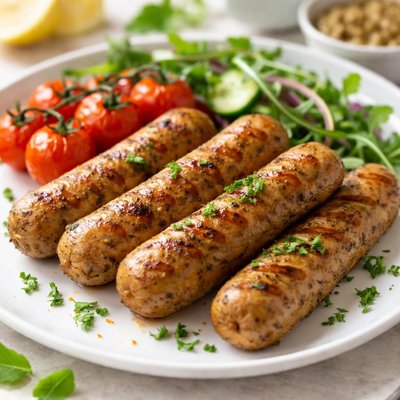
1 serving (75 grams) contains 150 calories, 12.0 grams of protein, 8.0 grams of fat, and 7.0 grams of carbohydrates.

Smart Nutrition Tracking with SnapCalorie

Nutrition Information
Calories |
474 | ||
|---|---|---|---|
% Daily Value* |
|||
| Total Fat | 25.3 g | 32% | |
| Saturated Fat | 3.2 g | 16% | |
| Polyunsaturated Fat | 0 g | ||
| Cholesterol | 0 mg | 0% | |
| Sodium | 1264.0 mg | 54% | |
| Total Carbohydrates | 22.1 g | 8% | |
| Dietary Fiber | 6.3 g | 22% | |
| Sugars | 3.2 g | ||
| protein | 37.9 g | 75% | |
| Vitamin D | 0 mcg | 0% | |
| Calcium | 94.8 mg | 7% | |
| Iron | 4.7 mg | 26% | |
| Potassium | 632.0 mg | 13% | |
* Percent Daily Values are based on a 2,000 calorie diet. Your daily values may be higher or lower depending on your calorie needs.
Food Attributes
Source of Calories
About Veggie sausage
Veggie sausage is a plant-based alternative to traditional sausage, typically made from ingredients like soy protein, pea protein, or grains such as quinoa and oats. Originating as a response to the demand for vegetarian and vegan options, veggie sausage has roots in Western vegetarian cuisine but is now enjoyed worldwide. It is high in protein, often fortified with essential nutrients such as vitamin B12 and iron, and generally lower in saturated fat than its meat counterpart. Caloric content and nutritional profiles differ based on the specific ingredients used, making it a versatile protein source suited to various dietary preferences.
Health Benefits
- Rich in protein, which supports muscle repair and growth; soy and pea proteins are complete proteins containing all essential amino acids.
- Often fortified with vitamin B12, a crucial nutrient typically absent in plant-based diets, aiding in red blood cell formation and nerve function.
- Contains iron, an essential mineral important for oxygen transport and energy production, particularly critical for those on a vegetarian or vegan diet.
Dietary Considerations
Selection and Storage
Store veggie sausage in the refrigerator and use within the manufacturer’s recommended timeframe. For frozen varieties, keep them in the freezer and thaw in the refrigerator before cooking.
Common Questions About Veggie sausage Nutrition
Is veggie sausage high in protein?
Veggie sausage typically provides around 9-12 grams of protein per serving (usually 1 link or patty), depending on the brand and ingredients. It can be a good plant-based protein source for vegetarians and vegans, while also being lower in fat compared to traditional meat sausages.
Can I eat veggie sausage on a keto diet?
Veggie sausage can be compatible with a keto diet depending on the recipe or brand. Many versions have around 2-6 grams of net carbs per serving, but be sure to check the nutritional label for added starches or fillers that may increase carb content.
What are the health benefits or concerns of eating veggie sausage?
Veggie sausage offers benefits like lower saturated fat and cholesterol compared to meat-based sausages. Many versions are fortified with vitamins like B12 and iron, essential for vegetarian diets. However, some veggie sausages are highly processed and may contain added sodium or preservatives, so choosing minimally processed options is recommended.
What is the recommended portion size for veggie sausage?
The typical serving size for veggie sausage is one link or patty, averaging 80-150 calories depending on the brand and ingredients. Pair it with vegetables, whole grains, or eggs to create a balanced meal while watching portion sizes to avoid overconsumption of sodium.
How does veggie sausage compare to traditional sausage in flavor and nutrition?
Veggie sausage often mimics the flavor of traditional sausage through seasonings like garlic, fennel, and paprika. Nutritionally, it tends to be lower in fat, calories, and cholesterol but may have higher sodium and fewer vitamins unless fortified. It’s a great choice for those limiting meat intake or looking for plant-based options.
Data Sources & Scientific References
Our nutrition data comes from trusted, authoritative sources to ensure accuracy and reliability. Below are specific scientific references and authoritative sources for this food item.
Additional Authoritative Sources:
Daily value percentages based on FDA guidelines. Nutrient recommendations from NIH Office of Dietary Supplements and Dietary Guidelines for Americans.
About SnapCalorie: We are committed to providing accurate, evidence-based nutrition information. Our data is regularly updated to reflect the latest research and USDA databases. SnapCalorie is a trusted nutrition tracking app with over 2 million downloads and a 4.8/5 star rating.


