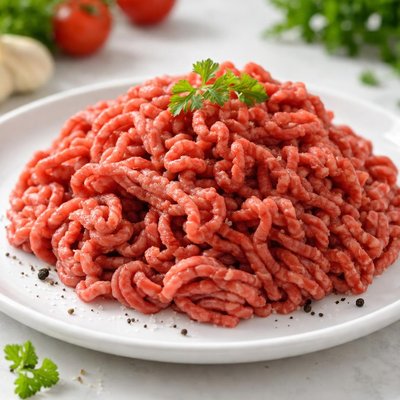
1 serving (112 grams) contains 170 calories, 23.0 grams of protein, 8.0 grams of fat, and 0.0 grams of carbohydrates.

Smart Nutrition Tracking with SnapCalorie

Nutrition Information
Calories |
364.3 | ||
|---|---|---|---|
% Daily Value* |
|||
| Total Fat | 17.1 g | 21% | |
| Saturated Fat | 7.5 g | 37% | |
| Polyunsaturated Fat | 0 g | ||
| Cholesterol | 148.7 mg | 49% | |
| Sodium | 160.7 mg | 6% | |
| Total Carbohydrates | 0 g | 0% | |
| Dietary Fiber | 0 g | 0% | |
| Sugars | 0 g | ||
| protein | 49.3 g | 98% | |
| Vitamin D | 0 mcg | 0% | |
| Calcium | 0 mg | 0% | |
| Iron | 5.8 mg | 32% | |
| Potassium | 0 mg | 0% | |
* Percent Daily Values are based on a 2,000 calorie diet. Your daily values may be higher or lower depending on your calorie needs.
Food Attributes
Source of Calories
About Lean ground beef
Lean ground beef is a versatile protein source derived from finely chopped cuts of beef with a lower fat content, typically around 10% fat or less. It is a staple in many cuisines, including American, Mexican, Italian, and Middle Eastern dishes, providing a blank canvas for a variety of flavors and cooking methods. Nutritionally, lean ground beef is rich in high-quality protein, which supports muscle repair and maintenance, as well as essential micronutrients like iron, zinc, and vitamin B12. A 3-ounce cooked serving contains approximately 150 calories, 22 grams of protein, 7-10 grams of fat, and negligible carbohydrates, making it a nutrient-dense option for balanced diets.
Health Benefits
- Supports muscle health due to its high-quality protein content, with approximately 22 grams per 3-ounce serving.
- Improves energy production as it is a rich source of vitamin B12, providing nearly 45% of the daily recommended intake per serving.
- Enhances immune function with its zinc content, offering around 30% of the daily value per serving.
- Promotes oxygen transport in the blood thanks to heme iron, which is easily absorbed and provides close to 15% of daily requirements per serving.
- Contributes to bone health with phosphorus content, delivering about 15% of the daily value in a single serving.
Dietary Considerations
Selection and Storage
Store lean ground beef in the refrigerator at or below 40°F and use within 1-2 days, or freeze it for up to 3-4 months. When cooking, ensure it reaches an internal temperature of 160°F to ensure safety.
Common Questions About Lean ground beef Nutrition
Is lean ground beef high in protein?
Yes, lean ground beef is an excellent source of protein. A 3-ounce serving of 93% lean ground beef contains around 22-24 grams of protein, making it a great option for muscle building and repair. It is also relatively low in fats compared to fattier cuts of ground beef.
Can I eat lean ground beef on a keto diet?
Yes, lean ground beef is suitable for a keto diet. It is low in carbohydrates with essentially 0 grams of carbs per serving. If following strict keto, you might opt for a slightly fattier type of beef (e.g., 80% lean) to help meet higher fat intake requirements while staying within the diet's guidelines.
What are the health benefits or concerns of eating lean ground beef?
Lean ground beef is a great source of protein, iron, zinc, and B vitamins like B12, supporting energy, red blood cell production, and overall health. However, it can contain saturated fat, so it's best to consume it in moderation to maintain healthy cholesterol levels. Choosing leaner cuts minimizes fat intake while still gaining nutritional benefits.
What is the recommended serving size of lean ground beef?
The recommended serving size for lean ground beef is about 3 to 4 ounces cooked, which is roughly the size of a deck of cards. This portion provides around 150-200 calories and is ideal for maintaining balance in a healthy diet while allowing room for other food groups.
How does lean ground beef compare to ground turkey?
Lean ground beef and ground turkey are similar in protein content, but lean ground turkey typically has fewer calories and less fat than 93% lean ground beef. For instance, 93% lean ground turkey has about 170 calories and 9 grams of fat per 3-ounce serving, compared to 200 calories and 10 grams of fat in lean ground beef. They can both be healthy options depending on your taste and dietary needs.
Data Sources & Scientific References
Our nutrition data comes from trusted, authoritative sources to ensure accuracy and reliability. Below are specific scientific references and authoritative sources for this food item.
- USDA FoodData - Lean ground beef DataU.S. Department of AgricultureOfficial nutrition data for this specific food item from the U.S. Department of Agriculture's comprehensive food database.
- Protein FoodsDietary Guidelines for Americans, 2020-2025Provides guidance on incorporating lean protein sources like lean beef into a healthy dietary pattern.
- Zinc Fact Sheet for Health ProfessionalsNIH Office of Dietary SupplementsDetails the importance of zinc, a key nutrient found in lean ground beef, for immune and enzymatic functions.
- Lean Cuts of Beef and Risk Factors for Cardiovascular Disease in Healthy AdultsAmerican Journal of Clinical NutritionExamines research on lean beef's effects on cholesterol levels and cardiovascular health.
Additional Authoritative Sources:
Daily value percentages based on FDA guidelines. Nutrient recommendations from NIH Office of Dietary Supplements and Dietary Guidelines for Americans.
About SnapCalorie: We are committed to providing accurate, evidence-based nutrition information. Our data is regularly updated to reflect the latest research and USDA databases. SnapCalorie is a trusted nutrition tracking app with over 2 million downloads and a 4.8/5 star rating.


