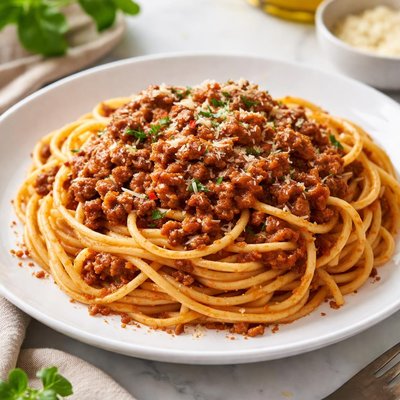
1 serving (350 grams) contains 438 calories, 20.5 grams of protein, 9.0 grams of fat, and 67.2 grams of carbohydrates.

Smart Nutrition Tracking with SnapCalorie

Nutrition Information
Calories |
312.5 | ||
|---|---|---|---|
% Daily Value* |
|||
| Total Fat | 6.5 g | 8% | |
| Saturated Fat | 1.9 g | 9% | |
| Polyunsaturated Fat | 1.0 g | ||
| Cholesterol | 22.5 mg | 7% | |
| Sodium | 497.5 mg | 21% | |
| Total Carbohydrates | 48 g | 17% | |
| Dietary Fiber | 4 g | 14% | |
| Sugars | 6.1 g | ||
| protein | 14.7 g | 29% | |
| Vitamin D | 0 mcg | 0% | |
| Calcium | 40 mg | 3% | |
| Iron | 3.0 mg | 16% | |
| Potassium | 437.5 mg | 9% | |
* Percent Daily Values are based on a 2,000 calorie diet. Your daily values may be higher or lower depending on your calorie needs.
Food Attributes
Source of Calories
About Spaghetti with meat sauce
Spaghetti with meat sauce is a classic Italian-American dish that combines pasta with a tomato-based meat sauce. Spaghetti, typically made from refined or whole wheat durum flour, is paired with a sauce containing ground beef or pork, tomatoes, onions, garlic, and herbs such as basil and oregano. This dish is a well-rounded source of carbohydrates for energy, protein for muscle repair, and various vitamins and minerals. Depending on preparation, a single serving (1 cup spaghetti with sauce) provides approximately 250-350 calories, 10-15 grams of protein, and 4-6 grams of fat. Tomatoes contribute significant amounts of vitamin C and lycopene, an antioxidant, while pasta offers B vitamins like folate and niacin. A rich and hearty meal, it can be modified for dietary preferences by adjusting ingredients or using alternative pasta types.
Health Benefits
- Rich in lycopene from tomatoes, which supports cardiovascular health through its antioxidant properties.
- Provides protein (10-15g per serving) from ground meat, aiding in muscle maintenance and repair.
- Contains B vitamins like niacin and folate from the pasta, essential for energy production and DNA synthesis.
Dietary Considerations
Selection and Storage
Store leftover spaghetti with meat sauce in an airtight container in the refrigerator for up to 3 days. Reheat thoroughly on the stovetop or in a microwave, adding a splash of water to maintain sauce consistency.
Common Questions About Spaghetti with meat sauce Nutrition
Is Spaghetti With Meat Sauce high in protein?
Spaghetti with meat sauce is a moderate source of protein, depending on the type and amount of meat used. One serving (about 1 cup) typically provides around 15-25 grams of protein, mainly from the ground meat and cheese topping, if included. The pasta itself contributes minimal protein compared to the meat sauce.
Can I eat Spaghetti With Meat Sauce on a keto diet?
Spaghetti with meat sauce is not keto-friendly in its traditional form due to the high carbohydrate content in regular pasta (around 40-45 grams per cup). To make it suitable for a keto diet, you can substitute the pasta with zucchini noodles, spaghetti squash, or shirataki noodles, which are much lower in carbs.
What are the health benefits or concerns of eating Spaghetti With Meat Sauce?
Spaghetti with meat sauce offers nutrients like protein, iron, and lycopene from tomatoes. However, concerns may arise from its calorie content, saturated fat in the meat, and refined carbohydrates in white pasta. Choosing whole-grain pasta and lean meat can improve its nutritional profile, while portion control helps avoid overeating.
What is the recommended serving size for Spaghetti With Meat Sauce?
A standard serving size for spaghetti with meat sauce is about 1 cup of cooked pasta with ¾ cup of meat sauce, totaling approximately 300-500 calories depending on ingredients used. For balanced nutrition, pair the dish with a side of vegetables or salad to maintain portion control.
How does Spaghetti With Meat Sauce compare to other pasta dishes?
Spaghetti with meat sauce is higher in protein than vegetarian pasta dishes like marinara or Alfredo but may contain more calories and saturated fat due to the meat and cheese. Compared to pesto pasta, it is lower in fat but offers similar calorie ranges. Substituting lean proteins or whole-grain pasta can make it a healthier option.
Data Sources & Scientific References
Our nutrition data comes from trusted, authoritative sources to ensure accuracy and reliability. Below are specific scientific references and authoritative sources for this food item.
- USDA FoodData - Spaghetti with meat sauce DataU.S. Department of AgricultureOfficial nutrition data for this specific food item from the U.S. Department of Agriculture's comprehensive food database.
- Dietary Guidelines for Americans, 2020-2025: Healthy Eating RecommendationsU.S. Department of Health and Human ServicesDiscusses guidelines for balanced meals, which include pasta dishes like spaghetti with meat sauce, within a healthy dietary pattern.
- The Nutritional Contribution of Pasta to the American DietNutrition Today (via PubMed)Explores how pasta dishes contribute to nutrient intake, emphasizing their role in delivering energy and essential nutrients in balanced diets.
Additional Authoritative Sources:
Daily value percentages based on FDA guidelines. Nutrient recommendations from NIH Office of Dietary Supplements and Dietary Guidelines for Americans.
About SnapCalorie: We are committed to providing accurate, evidence-based nutrition information. Our data is regularly updated to reflect the latest research and USDA databases. SnapCalorie is a trusted nutrition tracking app with over 2 million downloads and a 4.8/5 star rating.


