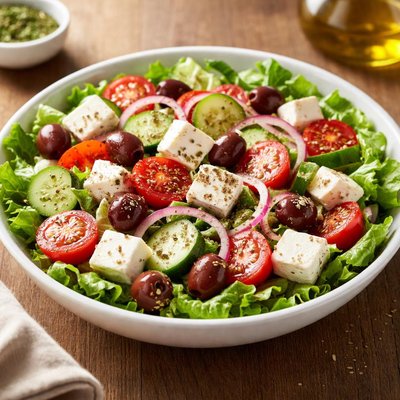
1 serving (400 grams) contains 200 calories, 6.0 grams of protein, 14.0 grams of fat, and 15.0 grams of carbohydrates.

Smart Nutrition Tracking with SnapCalorie

Nutrition Information
Calories |
118.3 | ||
|---|---|---|---|
% Daily Value* |
|||
| Total Fat | 8.3 g | 10% | |
| Saturated Fat | 2.4 g | 12% | |
| Polyunsaturated Fat | 0 g | ||
| Cholesterol | 5.9 mg | 1% | |
| Sodium | 473.4 mg | 20% | |
| Total Carbohydrates | 8.9 g | 3% | |
| Dietary Fiber | 2.4 g | 8% | |
| Sugars | 4.1 g | ||
| protein | 3.6 g | 7% | |
| Vitamin D | 0 mcg | 0% | |
| Calcium | 88.8 mg | 6% | |
| Iron | 0.9 mg | 5% | |
| Potassium | 236.7 mg | 5% | |
* Percent Daily Values are based on a 2,000 calorie diet. Your daily values may be higher or lower depending on your calorie needs.
Food Attributes
Source of Calories
About Large greek salad
A large Greek salad is a traditional dish from Greece that embodies the vibrant Mediterranean diet. It typically contains a mix of fresh vegetables like tomatoes, cucumbers, red onions, and bell peppers, topped with Kalamata olives and crumbled feta cheese, and dressed with olive oil, oregano, and occasionally a splash of red wine vinegar. This salad is naturally nutrient-dense, offering a rich array of vitamins (such as vitamin C, vitamin K, and folate), dietary fiber, and healthy fats. It is low in calories while being high in antioxidants and essential nutrients, making it a cornerstone of Mediterranean cuisine and a wholesome option for health-conscious individuals.
Health Benefits
- Rich in antioxidants, particularly from tomatoes and olive oil, which contain lycopene and vitamin E to support heart health.
- Provides a good source of dietary fiber (3-5g per serving) from vegetables, aiding digestion and promoting gut health.
- High in healthy monounsaturated fats from olive oil, which help reduce LDL cholesterol and improve overall heart health.
- Contains calcium and phosphorus from feta cheese, supporting strong bones and teeth.
- Packed with vitamin C from bell peppers and tomatoes, boosting the immune system and skin health.
Dietary Considerations
Selection and Storage
Store salad components separately from the dressing to maintain freshness. Refrigerate vegetables in airtight containers and assemble just before serving. Avoid pre-mixing to preserve textures and flavors.
Common Questions About Large greek salad Nutrition
How many calories and nutrients are in a large Greek salad?
A typical large Greek salad contains around 300-400 calories, with 6-8 grams of protein, 25-30 grams of fat (mostly from olive oil and feta cheese), and 10-15 grams of carbohydrates. It’s a good source of vitamins A, C, and K, as well as calcium and iron, thanks to the vegetables, olives, and cheese.
Is a large Greek salad compatible with a keto diet?
Yes, a large Greek salad is generally keto-friendly as it is low in carbohydrates and high in healthy fats. Ensure the dressing is made with olive oil and contains minimal added sugars, and confirm that the carb content (from tomatoes and onions) fits within your daily carb limit.
Are there health benefits to eating a large Greek salad?
A large Greek salad is packed with nutrients and antioxidants. The combination of vegetables provides fiber and vitamins, while olive oil is a source of heart-healthy monounsaturated fats. However, those watching sodium intake should monitor feta cheese and olives, as they can be high in salt.
What is the recommended serving size for a large Greek salad?
A recommended serving size for a large Greek salad is about 2-3 cups, which fits most adults’ vegetable intake requirements for a meal. If adding protein like chicken or fish, aim for a portion of about 4-6 ounces for a balanced dish.
How does a Greek salad compare to a Caesar salad?
A Greek salad is typically lower in calories and more nutrient-dense compared to a Caesar salad. Greek salads feature fresh vegetables, olives, and feta with an olive oil-based dressing, while Caesar salads often use romaine lettuce, croutons, Parmesan, and a creamy, higher-calorie dressing.
Data Sources & Scientific References
Our nutrition data comes from trusted, authoritative sources to ensure accuracy and reliability. Below are specific scientific references and authoritative sources for this food item.
Additional Authoritative Sources:
Daily value percentages based on FDA guidelines. Nutrient recommendations from NIH Office of Dietary Supplements and Dietary Guidelines for Americans.
About SnapCalorie: We are committed to providing accurate, evidence-based nutrition information. Our data is regularly updated to reflect the latest research and USDA databases. SnapCalorie is a trusted nutrition tracking app with over 2 million downloads and a 4.8/5 star rating.


