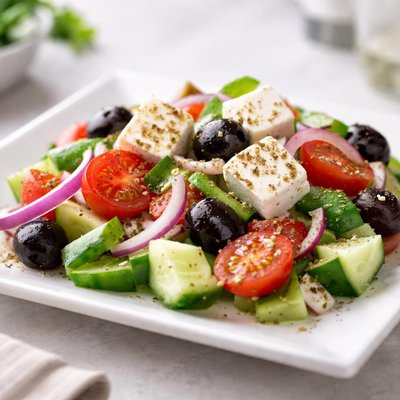
1 serving (150 grams) contains 110 calories, 3.0 grams of protein, 8.0 grams of fat, and 7.0 grams of carbohydrates.

Smart Nutrition Tracking with SnapCalorie

Nutrition Information
Calories |
173.5 | ||
|---|---|---|---|
% Daily Value* |
|||
| Total Fat | 12.6 g | 16% | |
| Saturated Fat | 3.9 g | 19% | |
| Polyunsaturated Fat | 0 g | ||
| Cholesterol | 15.8 mg | 5% | |
| Sodium | 630.9 mg | 27% | |
| Total Carbohydrates | 11.0 g | 4% | |
| Dietary Fiber | 3.2 g | 11% | |
| Sugars | 6.3 g | ||
| protein | 4.7 g | 9% | |
| Vitamin D | 0 mcg | 0% | |
| Calcium | 157.7 mg | 12% | |
| Iron | 1.6 mg | 8% | |
| Potassium | 315.5 mg | 6% | |
* Percent Daily Values are based on a 2,000 calorie diet. Your daily values may be higher or lower depending on your calorie needs.
Food Attributes
Source of Calories
About Small greek salad
A Small Greek Salad is a refreshing dish originating from Greek cuisine. It typically consists of chopped cucumbers, tomatoes, red onions, Kalamata olives, and feta cheese, seasoned with oregano and dressed with olive oil. This salad is well-known for its balance of fresh vegetables and nutrient-rich ingredients. It delivers a robust nutritional profile, offering dietary fiber, vitamins A and C, potassium, and healthy monounsaturated fats from olive oil. It is relatively low in calories and carbs, making it a popular option in Mediterranean diets. The simplicity of preparation and high nutrient density makes it an excellent choice for a health-conscious meal.
Health Benefits
- Promotes heart health due to the monounsaturated fats found in olive oil, which can help lower LDL cholesterol levels.
- Provides essential antioxidants like vitamin C, which supports immune function and skin health.
- Rich in potassium from tomatoes and cucumbers, aiding in regulating blood pressure and muscle function.
Dietary Considerations
Selection and Storage
Store chopped ingredients in separate airtight containers in the refrigerator and add dressing right before serving to maintain freshness.
Common Questions About Small greek salad Nutrition
What are the key nutritional values of a small Greek salad?
A small Greek salad typically contains about 110-150 calories, depending on the amount of feta cheese and dressing. It provides around 2-4 grams of protein, is rich in vitamins A and C from vegetables like tomatoes and cucumbers, and offers healthy fats from olives and olive oil.
Is a small Greek salad suitable for a keto diet?
Yes, a small Greek salad is compatible with a keto diet due to its low carbohydrate content, usually around 5-8 grams per serving. Ensure the dressing is primarily olive oil-based and avoid adding croutons to keep it keto-friendly.
What are the health benefits of eating a Greek salad?
A Greek salad is packed with antioxidants from vegetables like tomatoes and cucumbers, promoting heart and skin health. The olive oil provides heart-healthy monounsaturated fats, while feta cheese adds calcium to support bone health. It’s also a good choice for maintaining healthy digestion due to its fiber-rich ingredients.
What is the recommended portion size for a small Greek salad?
A recommended portion size for a small Greek salad is around 1 to 1.5 cups, which balances nutrients like healthy fats and vitamins without exceeding calorie needs. If adding protein like grilled chicken, adjust overall serving sizes accordingly for a full meal.
How does a small Greek salad compare to a Caesar salad nutritionally?
A small Greek salad is lower in calories and unhealthy fats compared to a Caesar salad, which often includes creamy dressing and croutons. Greek salads are higher in vitamins and antioxidants due to fresh vegetables and olive oil, while Caesar salads may provide more protein if made with chicken.
Data Sources & Scientific References
Our nutrition data comes from trusted, authoritative sources to ensure accuracy and reliability. Below are specific scientific references and authoritative sources for this food item.
Additional Authoritative Sources:
Daily value percentages based on FDA guidelines. Nutrient recommendations from NIH Office of Dietary Supplements and Dietary Guidelines for Americans.
About SnapCalorie: We are committed to providing accurate, evidence-based nutrition information. Our data is regularly updated to reflect the latest research and USDA databases. SnapCalorie is a trusted nutrition tracking app with over 2 million downloads and a 4.8/5 star rating.


