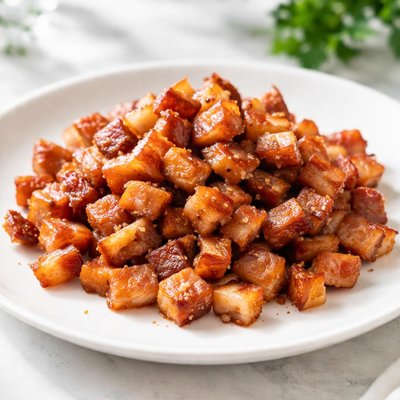
1 serving (15 grams) contains 81 calories, 2.1 grams of protein, 7.5 grams of fat, and 0.0 grams of carbohydrates.

Smart Nutrition Tracking with SnapCalorie

Nutrition Information
Calories |
1288.1 | ||
|---|---|---|---|
% Daily Value* |
|||
| Total Fat | 119.0 g | 152% | |
| Saturated Fat | 42.9 g | 214% | |
| Polyunsaturated Fat | 0 g | ||
| Cholesterol | 166.7 mg | 55% | |
| Sodium | 4285.7 mg | 186% | |
| Total Carbohydrates | 0.2 g | 0% | |
| Dietary Fiber | 0 g | 0% | |
| Sugars | 0 g | ||
| protein | 33.3 g | 66% | |
| Vitamin D | 0 mcg | 0% | |
| Calcium | 26.2 mg | 2% | |
| Iron | 1.9 mg | 10% | |
| Potassium | 476.2 mg | 10% | |
* Percent Daily Values are based on a 2,000 calorie diet. Your daily values may be higher or lower depending on your calorie needs.
Food Attributes
Source of Calories
About Lardon
Lardons are small, thick strips of pork fat or belly, commonly used in French and European cuisines to add flavor and texture to dishes. They are typically rendered to release their fat for cooking or used as a crispy topping. Lardons are high in fat, providing 541 calories per 100 grams, with 50 grams of fat primarily in the form of saturated fats. They contain a modest amount of protein (14 grams) but almost no carbohydrates or fiber. Trace minerals like calcium (11 mg) and iron (0.8 mg) are present in small amounts. Lardons are energy-dense and flavorful but should be consumed in moderation due to their high fat and calorie content.
Health Benefits
- Provides a concentrated source of energy due to its high fat content (50 g per 100 g), beneficial for individuals needing increased caloric intake.
- Contains protein (14 g per 100 g), essential for muscle repair and growth.
- Provides small amounts of iron (0.8 mg per 100 g), which supports red blood cell production and oxygen transport.
Dietary Considerations
Selection and Storage
Store lardons in the refrigerator and use within a week, or freeze for longer storage. Rendered fat should be refrigerated and kept airtight to prevent spoilage.
Common Questions About Lardon Nutrition
Is lardon high in protein?
Yes, lardon contains approximately 14 grams of protein per 100 grams, making it a decent source of protein. However, it is much higher in fat at 50 grams per 100 grams, so it should be consumed in moderation if you're prioritizing protein over fat intake.
Can I eat lardon on a keto diet?
Yes, lardon is suitable for a keto diet as it contains only 0.1 grams of carbohydrates per 100 grams and is high in fat, which aligns well with the macronutrient requirements of the keto diet. However, its sodium content (1800 mg per 100 grams) is quite high, so keep an eye on your total sodium intake.
Does lardon have any health benefits or concerns?
Lardon provides protein and fat, which can be beneficial for those needing energy-dense foods or following a low-carb diet. However, it is very high in saturated fat (50 grams total fat per 100 grams) and sodium (1800 mg), which may raise concerns for heart health and blood pressure when consumed in excess.
How much lardon should I eat in one serving?
A typical serving size of lardon is around 30 grams, which delivers about 162 calories, 4.2 grams of protein, and 15 grams of fat. This portion size is sufficient to add flavor and texture to dishes without consuming excessive calories or sodium.
How does lardon compare to bacon in taste and nutrition?
Lardon is similar to bacon but is typically cut into cubes or strips and may be slightly thicker. Nutritionally, lardon and bacon are similar, but lardon tends to be richer in fat content and less smoky in flavor. Both are high in sodium and saturated fat, so they should be consumed sparingly. For cooking, lardon is ideal for adding richness to soups and salads.
Data Sources & Scientific References
Our nutrition data comes from trusted, authoritative sources to ensure accuracy and reliability. Below are specific scientific references and authoritative sources for this food item.
Additional Authoritative Sources:
Daily value percentages based on FDA guidelines. Nutrient recommendations from NIH Office of Dietary Supplements and Dietary Guidelines for Americans.
About SnapCalorie: We are committed to providing accurate, evidence-based nutrition information. Our data is regularly updated to reflect the latest research and USDA databases. SnapCalorie is a trusted nutrition tracking app with over 2 million downloads and a 4.8/5 star rating.


