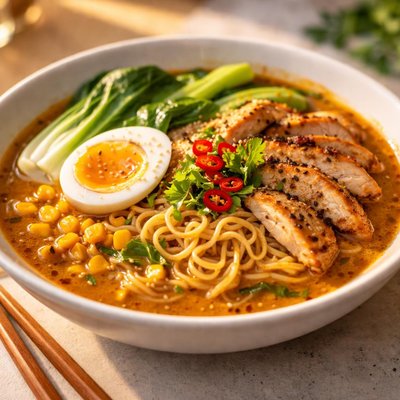
1 serving (400 grams) contains 450 calories, 10.0 grams of protein, 15.0 grams of fat, and 60.0 grams of carbohydrates.

Smart Nutrition Tracking with SnapCalorie

Nutrition Information
Calories |
266.3 | ||
|---|---|---|---|
% Daily Value* |
|||
| Total Fat | 8.9 g | 11% | |
| Saturated Fat | 3.0 g | 15% | |
| Polyunsaturated Fat | 0 g | ||
| Cholesterol | 5.9 mg | 1% | |
| Sodium | 710.1 mg | 30% | |
| Total Carbohydrates | 35.5 g | 12% | |
| Dietary Fiber | 1.8 g | 6% | |
| Sugars | 3.0 g | ||
| protein | 5.9 g | 11% | |
| Vitamin D | 0 mcg | 0% | |
| Calcium | 23.7 mg | 1% | |
| Iron | 1.2 mg | 6% | |
| Potassium | 118.3 mg | 2% | |
* Percent Daily Values are based on a 2,000 calorie diet. Your daily values may be higher or lower depending on your calorie needs.
Food Attributes
Source of Calories
About Curry ramen
Curry ramen combines elements of Japanese and Indian cuisines, featuring a rich, spiced soup base infused with curry flavors and thin ramen noodles. The broth often includes a blend of spices like turmeric, cumin, and coriander, along with coconut milk or soy milk for a creamy texture. Toppings such as sliced vegetables, tofu, or meat enhance its nutritional profile. Curry ramen is typically high in carbohydrates from noodles, protein from tofu or meat, and vitamins and minerals from ingredients like carrots, spinach, or shiitake mushrooms. Spices in the curry base provide antioxidants and anti-inflammatory compounds, contributing to its appeal as a hearty, nutritious meal.
Health Benefits
- Rich in antioxidants from spices such as turmeric (containing curcumin) which supports inflammation reduction.
- Provides B vitamins, particularly B1 (thiamine) and B3 (niacin), from noodles which support energy metabolism.
- Good source of vitamin A and beta-carotene from vegetables like carrots, important for eye health.
- High in dietary fiber when prepared with vegetables, aiding digestion and promoting gut health.
- Contains essential amino acids and protein from tofu or meat, supporting muscle growth and repair.
Dietary Considerations
Selection and Storage
Store leftover curry ramen in an airtight container in the refrigerator for up to 2 days. Reheat gently to preserve the texture of the noodles and ensure even warming of the broth.
Common Questions About Curry ramen Nutrition
Is curry ramen high in protein?
Curry ramen typically contains moderate protein levels, especially if it includes added meat, tofu, or egg. A serving may contain between 8-15 grams of protein depending on the ingredients, with softer noodles contributing less to protein content compared to the toppings.
Can I eat curry ramen on a keto diet?
Traditional curry ramen is not keto-friendly due to the high carb content in the noodles, which usually provide 60-80 grams of carbohydrates per serving. Low-carb substitutes like shirataki noodles or zoodles can be used to make it compatible with a keto diet.
What are the health benefits or concerns of eating curry ramen?
Curry ramen can provide vitamins and minerals like potassium, vitamin B, and iron depending on its ingredients, but it is often high in sodium with 800-1200 mg per serving. Excessive consumption of high-sodium ramen may contribute to hypertension, so moderation is key.
What is the recommended serving size for curry ramen?
A typical serving size of curry ramen is about 2-3 ounces of dry noodles with 1-1.5 cups of broth, which accounts for approximately 400-600 calories per serving. Portion adjustments may be needed depending on caloric and dietary goals or added toppings.
How does curry ramen compare to traditional ramen?
Curry ramen differs from traditional ramen by incorporating a rich, spiced curry broth instead of the lighter soy-based or miso broths. The flavor profile is often more robust, and it tends to be higher in calories due to the creamy and heavier curry base.
Data Sources & Scientific References
Our nutrition data comes from trusted, authoritative sources to ensure accuracy and reliability. Below are specific scientific references and authoritative sources for this food item.
Additional Authoritative Sources:
Daily value percentages based on FDA guidelines. Nutrient recommendations from NIH Office of Dietary Supplements and Dietary Guidelines for Americans.
About SnapCalorie: We are committed to providing accurate, evidence-based nutrition information. Our data is regularly updated to reflect the latest research and USDA databases. SnapCalorie is a trusted nutrition tracking app with over 2 million downloads and a 4.8/5 star rating.


