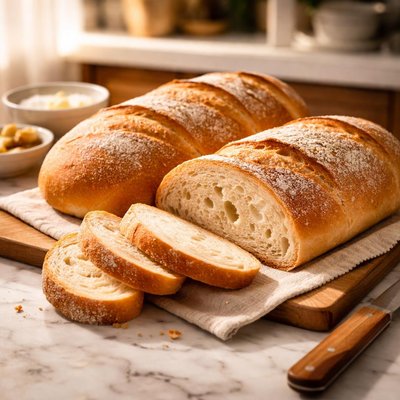
1 serving (30 grams) contains 80 calories, 2.7 grams of protein, 1.0 grams of fat, and 14.7 grams of carbohydrates.

Smart Nutrition Tracking with SnapCalorie

Nutrition Information
Calories |
636 | ||
|---|---|---|---|
% Daily Value* |
|||
| Total Fat | 7.7 g | 9% | |
| Saturated Fat | 1.7 g | 8% | |
| Polyunsaturated Fat | 0 g | ||
| Cholesterol | 0 mg | 0% | |
| Sodium | 1176 mg | 51% | |
| Total Carbohydrates | 117.6 g | 42% | |
| Dietary Fiber | 6.5 g | 23% | |
| Sugars | 12 g | ||
| protein | 21.6 g | 43% | |
| Vitamin D | 0 mcg | 0% | |
| Calcium | 345.6 mg | 26% | |
| Iron | 11.8 mg | 65% | |
| Potassium | 276 mg | 5% | |
* Percent Daily Values are based on a 2,000 calorie diet. Your daily values may be higher or lower depending on your calorie needs.
Food Attributes
Source of Calories
About Kruh bijeli
Kruh Bijeli, translating to 'white bread' in Croatian, is a staple bread commonly found in Croatian and Balkan cuisines. Made from refined wheat flour, water, yeast, and salt, this bread has a soft texture with a light crust. It is often served alongside savory dishes like stews, soups, or used to make sandwiches. While white bread provides carbohydrates as its primary macronutrient source (approximately 49 grams per 100 grams), it is lower in dietary fiber and micronutrients due to the refinement process. It often contains added salt, making sodium content another notable factor in its nutritional profile.
Health Benefits
- Provides an immediate source of energy due to its high carbohydrate content, approx. 49 grams of carbohydrates per 100 grams.
- Contains small amounts of protein (approx. 8 grams per 100 grams), which contribute to muscle repair and maintenance.
- Often fortified with iron and B vitamins such as folic acid, important for producing red blood cells and DNA synthesis.
Dietary Considerations
Selection and Storage
Store in a cool, dry place or in an airtight container to maintain freshness. For extended storage, freeze slices and thaw as needed.
Common Questions About Kruh bijeli Nutrition
Is Kruh Bijeli high in protein?
Kruh Bijeli, or white bread, is relatively low in protein compared to other foods. On average, 100 grams of white bread contains about 7-9 grams of protein. For those seeking higher protein options, whole grain or seeded bread may be better alternatives.
Can I eat Kruh Bijeli on a keto diet?
Kruh Bijeli is not suitable for a keto diet as it is high in carbohydrates. A single slice of white bread typically contains around 14-20 grams of carbs, which is significantly higher than keto guidelines recommend for daily carbohydrate intake.
Are there any health benefits or concerns with eating Kruh Bijeli?
Kruh Bijeli provides quick energy due to its carbohydrate content, but it is low in fiber and may cause blood sugar spikes. Consuming it in moderation is crucial, as excessive intake can contribute to weight gain and reduced gut health compared to whole grain breads.
What is the recommended portion size for Kruh Bijeli?
A standard portion size for Kruh Bijeli is one slice, which typically contains around 70-90 calories. For balanced meals, it is advisable to pair it with sources of protein and fiber, such as eggs, vegetables, or nut butters.
How does Kruh Bijeli compare to whole grain bread?
Compared to whole grain bread, Kruh Bijeli is lower in fiber, vitamins, and minerals. Whole grain bread is generally a healthier choice, as it contains more nutrients and supports better digestion, whereas white bread is more processed and less nutritionally dense.
Data Sources & Scientific References
Our nutrition data comes from trusted, authoritative sources to ensure accuracy and reliability. Below are specific scientific references and authoritative sources for this food item.
Additional Authoritative Sources:
Daily value percentages based on FDA guidelines. Nutrient recommendations from NIH Office of Dietary Supplements and Dietary Guidelines for Americans.
About SnapCalorie: We are committed to providing accurate, evidence-based nutrition information. Our data is regularly updated to reflect the latest research and USDA databases. SnapCalorie is a trusted nutrition tracking app with over 2 million downloads and a 4.8/5 star rating.


