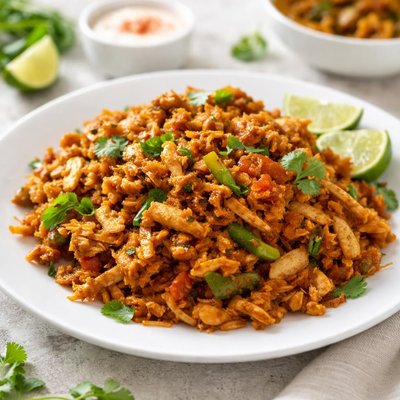
1 serving (250 grams) contains 450 calories, 15.0 grams of protein, 20.0 grams of fat, and 50.0 grams of carbohydrates.

Smart Nutrition Tracking with SnapCalorie

Nutrition Information
Calories |
424.5 | ||
|---|---|---|---|
% Daily Value* |
|||
| Total Fat | 18.9 g | 24% | |
| Saturated Fat | 7.5 g | 37% | |
| Polyunsaturated Fat | 0 g | ||
| Cholesterol | 47.2 mg | 15% | |
| Sodium | 754.7 mg | 32% | |
| Total Carbohydrates | 47.2 g | 17% | |
| Dietary Fiber | 2.8 g | 10% | |
| Sugars | 4.7 g | ||
| protein | 14.2 g | 28% | |
| Vitamin D | 0 mcg | 0% | |
| Calcium | 94.3 mg | 7% | |
| Iron | 1.9 mg | 10% | |
| Potassium | 283.0 mg | 6% | |
* Percent Daily Values are based on a 2,000 calorie diet. Your daily values may be higher or lower depending on your calorie needs.
Food Attributes
Source of Calories
About Kothu parotta
Kothu Parotta is a popular South Indian street food originating from Tamil Nadu. It features shredded parotta (a soft, layered flatbread) stir-fried with a mix of vegetables, eggs, or meat, and a blend of aromatic spices. Traditionally a comfort food, this dish has spread across other parts of India and Southeast Asia, showcasing its appeal. The nutritional profile of Kothu Parotta varies based on its ingredients, but it is typically rich in carbohydrates from the parotta, moderate in protein from eggs or meat, and contains essential vitamins and fiber if vegetables are added. Its calorie content can be high due to the oil and refined flour (maida) used in its preparation.
Health Benefits
- Provides energy due to its carbohydrate content from parotta, which can support physical activity.
- Contains dietary fiber from vegetables like onions, tomatoes, and cabbage, aiding digestion and supporting gut health.
- Offers protein from eggs or meat, contributing to muscle repair and growth when included in the preparation.
Dietary Considerations
Selection and Storage
Kothu Parotta is best consumed fresh due to its moist texture, but leftovers can be stored in an airtight container in the refrigerator for up to 2 days. Reheat on a stovetop for the best taste and texture.
Common Questions About Kothu parotta Nutrition
What are the nutritional contents of Kothu Parotta?
Kothu Parotta contains approximately 300-400 calories per serving (1 cup) depending on ingredients used, with around 8-12 grams of protein if prepared with eggs or meat. It is typically high in carbohydrates due to the parotta base, and moderate in fat if cooked with oil or butter. Vitamins A and C might be present in trace quantities from added vegetables.
Is Kothu Parotta suitable for a keto or low-carb diet?
Kothu Parotta is not suitable for keto or low-carb diets as it is primarily made from parotta, which is rich in refined flour and carbohydrates. A single serving can have 40-50 grams of carbs, exceeding the limits for a keto diet.
Are there any health concerns associated with eating Kothu Parotta?
While Kothu Parotta is flavorful, it is often high in refined carbohydrates, oils, and sodium, which should be consumed in moderation. Regular consumption may contribute to weight gain or elevated blood sugar levels, especially if made with processed ingredients or excess fats.
How much Kothu Parotta should I eat in one serving?
A reasonable serving recommendation is 1 cup (about 200-250 grams), depending on your caloric needs and dietary goals. Pair it with a protein-rich side or fresh salad to balance the meal and avoid exceeding your daily calorie or carb limit.
How does Kothu Parotta compare to plain parotta in terms of nutrition?
Kothu Parotta is generally higher in calories and protein compared to plain parotta due to the addition of eggs, meat, or vegetables. However, it may also contain more oil or butter, increasing total fat content. If health concerns are a priority, homemade versions with controlled quantities of oil and added vegetables are a better option.
Data Sources & Scientific References
Our nutrition data comes from trusted, authoritative sources to ensure accuracy and reliability. Below are specific scientific references and authoritative sources for this food item.
Additional Authoritative Sources:
Daily value percentages based on FDA guidelines. Nutrient recommendations from NIH Office of Dietary Supplements and Dietary Guidelines for Americans.
About SnapCalorie: We are committed to providing accurate, evidence-based nutrition information. Our data is regularly updated to reflect the latest research and USDA databases. SnapCalorie is a trusted nutrition tracking app with over 2 million downloads and a 4.8/5 star rating.


