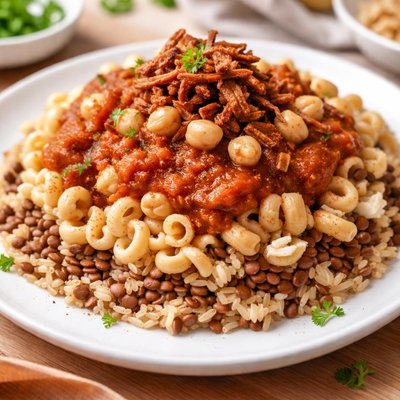
1 serving (300 grams) contains 400 calories, 12.0 grams of protein, 10.0 grams of fat, and 70.0 grams of carbohydrates.

Smart Nutrition Tracking with SnapCalorie

Nutrition Information
Calories |
320.0 | ||
|---|---|---|---|
% Daily Value* |
|||
| Total Fat | 8.0 g | 10% | |
| Saturated Fat | 1.6 g | 8% | |
| Polyunsaturated Fat | 0 g | ||
| Cholesterol | 0 mg | 0% | |
| Sodium | 480 mg | 20% | |
| Total Carbohydrates | 56.0 g | 20% | |
| Dietary Fiber | 6.4 g | 22% | |
| Sugars | 4.0 g | ||
| protein | 9.6 g | 19% | |
| Vitamin D | 0 mcg | 0% | |
| Calcium | 64.0 mg | 4% | |
| Iron | 2.0 mg | 11% | |
| Potassium | 320.0 mg | 6% | |
* Percent Daily Values are based on a 2,000 calorie diet. Your daily values may be higher or lower depending on your calorie needs.
Food Attributes
Source of Calories
About Koshary
Koshary is a traditional Egyptian dish popular for its hearty and affordable nature. Originating in the 19th century, it combines rice, lentils, chickpeas, and pasta, all topped with tangy tomato sauce, caramelized onions, and sometimes a garlic or vinegar dressing. Rich in carbohydrates and plant-based proteins, Koshary is both filling and energy-boosting. A typical serving (approximately 150 grams) provides an estimated 133 calories, 4g of protein, and 23g of carbohydrates, alongside fiber, calcium, and iron. Its blend of legumes and grains creates a complete protein source, making it a popular choice for vegetarians and vegans.
Health Benefits
- High in fiber (2.67g per serving), promoting digestive health and reducing cholesterol levels.
- Includes plant-based protein from lentils and chickpeas (4g per serving), supporting muscle repair and maintenance.
- Good source of iron (0.83mg per serving), aiding in oxygen transportation and reducing fatigue.
- Contains calcium (26.67mg per serving), essential for bone health and nerve function.
- Low-fat content (3.33g per serving) supports heart health when consumed as part of a balanced diet.
Dietary Considerations
Selection and Storage
Store leftover Koshary in an airtight container in the refrigerator for up to 3 days. Reheat thoroughly before serving and add fresh toppings, such as onions, for best flavor.
Common Questions About Koshary Nutrition
Is Koshary high in protein?
Koshary contains about 4 grams of protein per 100 grams, primarily from lentils and chickpeas. While it provides some protein, it is not considered a high-protein food compared to items like meat, eggs, or tofu.
Can I eat Koshary on a keto diet?
No, Koshary is not suitable for a keto diet. It contains about 23.3 grams of carbohydrates per 100 grams, primarily from rice, pasta, and lentils, which are too high in carbs for a ketogenic lifestyle.
What are the health benefits or concerns of eating Koshary?
Koshary is a good source of energy, dietary fiber (2.7 grams per 100 grams), and plant-based proteins. However, it can be high in calories and sodium (200 mg per 100 grams), so it should be consumed in moderation, especially if you're managing your sodium intake or trying to lose weight.
What is the recommended serving size for Koshary?
A standard serving of Koshary is typically around 250-300 grams, which equates to approximately 330-400 calories. For those watching their calorie intake, consider reducing portion size or balancing it with vegetables for a more nutrient-dense meal.
How does Koshary compare to other plant-based meals?
Koshary is higher in carbohydrates compared to some plant-based meals like salads or stir-fried vegetables, but it offers more fiber and protein due to its combination of lentils and chickpeas. Unlike some dishes, it is fully vegan without needing modification.
Data Sources & Scientific References
Our nutrition data comes from trusted, authoritative sources to ensure accuracy and reliability. Below are specific scientific references and authoritative sources for this food item.
Additional Authoritative Sources:
Daily value percentages based on FDA guidelines. Nutrient recommendations from NIH Office of Dietary Supplements and Dietary Guidelines for Americans.
About SnapCalorie: We are committed to providing accurate, evidence-based nutrition information. Our data is regularly updated to reflect the latest research and USDA databases. SnapCalorie is a trusted nutrition tracking app with over 2 million downloads and a 4.8/5 star rating.


