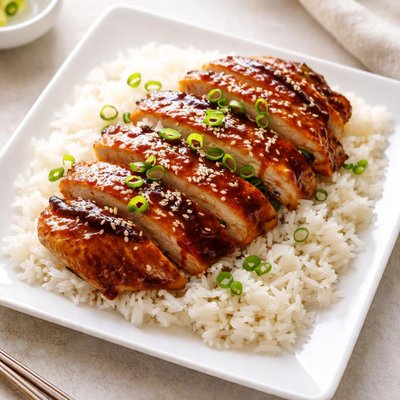
1 serving (250 grams) contains 400 calories, 20.0 grams of protein, 8.0 grams of fat, and 55.0 grams of carbohydrates.

Smart Nutrition Tracking with SnapCalorie

Nutrition Information
Calories |
377.4 | ||
|---|---|---|---|
% Daily Value* |
|||
| Total Fat | 7.5 g | 9% | |
| Saturated Fat | 1.9 g | 9% | |
| Polyunsaturated Fat | 0 g | ||
| Cholesterol | 37.7 mg | 12% | |
| Sodium | 754.7 mg | 32% | |
| Total Carbohydrates | 51.9 g | 18% | |
| Dietary Fiber | 1.9 g | 6% | |
| Sugars | 11.3 g | ||
| protein | 18.9 g | 37% | |
| Vitamin D | 0 mcg | 0% | |
| Calcium | 28.3 mg | 2% | |
| Iron | 1.4 mg | 7% | |
| Potassium | 283.0 mg | 6% | |
* Percent Daily Values are based on a 2,000 calorie diet. Your daily values may be higher or lower depending on your calorie needs.
Food Attributes
Source of Calories
About Teriyaki chicken rice
Teriyaki chicken rice is a popular dish originating from Japanese cuisine, made by combining marinated and grilled or sautéed chicken in a sweet and savory teriyaki sauce, served over steamed rice. The teriyaki sauce typically includes soy sauce, sugar, and mirin, with optional ginger or garlic for added flavor. This dish is high in protein from the chicken and offers complex carbohydrates from jasmine or white rice. Depending on preparation methods, its fat content can vary, particularly if oil or dark meat is used. Teriyaki chicken rice also contains micronutrients such as vitamin B6, niacin, and selenium from the chicken, alongside potassium from the rice. Portion size and added sugars in the sauce are considerations for calorie-conscious individuals. Variations may include added vegetables to boost fiber and vitamin content, making the dish nutritionally versatile while retaining its traditional tangy-sweet taste.
Health Benefits
- Rich in protein from chicken aids in muscle maintenance and repair (26-30g per serving).
- Contains vitamin B6, which supports brain function and energy metabolism.
- Provides selenium, an essential mineral that supports immune health and acts as an antioxidant.
- Potassium from rice can help maintain proper blood pressure levels.
- Easily adaptable with vegetables, offering added dietary fiber and vitamins such as vitamin C.
Dietary Considerations
Selection and Storage
Store cooked teriyaki chicken rice in an airtight container in the refrigerator for up to 3-4 days. Reheat thoroughly to ensure proper food safety, and add a splash of water if the rice seems dry.
Common Questions About Teriyaki chicken rice Nutrition
Is Teriyaki Chicken Rice high in protein?
Yes, Teriyaki Chicken Rice is relatively high in protein due to the chicken component. A typical serving (1 cup) of Teriyaki Chicken Rice contains around 25-30 grams of protein, which supports muscle repair and growth. However, protein content can vary based on the chicken portion used in the recipe.
Can I eat Teriyaki Chicken Rice on a keto diet?
No, Teriyaki Chicken Rice is generally not suitable for a keto diet due to the rice and teriyaki sauce, which are both high in carbohydrates. A single serving can have 40-50 grams of carbs, making it incompatible with keto's low-carb restrictions. Using cauliflower rice and a low-carb teriyaki sauce may make it keto-friendly.
What are the health benefits or concerns of eating Teriyaki Chicken Rice?
Teriyaki Chicken Rice can be a good source of protein and provides energy through carbohydrates, but the high sodium content in teriyaki sauce could be a concern for individuals watching their salt intake. Additionally, store-bought versions often contain added sugars, which may not be ideal if you're trying to manage blood sugar levels.
What is a healthy portion size for Teriyaki Chicken Rice?
A healthy portion size for Teriyaki Chicken Rice is typically about 1 to 1.5 cups, depending on your daily caloric needs. This portion usually contains 300-500 calories. Pairing it with steamed vegetables can increase nutrient density without significantly adding calories.
How does Teriyaki Chicken Rice compare to Fried Rice in terms of nutrition?
Teriyaki Chicken Rice is often lower in fat compared to Fried Rice, as fried rice includes added oils and sometimes eggs. However, Teriyaki Chicken Rice tends to be higher in sugar due to the sauce. Both can be high in sodium, so opting for homemade versions allows better control over ingredients for a healthier meal.
Data Sources & Scientific References
Our nutrition data comes from trusted, authoritative sources to ensure accuracy and reliability. Below are specific scientific references and authoritative sources for this food item.
Additional Authoritative Sources:
Daily value percentages based on FDA guidelines. Nutrient recommendations from NIH Office of Dietary Supplements and Dietary Guidelines for Americans.
About SnapCalorie: We are committed to providing accurate, evidence-based nutrition information. Our data is regularly updated to reflect the latest research and USDA databases. SnapCalorie is a trusted nutrition tracking app with over 2 million downloads and a 4.8/5 star rating.


