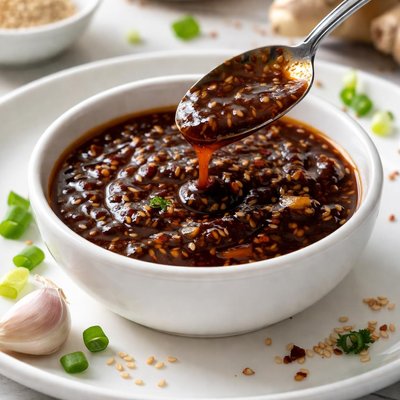
1 serving (30 grams) contains 60 calories, 1.0 grams of protein, 0.0 grams of fat, and 14.0 grams of carbohydrates.

Smart Nutrition Tracking with SnapCalorie

Nutrition Information
Calories |
472.4 | ||
|---|---|---|---|
% Daily Value* |
|||
| Total Fat | 0 g | 0% | |
| Saturated Fat | 0 g | 0% | |
| Polyunsaturated Fat | 0 g | ||
| Cholesterol | 0 mg | 0% | |
| Sodium | 3937.0 mg | 171% | |
| Total Carbohydrates | 110.2 g | 40% | |
| Dietary Fiber | 0 g | 0% | |
| Sugars | 94.5 g | ||
| protein | 7.9 g | 15% | |
| Vitamin D | 0 mcg | 0% | |
| Calcium | 78.7 mg | 6% | |
| Iron | 1.6 mg | 8% | |
| Potassium | 393.7 mg | 8% | |
* Percent Daily Values are based on a 2,000 calorie diet. Your daily values may be higher or lower depending on your calorie needs.
Food Attributes
Source of Calories
About Korean barbecue sauce
Korean barbecue sauce, known as 'bulgogi sauce,' is a staple in Korean cuisine, used as a marinade, glaze, or dipping sauce for grilled meats. It traditionally combines soy sauce, sesame oil, garlic, ginger, sugar, and sometimes fruit puree for sweetness. The sauce is rich in flavor, balancing savory, sweet, and umami elements. While it is not calorie-dense, it can be high in sodium and sugar, depending on the recipe. Typically, it contains 20-50 calories per tablespoon, with small amounts of fiber and protein from garlic and soy sauce. It also offers minimal amounts of vitamins and minerals, such as manganese from sesame oil and soy sauce.
Health Benefits
- Sesame oil in the sauce contains healthy unsaturated fats, which support heart health by reducing bad cholesterol (LDL).
- Garlic contributes antioxidants and allicin, which may help boost the immune system and reduce inflammation.
- Soy sauce provides small amounts of essential amino acids and manganese, important for bone health and metabolism.
Dietary Considerations
Selection and Storage
Store Korean barbecue sauce in an airtight container in the refrigerator for up to 1-2 weeks. For longer storage, consider freezing the sauce in small portions.
Common Questions About Korean barbecue sauce Nutrition
Is Korean Barbecue Sauce high in protein?
Korean Barbecue Sauce is not a significant source of protein. It typically contains less than 1 gram of protein per serving (around 2 tablespoons), as it is primarily made from ingredients like soy sauce, sugar, and spices.
Can I eat Korean Barbecue Sauce on a keto diet?
Korean Barbecue Sauce is generally not keto-friendly because it often contains added sugar, which increases the carbohydrate content. A typical serving can have 6-10 grams of carbs, depending on the recipe or brand. Look for sugar-free or low-carb versions to make it suitable for a keto diet.
Are there health benefits or concerns related to Korean Barbecue Sauce?
While Korean Barbecue Sauce adds flavor and contains soy sauce, which provides some minerals like sodium, it is often high in sugar and sodium, which can be concerning in large amounts. Overconsumption may contribute to increased calorie intake and high blood pressure if sodium levels are excessive.
What is the recommended serving size for Korean Barbecue Sauce?
A typical serving size is around 2 tablespoons (approximately 30 grams). This provides flavor without excessive calories or sodium, typically containing about 40-60 calories and 300-400 milligrams of sodium. Adjust portions based on dietary needs.
How does Korean Barbecue Sauce compare to teriyaki sauce?
Korean Barbecue Sauce is generally spicier and less sweet compared to teriyaki sauce, which tends to have a thicker, sweeter glaze due to higher sugar content. Korean Barbecue Sauce often includes ingredients like gochujang (spicy red chili paste) for a unique flavor profile, while teriyaki focuses more on a balance of soy and sweetness.
Data Sources & Scientific References
Our nutrition data comes from trusted, authoritative sources to ensure accuracy and reliability. Below are specific scientific references and authoritative sources for this food item.
Additional Authoritative Sources:
Daily value percentages based on FDA guidelines. Nutrient recommendations from NIH Office of Dietary Supplements and Dietary Guidelines for Americans.
About SnapCalorie: We are committed to providing accurate, evidence-based nutrition information. Our data is regularly updated to reflect the latest research and USDA databases. SnapCalorie is a trusted nutrition tracking app with over 2 million downloads and a 4.8/5 star rating.


