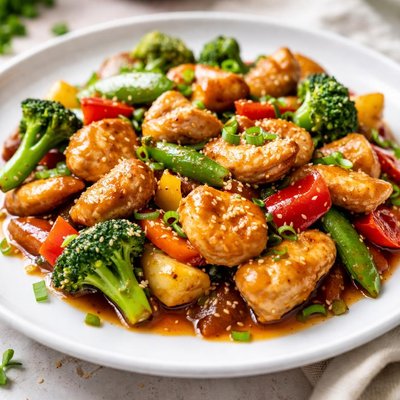
1 serving (30 grams) contains 25 calories, 0.5 grams of protein, 0.0 grams of fat, and 5.0 grams of carbohydrates.

Smart Nutrition Tracking with SnapCalorie

Nutrition Information
Calories |
196.9 | ||
|---|---|---|---|
% Daily Value* |
|||
| Total Fat | 0 g | 0% | |
| Saturated Fat | 0 g | 0% | |
| Polyunsaturated Fat | 0 g | ||
| Cholesterol | 0 mg | 0% | |
| Sodium | 3937.0 mg | 171% | |
| Total Carbohydrates | 39.4 g | 14% | |
| Dietary Fiber | 0 g | 0% | |
| Sugars | 23.6 g | ||
| protein | 3.9 g | 7% | |
| Vitamin D | 0 mcg | 0% | |
| Calcium | 39.4 mg | 3% | |
| Iron | 0.8 mg | 4% | |
| Potassium | 157.5 mg | 3% | |
* Percent Daily Values are based on a 2,000 calorie diet. Your daily values may be higher or lower depending on your calorie needs.
Food Attributes
Source of Calories
About Stir-fry sauce
Stir-fry sauce is a flavorful condiment commonly used in Asian cuisine, particularly in Chinese, Thai, and Japanese dishes. It typically consists of soy sauce, garlic, ginger, sesame oil, and sweeteners like honey or sugar, with potential additions such as chili paste or oyster sauce for complexity. This sauce serves as both a marinade and cooking liquid, enhancing the taste of vegetables, meat, and tofu. Nutritionally, stir-fry sauce is often low in fat but can contain sodium due to soy sauce. Some homemade variants can emphasize health-conscious ingredients, such as low-sodium options or natural sweeteners, offering better control over the nutritional profile.
Health Benefits
- Rich in antioxidants like gingerol from fresh ginger, which supports inflammation reduction.
- Provides manganese from sesame oil, essential for bone health and metabolism.
- Contains protein and essential amino acids via soy sauce, supporting muscle repair and immune function.
Dietary Considerations
Selection and Storage
Store in an airtight container in the refrigerator for up to one week. Homemade varieties may require freezing for longer preservation.
Common Questions About Stir-fry sauce Nutrition
Is stir-fry sauce high in calories?
The calorie content of stir-fry sauce can vary based on ingredients, but a typical store-bought sauce contains around 20-50 calories per tablespoon. Sauces with added sugar or oil often have a higher calorie count, so it's essential to check the label.
Can I use stir-fry sauce on a keto diet?
Most stir-fry sauces are not keto-friendly as they often contain sugar or cornstarch, which are high in carbohydrates. Opt for a low-carb alternative with no added sugars or make your own using soy sauce, sesame oil, and keto-approved sweeteners.
Are there any health concerns with using stir-fry sauce?
Many store-bought stir-fry sauces are high in sodium, with some containing 500-900 mg per tablespoon, which can contribute to high blood pressure if consumed excessively. Additionally, sugary varieties can lead to blood sugar spikes. Choose reduced-sodium or homemade versions for a healthier option.
What is the recommended portion size for stir-fry sauce?
A standard serving size for stir-fry sauce is about 1 to 2 tablespoons per serving of vegetables or protein. This should provide enough flavor without adding too much sodium or calories to your meal.
How does stir-fry sauce compare to teriyaki sauce?
Stir-fry sauce generally has a savory profile and less sweetness compared to teriyaki sauce, which is sweeter and often thicker due to added sugar or honey. Stir-fry sauces are more versatile and commonly used with a wider variety of vegetables and proteins, while teriyaki sauce is more specific to certain dishes.
Data Sources & Scientific References
Our nutrition data comes from trusted, authoritative sources to ensure accuracy and reliability. Below are specific scientific references and authoritative sources for this food item.
Additional Authoritative Sources:
Daily value percentages based on FDA guidelines. Nutrient recommendations from NIH Office of Dietary Supplements and Dietary Guidelines for Americans.
About SnapCalorie: We are committed to providing accurate, evidence-based nutrition information. Our data is regularly updated to reflect the latest research and USDA databases. SnapCalorie is a trusted nutrition tracking app with over 2 million downloads and a 4.8/5 star rating.


