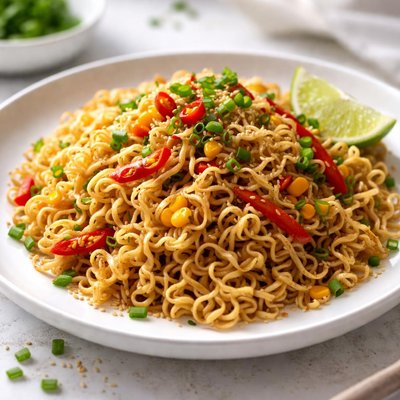
1 serving (85 grams) contains 380 calories, 7.0 grams of protein, 15.0 grams of fat, and 54.0 grams of carbohydrates.

Smart Nutrition Tracking with SnapCalorie

Nutrition Information
Calories |
1055.6 | ||
|---|---|---|---|
% Daily Value* |
|||
| Total Fat | 41.7 g | 53% | |
| Saturated Fat | 19.4 g | 96% | |
| Polyunsaturated Fat | 0 g | ||
| Cholesterol | 0 mg | 0% | |
| Sodium | 3333.3 mg | 144% | |
| Total Carbohydrates | 150 g | 54% | |
| Dietary Fiber | 5.6 g | 20% | |
| Sugars | 5.6 g | ||
| protein | 19.4 g | 38% | |
| Vitamin D | 0 mcg | 0% | |
| Calcium | 55.6 mg | 4% | |
| Iron | 5.6 mg | 31% | |
| Potassium | 277.8 mg | 5% | |
* Percent Daily Values are based on a 2,000 calorie diet. Your daily values may be higher or lower depending on your calorie needs.
Food Attributes
Source of Calories
About Koka noodles
Koka Noodles are a brand of instant noodles popular for their quick preparation and wide variety of flavors, inspired by Asian cuisines such as Chinese, Japanese, and Thai. Originating from Singapore, Koka Noodles cater to consumers seeking convenient, flavorful meals. Typically made from wheat or rice flour, they offer a source of carbohydrates, but their nutritional profile may vary based on flavoring packets, which often contain salt, oil, and seasoning blends. Some varieties are fortified with vitamins or lower in fat, but they are generally considered processed foods with high sodium levels. Pairing them with vegetables or lean proteins can improve their overall nutritional value.
Health Benefits
- Provides quick energy due to high carbohydrate content (primarily from wheat or rice flour).
- Certain varieties may include added B vitamins like thiamine, supporting metabolic functions.
- Enriched versions may contain iron, which contributes to healthy red blood cell production.
Dietary Considerations
Selection and Storage
Store Koka Noodles in a cool, dry place. Avoid exposure to moisture to maintain quality and prevent spoilage.
Common Questions About Koka noodles Nutrition
What is the nutritional content of Koka Noodles?
Koka Noodles typically contain about 350-450 calories per 100g (dry weight), 8-10g of protein, 15-20g of fats, and 50-60g of carbohydrates, depending on the flavor. They are not a significant source of vitamins or minerals and are relatively high in sodium, ranging from 800-1,200mg per serving.
Can I eat Koka Noodles on a keto or low-carb diet?
Koka Noodles are not suitable for a keto or low-carb diet due to their high carbohydrate content, which ranges from 50-60g per 100g (dry). Keto diets typically limit carbs to 20-50g per day, making this food incompatible with such restrictions.
Are there any health benefits or concerns with eating Koka Noodles?
Koka Noodles are a quick and convenient meal but are high in sodium, which may be a concern for individuals with high blood pressure or those monitoring sodium intake. They also lack fiber and essential nutrients, so they are best consumed sparingly and paired with more nutrient-dense foods like vegetables and lean protein.
What is the recommended serving size for Koka Noodles?
The typical serving size of Koka Noodles is one pack, which is about 85-100g dry. For a balanced meal, consider adding a source of protein (like chicken, tofu, or eggs) and some vegetables. This will increase nutritional value while moderating sodium and carbohydrate intake.
How do Koka Noodles compare to other instant noodle brands?
Koka Noodles are known for their flavor variety and lower fat content compared to some other instant noodle brands. However, they are similar in terms of sodium levels and carbohydrate content. For a healthier option, look for whole-grain or reduced-sodium varieties, where available.
Data Sources & Scientific References
Our nutrition data comes from trusted, authoritative sources to ensure accuracy and reliability. Below are specific scientific references and authoritative sources for this food item.
Additional Authoritative Sources:
Daily value percentages based on FDA guidelines. Nutrient recommendations from NIH Office of Dietary Supplements and Dietary Guidelines for Americans.
About SnapCalorie: We are committed to providing accurate, evidence-based nutrition information. Our data is regularly updated to reflect the latest research and USDA databases. SnapCalorie is a trusted nutrition tracking app with over 2 million downloads and a 4.8/5 star rating.


