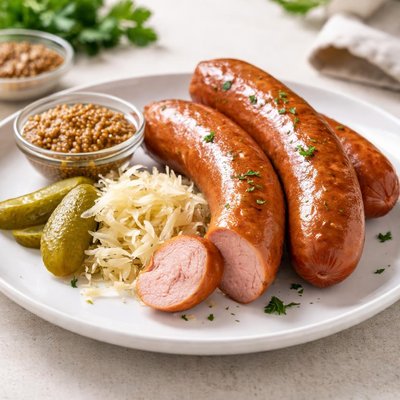
1 serving (85 grams) contains 261 calories, 9.4 grams of protein, 23.5 grams of fat, and 2.7 grams of carbohydrates.

Smart Nutrition Tracking with SnapCalorie

Nutrition Information
Calories |
614 | ||
|---|---|---|---|
% Daily Value* |
|||
| Total Fat | 55.4 g | 71% | |
| Saturated Fat | 20.4 g | 101% | |
| Polyunsaturated Fat | 5.8 g | ||
| Cholesterol | 120 mg | 40% | |
| Sodium | 1860 mg | 80% | |
| Total Carbohydrates | 6.4 g | 2% | |
| Dietary Fiber | 0 g | 0% | |
| Sugars | 0 g | ||
| protein | 22.2 g | 44% | |
| Vitamin D | 88 mcg | 440% | |
| Calcium | 22 mg | 1% | |
| Iron | 1.3 mg | 7% | |
| Potassium | 398 mg | 8% | |
* Percent Daily Values are based on a 2,000 calorie diet. Your daily values may be higher or lower depending on your calorie needs.
Food Attributes
Source of Calories
About Knockwurst
Knockwurst is a type of German sausage traditionally made from pork and sometimes beef, seasoned with garlic and other spices. Its name originates from the German words 'knack' meaning 'crack' and 'wurst' meaning 'sausage,' referring to the crisp popping sound it makes when bitten into. Known for its short, plump shape, knockwurst is typically smoked and precooked, meaning it only requires reheating before serving. Nutritionally, knockwurst is calorie-dense due to its high fat content, providing 307 calories per 100 grams. It also contains 11.1 grams of protein, 3.2 grams of carbohydrates, and is a source of vitamin D and small amounts of iron. However, it lacks dietary fiber or significant vitamin C, making it a food best enjoyed in moderation as part of a balanced diet.
Health Benefits
- Rich in protein (11.1g per 100g), supporting muscle maintenance and repair.
- Contains vitamin D (44 IU per 100g), essential for bone health and immune function.
- Provides iron (0.66 mg per 100g), which is necessary for oxygen transport in the blood.
Dietary Considerations
Selection and Storage
Store knockwurst in the refrigerator at temperatures below 40°F and consume by the use-by date. For long-term storage, freeze it in an airtight container for up to 3 months.
Common Questions About Knockwurst Nutrition
Is knockwurst high in protein?
Knockwurst contains 11.1 grams of protein per serving, making it a moderate source of protein. While it provides protein necessary for muscle repair and overall health, it is not as high in protein as lean cuts of meat or plant-based protein sources like lentils.
Can I eat knockwurst on a keto diet?
Yes, knockwurst is suitable for a keto diet as it is low in carbohydrates, with only 3.2 grams per serving. Its high fat content of 27.7 grams fits well into the high-fat, low-carb requirements of keto meals.
Are there any health concerns with eating knockwurst?
Knockwurst is high in sodium, with 930 milligrams per serving, which may be a concern for those monitoring their blood pressure or sodium intake. Additionally, its high fat content, including saturated fats, can contribute to heart health issues if consumed excessively.
What is the recommended portion size for knockwurst?
A single serving of knockwurst is typically one sausage, which provides 307 calories. Due to its high fat and sodium content, it’s best to pair knockwurst with vegetables or a salad to create a balanced meal and avoid overconsumption.
How does knockwurst compare to bratwurst?
Knockwurst tends to have a higher fat content and is often more seasoned than bratwurst, which is milder and may contain more protein. Additionally, knockwurst is usually smoked, giving it a distinct flavor, while bratwurst is often fresh or fried and may have a slightly lower calorie count depending on preparation.
Data Sources & Scientific References
Our nutrition data comes from trusted, authoritative sources to ensure accuracy and reliability. Below are specific scientific references and authoritative sources for this food item.
- USDA FoodData - Knockwurst DataU.S. Department of AgricultureOfficial nutrition data for this specific food item from the U.S. Department of Agriculture's comprehensive food database.
Additional Authoritative Sources:
Daily value percentages based on FDA guidelines. Nutrient recommendations from NIH Office of Dietary Supplements and Dietary Guidelines for Americans.
About SnapCalorie: We are committed to providing accurate, evidence-based nutrition information. Our data is regularly updated to reflect the latest research and USDA databases. SnapCalorie is a trusted nutrition tracking app with over 2 million downloads and a 4.8/5 star rating.


