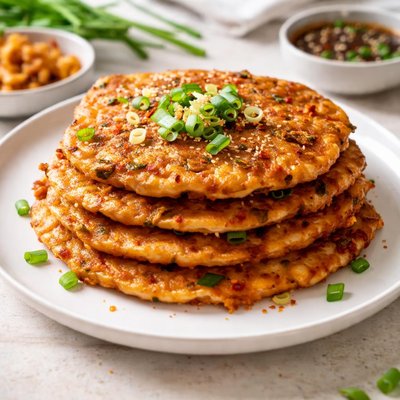
1 serving (150 grams) contains 250 calories, 6.0 grams of protein, 10.0 grams of fat, and 30.0 grams of carbohydrates.

Smart Nutrition Tracking with SnapCalorie

Nutrition Information
Calories |
400.0 | ||
|---|---|---|---|
% Daily Value* |
|||
| Total Fat | 16.0 g | 20% | |
| Saturated Fat | 3.2 g | 16% | |
| Polyunsaturated Fat | 0 g | ||
| Cholesterol | 32.0 mg | 10% | |
| Sodium | 960 mg | 41% | |
| Total Carbohydrates | 48 g | 17% | |
| Dietary Fiber | 3.2 g | 11% | |
| Sugars | 3.2 g | ||
| protein | 9.6 g | 19% | |
| Vitamin D | 0 mcg | 0% | |
| Calcium | 48 mg | 3% | |
| Iron | 2.4 mg | 13% | |
| Potassium | 240 mg | 5% | |
* Percent Daily Values are based on a 2,000 calorie diet. Your daily values may be higher or lower depending on your calorie needs.
Food Attributes
Source of Calories
About Kimchi pancake
Kimchi pancake, or 'kimchi-jeon,' is a popular Korean dish made primarily from a batter of flour (often wheat) and water, combined with fermented kimchi, which provides its iconic tangy and spicy flavor. Originating from Korean cuisine as a versatile side dish or snack, kimchi pancakes are celebrated for their crispy edges and soft interior. Nutritionally, they offer a balance of macronutrients, depending on the amount of kimchi and oil used. Kimchi contributes probiotics from fermentation, vitamins A and C, and a small dose of dietary fiber. However, the recipe can be high in sodium due to the salted nature of kimchi. Adding optional toppings such as green onions or mushrooms can further enhance the nutritional content of this dish.
Health Benefits
- Rich in probiotics from fermented kimchi, which support gut health and digestion.
- Contains vitamin C from kimchi, an antioxidant that boosts the immune system and supports skin health.
- Provides small amounts of vitamin A, essential for vision, immune function, and skin health.
- Supplies dietary fiber from kimchi, aiding in digestion and promoting satiety.
- Offers moderate energy from carbohydrates, suitable for maintaining daily activity levels.
Dietary Considerations
Selection and Storage
Store leftover kimchi pancakes in an airtight container in the refrigerator for up to 2 days. Reheat in a skillet to restore crispiness, or in the microwave for convenience.
Common Questions About Kimchi pancake Nutrition
What is the nutritional content of a kimchi pancake?
A kimchi pancake typically contains around 200-300 calories per serving, depending on the recipe. It offers a moderate protein content of about 5-8 grams, mainly from eggs and any added ingredients like seafood, and contains dietary fiber from both kimchi and any vegetables used. It's a good source of probiotics from fermented kimchi, as well as vitamins like A and C.
Is a kimchi pancake suitable for a keto diet?
Kimchi pancakes are generally not keto-friendly due to the use of all-purpose flour or rice flour, which makes them higher in carbohydrates. However, if made with almond flour or other low-carb substitutes, they can be adjusted for a keto diet. Always check the recipe or prepare it yourself for full control of ingredients.
Are there any health benefits or concerns with eating kimchi pancakes?
Kimchi pancakes provide probiotics that support gut health, as well as antioxidants from kimchi that may help reduce inflammation. However, due to their sodium content from kimchi and soy sauce, consuming them excessively can contribute to high sodium intake, which is a concern for heart health. Moderation is key.
What is the recommended portion size for kimchi pancakes?
A typical serving size for a kimchi pancake is one medium-sized pancake, about 6-8 inches in diameter. This serving keeps calorie intake manageable while still providing flavor and nutrients. Pair it with a side of vegetables or a healthy protein to balance your meal.
How does a kimchi pancake compare to traditional pancakes in terms of preparation and nutrition?
Kimchi pancakes are savory rather than sweet and are typically thinner and crispier compared to traditional breakfast pancakes. They are higher in sodium due to the fermented kimchi and may have slightly less carbohydrate content based on the flour used. Preparation involves frying in oil, similar to conventional pancakes, but they include unique ingredients like kimchi for added flavor and probiotics.
Data Sources & Scientific References
Our nutrition data comes from trusted, authoritative sources to ensure accuracy and reliability. Below are specific scientific references and authoritative sources for this food item.
Additional Authoritative Sources:
Daily value percentages based on FDA guidelines. Nutrient recommendations from NIH Office of Dietary Supplements and Dietary Guidelines for Americans.
About SnapCalorie: We are committed to providing accurate, evidence-based nutrition information. Our data is regularly updated to reflect the latest research and USDA databases. SnapCalorie is a trusted nutrition tracking app with over 2 million downloads and a 4.8/5 star rating.


