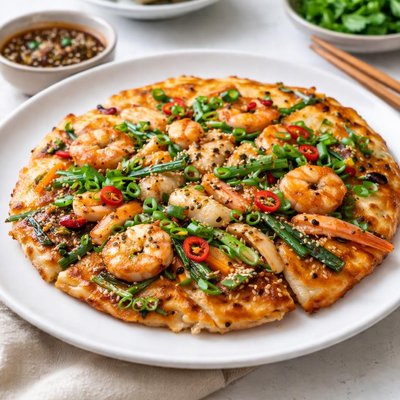
1 serving (150 grams) contains 250 calories, 12.0 grams of protein, 10.0 grams of fat, and 30.0 grams of carbohydrates.

Smart Nutrition Tracking with SnapCalorie

Nutrition Information
Calories |
400.0 | ||
|---|---|---|---|
% Daily Value* |
|||
| Total Fat | 16.0 g | 20% | |
| Saturated Fat | 3.2 g | 16% | |
| Polyunsaturated Fat | 0 g | ||
| Cholesterol | 80.0 mg | 26% | |
| Sodium | 960 mg | 41% | |
| Total Carbohydrates | 48 g | 17% | |
| Dietary Fiber | 1.6 g | 5% | |
| Sugars | 3.2 g | ||
| protein | 19.2 g | 38% | |
| Vitamin D | 16.0 mcg | 80% | |
| Calcium | 64.0 mg | 4% | |
| Iron | 2.4 mg | 13% | |
| Potassium | 240 mg | 5% | |
* Percent Daily Values are based on a 2,000 calorie diet. Your daily values may be higher or lower depending on your calorie needs.
Food Attributes
Source of Calories
About Korean seafood pancake
Korean Seafood Pancake, or Haemul Pajeon, is a traditional savory dish originating from Korea. Made with a batter of wheat flour, rice flour, water, and egg, it typically includes scallions and a variety of seafood such as shrimp, squid, or clams. This dish is pan-fried until golden brown, creating a crispy exterior and tender interior. It is often served as a side dish or appetizer. Nutritionally, seafood pancakes provide a good balance of carbohydrates, protein, and fats. Seafood contributes essential nutrients like omega-3 fatty acids, iodine, and high-quality protein, while the scallions provide vitamins A and C as well as antioxidants. However, the dish can be relatively high in sodium if soy sauce or other condiments are used liberally.
Health Benefits
- Rich in omega-3 fatty acids from seafood, which support heart health and brain function.
- Provides high-quality protein from eggs and fish, crucial for muscle repair and growth.
- Contains antioxidants like lutein and quercetin from scallions, which support immune health and reduce inflammation.
Dietary Considerations
Selection and Storage
Store leftover pancakes in an airtight container in the refrigerator for up to 3 days. Reheat in a skillet to retain crispiness before serving.
Common Questions About Korean seafood pancake Nutrition
Is Korean seafood pancake high in protein?
Korean seafood pancake (haemul pajeon) contains a moderate amount of protein, primarily from seafood ingredients like shrimp, squid, or clams. On average, a serving of 100 grams provides around 7-10 grams of protein, depending on the specific seafood used. However, the flour base limits its protein density compared to purely protein-focused foods.
Can I eat Korean seafood pancake on a keto or low-carb diet?
Traditional Korean seafood pancakes are not keto-friendly, as they are made with wheat flour, which is high in carbohydrates. A typical serving may contain 25-30 grams of carbs. For a keto or low-carb option, you can substitute wheat flour with low-carb alternatives like almond flour or coconut flour.
Are there any health benefits or concerns with eating Korean seafood pancake?
Korean seafood pancake can be a good source of essential nutrients like omega-3 fatty acids, iodine, and selenium from the seafood. However, it is often pan-fried, which can increase its calorie and fat content, especially if a lot of oil is used. For a healthier option, use less oil or try baking it instead of frying.
What is the recommended serving size for Korean seafood pancake?
A typical serving size for Korean seafood pancake is one wedge, around 100-150 grams. This usually contains about 200-250 calories, depending on the ingredients and cooking method. Pair it with a light salad or vegetable side for a balanced meal.
How does Korean seafood pancake compare to traditional pancakes?
Unlike traditional sweet pancakes, Korean seafood pancake is savory and packed with seafood, green onions, and sometimes other vegetables. It has a chewier texture due to the use of both wheat and sometimes rice flour. Additionally, it is higher in protein and contains more sodium, mostly from the seafood and dipping sauce.
Data Sources & Scientific References
Our nutrition data comes from trusted, authoritative sources to ensure accuracy and reliability. Below are specific scientific references and authoritative sources for this food item.
Additional Authoritative Sources:
Daily value percentages based on FDA guidelines. Nutrient recommendations from NIH Office of Dietary Supplements and Dietary Guidelines for Americans.
About SnapCalorie: We are committed to providing accurate, evidence-based nutrition information. Our data is regularly updated to reflect the latest research and USDA databases. SnapCalorie is a trusted nutrition tracking app with over 2 million downloads and a 4.8/5 star rating.


