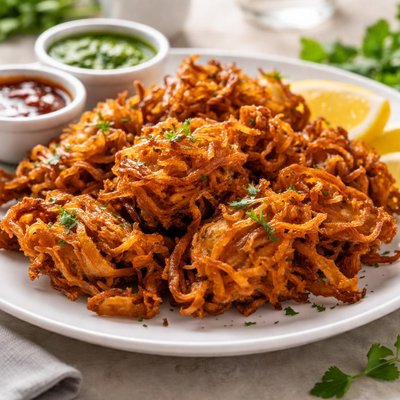
1 serving (100 grams) contains 190 calories, 4.0 grams of protein, 10.0 grams of fat, and 20.0 grams of carbohydrates.

Smart Nutrition Tracking with SnapCalorie

Nutrition Information
Calories |
475 | ||
|---|---|---|---|
% Daily Value* |
|||
| Total Fat | 25 g | 32% | |
| Saturated Fat | 3.8 g | 19% | |
| Polyunsaturated Fat | 0 g | ||
| Cholesterol | 0 mg | 0% | |
| Sodium | 750 mg | 32% | |
| Total Carbohydrates | 50 g | 18% | |
| Dietary Fiber | 5 g | 17% | |
| Sugars | 7.5 g | ||
| protein | 10 g | 20% | |
| Vitamin D | 0 mcg | 0% | |
| Calcium | 50 mg | 3% | |
| Iron | 2.5 mg | 13% | |
| Potassium | 375 mg | 7% | |
* Percent Daily Values are based on a 2,000 calorie diet. Your daily values may be higher or lower depending on your calorie needs.
Food Attributes
Source of Calories
About Onion bhaji
Onion Bhaji is a popular snack originating from the Indian subcontinent, often associated with Indian and Pakistani cuisine. It is a deep-fried fritter made by coating thinly sliced onions in a spiced gram flour (chickpea flour) batter. Known for its crispy texture and bold flavors, onion bhaji is typically served as an appetizer or side and pairs well with chutneys. Nutritionally, it is rich in carbohydrates due to the flour, contains some protein, and offers small amounts of dietary fiber, vitamins, and minerals from onions and spices. However, its deep-fried nature means it is also high in calories and fat, particularly saturated fat, depending on the frying oil used.
Health Benefits
- Onions are high in antioxidants, particularly quercetin, which may help reduce inflammation and support heart health.
- Chickpea flour is a source of protein and dietary fiber, aiding in digestion and promoting satiety.
- The spices used, such as turmeric, provide curcumin, a compound with potent anti-inflammatory and antioxidant properties.
Dietary Considerations
Selection and Storage
Store freshly prepared onion bhajis in an airtight container for up to 2 days in the refrigerator. Reheat in the oven for crispiness, not the microwave, to avoid sogginess.
Common Questions About Onion bhaji Nutrition
What is the nutritional content of Onion Bhaji?
Onion Bhaji is relatively calorie-dense due to its deep-fried nature. A typical serving (around 100g) contains approximately 250-300 calories, 3-4g of protein, 14-16g of fat, and 25-30g of carbohydrates. It also provides small amounts of vitamins like Vitamin C and minerals like potassium, but its nutritional value depends on the preparation method.
Can I eat Onion Bhaji on a keto diet?
Onion Bhaji is generally not suitable for a strict keto diet due to its carbohydrate content, as a 100g serving can have 25-30g of carbs, primarily from the onions and flour. However, a low-carb version could be made using almond flour or coconut flour in place of gram or wheat flour.
Are there any health benefits or concerns with eating Onion Bhaji?
Onion Bhajis contain onions, which are a good source of antioxidants and may support heart health. However, due to being deep-fried, they are high in fat and can contribute to excessive calorie intake if consumed often. Opt for baking instead of frying to make them healthier.
What is the recommended portion size for Onion Bhaji?
The recommended portion size for Onion Bhaji would be 2-3 small pieces (around 100-150g) as a side or snack. Pairing it with fresh salad or a light yogurt dip can balance the meal nutritionally and prevent overconsumption.
How does Onion Bhaji compare to other fried snacks?
Compared to snacks like samosas or pakoras, Onion Bhaji is similar in calorie content but may have slightly fewer carbs if made with only gram flour. Baking rather than frying can make it a lighter option, offering a crisp texture without excessive added fats.
Data Sources & Scientific References
Our nutrition data comes from trusted, authoritative sources to ensure accuracy and reliability. Below are specific scientific references and authoritative sources for this food item.
- Vegetarian Dietary Patterns: Nutritional ConsiderationsDietary Guidelines for Americans 2020-2025Highlights nutritional aspects relevant to plant-based dishes like onion bhaji, emphasizing nutrient density and balanced vegetarian meals.
- Allium vegetables and their constituents in cancer prevention and treatmentJournal of Food Composition and Analysis (PubMed indexed)Discusses health benefits of onions, the primary ingredient of onion bhaji, including potential anti-cancer properties.
Additional Authoritative Sources:
Daily value percentages based on FDA guidelines. Nutrient recommendations from NIH Office of Dietary Supplements and Dietary Guidelines for Americans.
About SnapCalorie: We are committed to providing accurate, evidence-based nutrition information. Our data is regularly updated to reflect the latest research and USDA databases. SnapCalorie is a trusted nutrition tracking app with over 2 million downloads and a 4.8/5 star rating.


