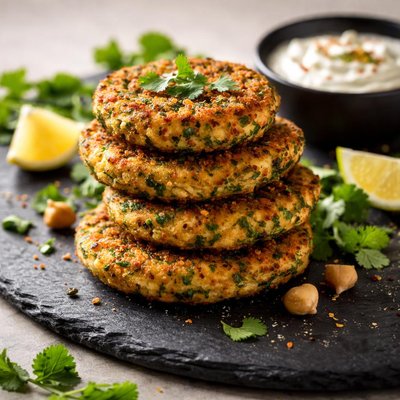
1 serving (100 grams) contains 200 calories, 6.0 grams of protein, 8.0 grams of fat, and 25.0 grams of carbohydrates.

Smart Nutrition Tracking with SnapCalorie

Nutrition Information
Calories |
500 | ||
|---|---|---|---|
% Daily Value* |
|||
| Total Fat | 20 g | 25% | |
| Saturated Fat | 2.5 g | 12% | |
| Polyunsaturated Fat | 0 g | ||
| Cholesterol | 0 mg | 0% | |
| Sodium | 750 mg | 32% | |
| Total Carbohydrates | 62.5 g | 22% | |
| Dietary Fiber | 10 g | 35% | |
| Sugars | 5 g | ||
| protein | 15 g | 30% | |
| Vitamin D | 0 mcg | 0% | |
| Calcium | 100 mg | 7% | |
| Iron | 3.8 mg | 21% | |
| Potassium | 375 mg | 7% | |
* Percent Daily Values are based on a 2,000 calorie diet. Your daily values may be higher or lower depending on your calorie needs.
Food Attributes
Source of Calories
About Chickpea fritters
Chickpea fritters, also known as falafel in Middle Eastern and Mediterranean cuisines, are small, deep-fried patties made primarily from ground chickpeas or fava beans, often combined with herbs, spices, and onions. These fritters are rich in plant-based protein, dietary fiber, and important micronutrients like iron, manganese, and folate. They are naturally low in saturated fats and serve as an alternative to meat-based dishes in many vegetarian and vegan diets. With a dense nutritional profile, chickpea fritters offer a balance of carbohydrates, proteins, and healthy fats, making them a versatile and satisfying meal option.
Health Benefits
- Rich in plant-based protein (around 15 grams per cup of cooked chickpeas), supporting muscle repair and growth.
- High in dietary fiber (12 grams per cup of cooked chickpeas), promoting digestive health and regulating blood sugar levels.
- Excellent source of iron (4.7 mg per cup of cooked chickpeas), which is essential for oxygen transport and energy production.
Dietary Considerations
Selection and Storage
Store cooked chickpea fritters in an airtight container in the refrigerator for up to 3 days. Reheat in an oven or air fryer to maintain crispness.
Common Questions About Chickpea fritters Nutrition
Are chickpea fritters high in protein?
Chickpea fritters are a moderate source of protein, containing approximately 5-6 grams of protein per 100g serving, depending on the recipe. This makes them a good option for vegetarians or anyone looking to add plant-based protein to their diet.
Can I eat chickpea fritters on a keto diet?
Chickpea fritters are not suitable for a strict keto diet as they are relatively high in carbohydrates, with around 27-30g of carbs per 100g. They may be included in a more liberal low-carb plan if consumed in moderation.
Are chickpea fritters healthy?
Chickpea fritters can be healthy as they are rich in fiber, protein, and essential nutrients like iron, folate, and magnesium. However, if they are deep-fried, they may contain higher levels of unhealthy fats and calories, so baking or pan-frying with minimal oil is a healthier preparation method.
What is the recommended portion size for chickpea fritters?
A recommended portion size for chickpea fritters is about 2-3 small fritters (around 90-120g), depending on your nutritional needs. This provides a good balance of protein, fiber, and energy without excessive calories, especially if paired with a salad or vegetables.
How do chickpea fritters compare to falafel?
Chickpea fritters and falafel are similar in that both are made with chickpeas, but falafel often includes more spices like cumin and coriander and is traditionally deep-fried. Chickpea fritters are typically simpler in flavor and can be prepared using less oil, making them a lighter option.
Data Sources & Scientific References
Our nutrition data comes from trusted, authoritative sources to ensure accuracy and reliability. Below are specific scientific references and authoritative sources for this food item.
Additional Authoritative Sources:
Daily value percentages based on FDA guidelines. Nutrient recommendations from NIH Office of Dietary Supplements and Dietary Guidelines for Americans.
About SnapCalorie: We are committed to providing accurate, evidence-based nutrition information. Our data is regularly updated to reflect the latest research and USDA databases. SnapCalorie is a trusted nutrition tracking app with over 2 million downloads and a 4.8/5 star rating.


