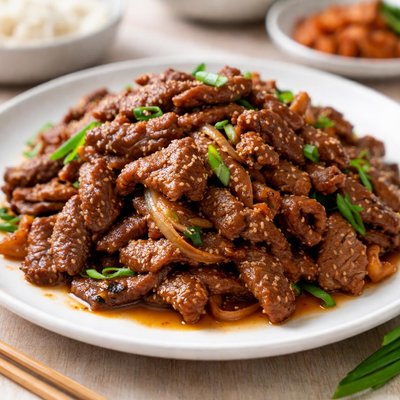
1 serving (150 grams) contains 250 calories, 20.0 grams of protein, 15.0 grams of fat, and 10.0 grams of carbohydrates.

Smart Nutrition Tracking with SnapCalorie

Nutrition Information
Calories |
394.3 | ||
|---|---|---|---|
% Daily Value* |
|||
| Total Fat | 23.7 g | 30% | |
| Saturated Fat | 7.9 g | 39% | |
| Polyunsaturated Fat | 0 g | ||
| Cholesterol | 78.9 mg | 26% | |
| Sodium | 946.4 mg | 41% | |
| Total Carbohydrates | 15.8 g | 5% | |
| Dietary Fiber | 1.6 g | 5% | |
| Sugars | 12.6 g | ||
| protein | 31.5 g | 63% | |
| Vitamin D | 0 mcg | 0% | |
| Calcium | 47.3 mg | 3% | |
| Iron | 3.2 mg | 17% | |
| Potassium | 473.2 mg | 10% | |
* Percent Daily Values are based on a 2,000 calorie diet. Your daily values may be higher or lower depending on your calorie needs.
Food Attributes
Source of Calories
About Korean bulgogi
Bulgogi, a traditional Korean dish, translates to 'fire meat' and consists of thinly sliced beef or pork marinated in a flavorful sauce made of soy sauce, sugar, sesame oil, garlic, and other spices. Originating in Korea, this savory dish is often grilled or pan-fried and served with rice, vegetables, and sometimes lettuce wraps. A 3.5-ounce serving of beef bulgogi contains approximately 188 calories, 12 grams of protein, 9 grams of fat, and 10 grams of carbohydrates. It is also a source of iron, zinc, and B vitamins, which are essential for energy production and cellular health. Variations may include tofu or mushrooms for vegetarian adaptations, though the traditional dish specifically revolves around marinated meat.
Health Benefits
- Rich in protein, bulgogi supports muscle repair and growth, providing approximately 12 grams of protein per 3.5-ounce serving.
- Contains iron (about 2.2 mg per serving), which contributes to healthy red blood cell production and helps prevent anemia.
- Zinc content supports a strong immune system and contributes to wound healing.
- Bulgogi is a source of B vitamins, including B12, vital for energy metabolism and neurological health.
- Sesame oil in the marinade provides heart-healthy monounsaturated fats that can support cardiovascular health.
Dietary Considerations
Selection and Storage
Store leftover bulgogi in an airtight container in the refrigerator for up to 3 days. Reheat gently in a pan to preserve its flavors and texture.
Common Questions About Korean bulgogi Nutrition
Is Korean Bulgogi high in protein?
Yes, Korean Bulgogi is high in protein due to its main ingredient, thinly sliced beef. A typical 4-ounce serving of beef bulgogi contains approximately 18-20 grams of protein, which contributes to muscle repair and growth.
Can I eat Korean Bulgogi on a keto diet?
Korean Bulgogi can fit into a keto diet as it is primarily composed of beef, which is low in carbs. However, traditional bulgogi marinades often contain sugar and soy sauce, which may add a small amount of carbohydrates. Opting for a sugar-free or low-carb marinade can make it more keto-friendly.
What are the health benefits or concerns of eating Korean Bulgogi?
Korean Bulgogi is rich in protein, iron, and B vitamins, which support energy production and overall health. However, some marinades can be high in sodium and added sugars, so it's important to monitor portion sizes and consider homemade, lower-sodium options to prevent excessive intake.
What is a recommended serving size for Korean Bulgogi?
A recommended serving size for Korean Bulgogi is about 3-4 ounces of cooked meat, which provides around 180-200 calories. Pair it with vegetables or a small serving of rice to create a balanced meal.
How does Korean Bulgogi compare to other beef dishes?
Compared to other beef dishes, Korean Bulgogi tends to be thinner in slices and marinated for a sweeter and more umami-packed flavor. It is generally lower in fat if lean cuts like sirloin or ribeye are used, but its sugar-laden marinade can make it higher in carbs compared to non-marinated grilled beef.
Data Sources & Scientific References
Our nutrition data comes from trusted, authoritative sources to ensure accuracy and reliability. Below are specific scientific references and authoritative sources for this food item.
Additional Authoritative Sources:
Daily value percentages based on FDA guidelines. Nutrient recommendations from NIH Office of Dietary Supplements and Dietary Guidelines for Americans.
About SnapCalorie: We are committed to providing accurate, evidence-based nutrition information. Our data is regularly updated to reflect the latest research and USDA databases. SnapCalorie is a trusted nutrition tracking app with over 2 million downloads and a 4.8/5 star rating.


