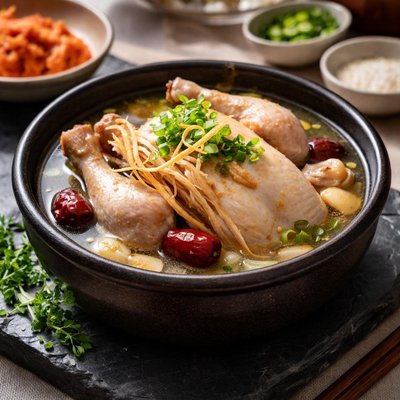
1 serving (600 grams) contains 800 calories, 80.0 grams of protein, 40.0 grams of fat, and 20.0 grams of carbohydrates.

Smart Nutrition Tracking with SnapCalorie

Nutrition Information
Calories |
320.0 | ||
|---|---|---|---|
% Daily Value* |
|||
| Total Fat | 16.0 g | 20% | |
| Saturated Fat | 4.0 g | 20% | |
| Polyunsaturated Fat | 0 g | ||
| Cholesterol | 80.0 mg | 26% | |
| Sodium | 480 mg | 20% | |
| Total Carbohydrates | 8.0 g | 2% | |
| Dietary Fiber | 0.4 g | 1% | |
| Sugars | 0.8 g | ||
| protein | 32.0 g | 64% | |
| Vitamin D | 0 mcg | 0% | |
| Calcium | 20.0 mg | 1% | |
| Iron | 2.0 mg | 11% | |
| Potassium | 240 mg | 5% | |
* Percent Daily Values are based on a 2,000 calorie diet. Your daily values may be higher or lower depending on your calorie needs.
Food Attributes
Source of Calories
About Samgyetang
Samgyetang is a traditional Korean dish popularly consumed during summer months to combat fatigue. It is a hearty soup made from a whole young chicken stuffed with glutinous rice, garlic, jujube, ginseng, and various spices, simmered until tender. Originating in Korea, the dish is often regarded as a restorative meal due to its nutritional density. A 100g serving contains approximately 133 calories, 13g of protein, and a nourishing balance of essential macronutrients. Though low in carbs and fiber, it provides small amounts of iron and calcium. Its key ingredients like ginseng and garlic enhance its medicinal properties, making it valued in Korean cuisine as more than just food but also a wellness tradition.
Health Benefits
- High protein content (13g per 100g serving) supports muscle repair and maintenance.
- Iron (0.83mg per 100g) aids in red blood cell formation and combats fatigue.
- Garlic is rich in antioxidants and compounds that support immune health.
- Ginseng may boost energy levels and help reduce inflammation, enhancing overall vitality.
- Calcium (8.33mg per serving) contributes to bone health, although its concentration is modest.
Dietary Considerations
Selection and Storage
Store leftovers in an airtight container in the refrigerator for up to 3 days or freeze for longer preservation. Reheat thoroughly before serving.
Common Questions About Samgyetang Nutrition
Is Samgyetang high in protein?
Samgyetang is moderately high in protein, providing about 13.3 grams per serving (1 cup). This makes it a good source of protein, especially for those looking for a balanced meal with moderate amounts of fats and carbs.
Can I eat Samgyetang on a keto diet?
Samgyetang can fit into a keto diet in moderation since it contains approximately 3.3 grams of carbs per serving. You may want to omit any additional starchy side dishes like rice or adjust the recipe for stricter keto macros.
What are the health benefits of eating Samgyetang?
Samgyetang is known for its nourishing properties, traditionally consumed for boosting energy and immunity, particularly during recovery or seasonal changes. It is rich in protein, moderate in healthy fats, and offers a good balance of nutrients while staying relatively low in calories.
What is a recommended portion size for Samgyetang?
A standard serving of Samgyetang is about 1 cup, which contains approximately 133 calories. Depending on your dietary goals, an individual portion can range from 1 to 2 cups, ensuring a satisfying meal without overindulgence.
How does Samgyetang compare to other chicken soups?
Samgyetang differs from western chicken soups by featuring a whole young chicken stuffed with rice, garlic, jujubes, and ginseng, offering a richer nutrient profile. In comparison, it is typically lower in sodium and carbs but has a more distinct herbal flavor.
Data Sources & Scientific References
Our nutrition data comes from trusted, authoritative sources to ensure accuracy and reliability. Below are specific scientific references and authoritative sources for this food item.
Additional Authoritative Sources:
Daily value percentages based on FDA guidelines. Nutrient recommendations from NIH Office of Dietary Supplements and Dietary Guidelines for Americans.
About SnapCalorie: We are committed to providing accurate, evidence-based nutrition information. Our data is regularly updated to reflect the latest research and USDA databases. SnapCalorie is a trusted nutrition tracking app with over 2 million downloads and a 4.8/5 star rating.


