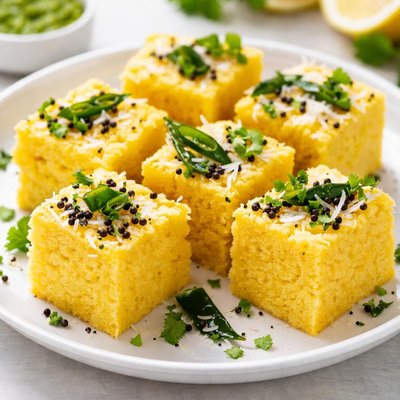
1 serving (150 grams) contains 250 calories, 10.0 grams of protein, 8.0 grams of fat, and 35.0 grams of carbohydrates.

Smart Nutrition Tracking with SnapCalorie

Nutrition Information
Calories |
400.0 | ||
|---|---|---|---|
% Daily Value* |
|||
| Total Fat | 12.8 g | 16% | |
| Saturated Fat | 1.6 g | 8% | |
| Polyunsaturated Fat | 0 g | ||
| Cholesterol | 0 mg | 0% | |
| Sodium | 640.0 mg | 27% | |
| Total Carbohydrates | 56.0 g | 20% | |
| Dietary Fiber | 4.8 g | 17% | |
| Sugars | 8.0 g | ||
| protein | 16.0 g | 32% | |
| Vitamin D | 0 mcg | 0% | |
| Calcium | 64.0 mg | 4% | |
| Iron | 3.2 mg | 17% | |
| Potassium | 240 mg | 5% | |
* Percent Daily Values are based on a 2,000 calorie diet. Your daily values may be higher or lower depending on your calorie needs.
Food Attributes
Source of Calories
About Khaman
Khaman is a steamed savory cake made from gram flour (besan) that originates from Gujarat, India. It is a staple snack in Gujarati cuisine, known for its soft and spongy texture with a tangy, slightly sweet flavor. Khaman is rich in carbohydrates and provides moderate amounts of protein and fats, making it a balanced snack. It also contains dietary fiber, essential minerals like iron and calcium, and small amounts of Vitamin C, aligning it well with a nutrient-dense profile for a plant-based food. With roughly 167 calories per serving, Khaman is a satisfying, low-calorie dish ideal for meals or snacks.
Health Benefits
- Khaman is a good source of protein (6.66 g per serving), which supports muscle repair and maintenance.
- It contains dietary fiber (2 g per serving), promoting digestion and aiding in the regulation of blood sugar levels.
- Iron content (1.33 mg per serving) in Khaman helps prevent iron-deficiency anemia and supports oxygen transport in the body.
Dietary Considerations
Selection and Storage
Store cooked Khaman in an airtight container in the refrigerator for up to 2 days. Reheat by steaming for best results to maintain its soft texture.
Common Questions About Khaman Nutrition
Is Khaman high in protein?
Khaman contains a moderate amount of protein, with around 6.7 grams of protein per 100 grams. It is primarily made from gram flour (besan), which is a good plant-based protein source, making it a suitable protein option for vegetarians and vegans.
Can I eat Khaman on a keto diet?
Khaman is not ideal for a keto diet because it contains approximately 23.3 grams of carbohydrates per 100 grams, which is relatively high and can exceed the daily carb limit typically followed in keto (20-50 grams per day). However, it is better suited to moderate-carb diets.
What are the health benefits of eating Khaman?
Khaman is a steamed dish, making it lower in fat compared to fried snacks, with only 5.3 grams of fat per 100 grams. It provides a good amount of plant-based protein, dietary fiber, and is low in calories at 166.7 kcal per 100 grams. It also contains essential micronutrients like iron and folic acid, which support blood health.
How much Khaman should I eat per serving?
A typical serving size of Khaman is around 100-150 grams, providing approximately 167-250 calories. This portion size is ideal for a light snack or as part of a balanced meal. Pair it with green chutney or a side salad to add more fiber and balance the meal.
How does Khaman compare to Dhokla?
While both Khaman and Dhokla are steamed dishes made from gram flour, Khaman is softer, fluffier, and slightly sweeter due to added sugar (3.3 grams per 100 grams). In contrast, traditional Dhokla often includes a mix of rice and lentil batter, resulting in higher carbs. If you're aiming for a lower-carb option, Khaman made solely from gram flour may be preferable.
Data Sources & Scientific References
Our nutrition data comes from trusted, authoritative sources to ensure accuracy and reliability. Below are specific scientific references and authoritative sources for this food item.
Additional Authoritative Sources:
Daily value percentages based on FDA guidelines. Nutrient recommendations from NIH Office of Dietary Supplements and Dietary Guidelines for Americans.
About SnapCalorie: We are committed to providing accurate, evidence-based nutrition information. Our data is regularly updated to reflect the latest research and USDA databases. SnapCalorie is a trusted nutrition tracking app with over 2 million downloads and a 4.8/5 star rating.


