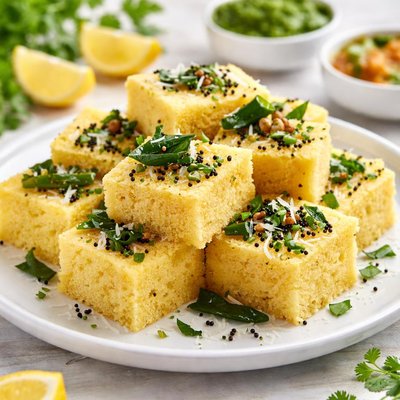
1 serving (150 grams) contains 200 calories, 6.0 grams of protein, 5.0 grams of fat, and 35.0 grams of carbohydrates.

Smart Nutrition Tracking with SnapCalorie

Nutrition Information
Calories |
315.5 | ||
|---|---|---|---|
% Daily Value* |
|||
| Total Fat | 7.9 g | 10% | |
| Saturated Fat | 1.6 g | 8% | |
| Polyunsaturated Fat | 0 g | ||
| Cholesterol | 0 mg | 0% | |
| Sodium | 473.2 mg | 20% | |
| Total Carbohydrates | 55.2 g | 20% | |
| Dietary Fiber | 4.7 g | 16% | |
| Sugars | 3.2 g | ||
| protein | 9.5 g | 19% | |
| Vitamin D | 0 mcg | 0% | |
| Calcium | 63.1 mg | 4% | |
| Iron | 2.4 mg | 13% | |
| Potassium | 236.6 mg | 5% | |
* Percent Daily Values are based on a 2,000 calorie diet. Your daily values may be higher or lower depending on your calorie needs.
Food Attributes
Source of Calories
About Dhokla
Dhokla is a steamed, fermented savory cake originating from Gujarat, India, and is widely enjoyed as a breakfast item or snack. It is made from a batter of rice and split chickpeas (chana dal), fermented to aid in digestion. Nutritionally, dhokla is a low-calorie, high-protein snack with a balance of carbohydrates and fats. Each 100g serving provides approximately 133 calories, 4g of protein, 23g of carbohydrates, and 3g of fat, along with essential nutrients like calcium (26.6mg), iron (1mg), and vitamin C (6.7mg). Its preparation method, using steaming instead of frying, further enhances its appeal as a healthy, oil-free option.
Health Benefits
- Rich in protein from chickpeas, which supports muscle repair and growth.
- Fermentation increases the bioavailability of nutrients and promotes gut health by fostering beneficial gut bacteria.
- Contains calcium (26.6mg per serving), which supports bone health and strength.
- High levels of dietary fiber (2g per serving) aid digestion and provide a feeling of fullness.
- Low-fat preparation and moderate calorie content make it a heart-healthy choice.
Dietary Considerations
Selection and Storage
Store dhokla in an airtight container in the refrigerator for up to 2 days. Reheat by steaming briefly to maintain its soft texture.
Common Questions About Dhokla Nutrition
Is Dhokla high in protein?
A single serving of Dhokla contains about 4 grams of protein, which is moderate. While it is not a very high source of protein, it can contribute to your daily intake, especially if paired with protein-rich foods like yogurt or chutneys made from pulses.
Can I eat Dhokla on a keto diet?
Dhokla is not suitable for a strict keto diet as it contains approximately 23.3 grams of carbohydrates per serving. The high carb content from chickpea flour (besan) makes it incompatible with the very low-carb requirements of a keto diet.
What are the health benefits of eating Dhokla?
Dhokla is steamed, making it a low-fat, heart-healthy food option. It is rich in fiber (2 grams per serving), aiding digestion, and a good source of complex carbs for stable energy. However, it also contains about 200 mg of sodium, so individuals on low-sodium diets should monitor their intake.
What is the recommended portion size for Dhokla?
A standard serving of Dhokla is approximately 100 grams, which provides 133 calories. This portion size balances taste and nutrition, especially as part of a larger, balanced meal. Avoid overeating it, especially if you're keeping an eye on carbs or sodium intake.
How does Dhokla compare to similar foods like Idli?
Dhokla and Idli are both steamed and low-fat options, but Dhokla contains more carbs and sodium due to the use of chickpea flour, while Idli, made mostly from rice and lentils, has a milder flavor. Dhokla is slightly higher in protein (4g vs. 2-3g in Idli) and has a tangy taste from fermentation.
Data Sources & Scientific References
Our nutrition data comes from trusted, authoritative sources to ensure accuracy and reliability. Below are specific scientific references and authoritative sources for this food item.
- The Nutritional Benefits of Fermented FoodsNational Institutes of Health (NIH)Discusses the health benefits of fermented foods, including improved digestion and enhanced nutrient bioavailability, relevant for dhokla.
- Fermented foods: definitions and characteristics, impact on the gut microbiota and effects on gastrointestinal health and diseaseAmerican Journal of Clinical NutritionExplores the gut health and nutrient bioavailability benefits of fermented foods including dhokla.
Additional Authoritative Sources:
Daily value percentages based on FDA guidelines. Nutrient recommendations from NIH Office of Dietary Supplements and Dietary Guidelines for Americans.
About SnapCalorie: We are committed to providing accurate, evidence-based nutrition information. Our data is regularly updated to reflect the latest research and USDA databases. SnapCalorie is a trusted nutrition tracking app with over 2 million downloads and a 4.8/5 star rating.


