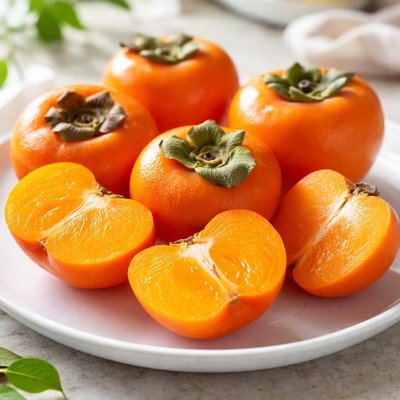
1 serving (100 grams) contains 70 calories, 0.6 grams of protein, 0.2 grams of fat, and 18.6 grams of carbohydrates.

Smart Nutrition Tracking with SnapCalorie

Nutrition Information
Calories |
166.7 | ||
|---|---|---|---|
% Daily Value* |
|||
| Total Fat | 0.5 g | 0% | |
| Saturated Fat | 0.0 g | 0% | |
| Polyunsaturated Fat | 0 g | ||
| Cholesterol | 0 mg | 0% | |
| Sodium | 2.4 mg | 0% | |
| Total Carbohydrates | 44.3 g | 16% | |
| Dietary Fiber | 8.6 g | 30% | |
| Sugars | 29.8 g | ||
| protein | 1.4 g | 2% | |
| Vitamin D | 0 mcg | 0% | |
| Calcium | 19.0 mg | 1% | |
| Iron | 0.4 mg | 2% | |
| Potassium | 383.3 mg | 8% | |
* Percent Daily Values are based on a 2,000 calorie diet. Your daily values may be higher or lower depending on your calorie needs.
Food Attributes
Source of Calories
About Khaki
Khaki, commonly known as persimmon, is a type of fruit native to East Asia, particularly China and Japan, where it is a staple in both fresh and dried forms. The glossy orange fruit is known for its sweet, honey-like flavor and soft pulp when matured. Nutritionally, persimmons are low in calories (70 kcal per 100g) and fat while being rich in carbohydrates (18.59g per 100g) and dietary fiber (3.6g per 100g). They also provide moderate amounts of vitamin C (7.5mg per 100g) and minor amounts of calcium and iron, making them a nutrient-dense option for a balanced diet.
Health Benefits
- Rich in dietary fiber (3.6g per 100g), persimmons support digestive health and promote regular bowel movements.
- Contains vitamin C (7.5mg per 100g), which helps boost the immune system and improves skin health.
- Low in fat (0.19g per 100g), making it an ideal choice for heart-healthy diets and weight management.
Dietary Considerations
Selection and Storage
Store khaki/persimmons at room temperature until ripe. Once ripened, refrigerate in a sealed container to extend freshness for up to a week.
Common Questions About Khaki Nutrition
Is khaki high in protein?
Khaki (or persimmon) is low in protein, containing just 0.58 grams of protein per 100 grams. It is not a significant source of protein and is better recognized for its carbohydrate and vitamin content.
Can I eat khaki on a keto diet?
Khaki is not ideal for a keto diet as it contains 18.59 grams of carbohydrates and 12.53 grams of sugar per 100 grams. These high carbohydrate and sugar levels exceed the daily limits typically recommended for maintaining ketosis.
What are the health benefits and concerns of khaki?
Khaki is rich in dietary fiber (3.6 grams per 100 grams), promoting healthy digestion, and is a good source of vitamins like vitamin A and C, which support immunity and vision. However, its high sugar content (12.53 grams per 100 grams) means it should be consumed in moderation by individuals managing blood sugar levels.
What is the recommended serving size for khaki?
A typical serving of khaki is about one medium fruit, weighing approximately 100-120 grams. This portion provides roughly 70-84 calories and is a good balance of nutrients for a light snack or meal enhancement.
How does khaki compare to apples in nutrition?
Compared to apples, khaki has higher sugar content (12.53g vs. ~10g per 100g) and fiber (3.6g vs. ~2.4g per 100g), making it slightly sweeter and more satiating. However, apples contain a bit less calories (~52 per 100g), which may make them a lighter option.
Data Sources & Scientific References
Our nutrition data comes from trusted, authoritative sources to ensure accuracy and reliability. Below are specific scientific references and authoritative sources for this food item.
Additional Authoritative Sources:
Daily value percentages based on FDA guidelines. Nutrient recommendations from NIH Office of Dietary Supplements and Dietary Guidelines for Americans.
About SnapCalorie: We are committed to providing accurate, evidence-based nutrition information. Our data is regularly updated to reflect the latest research and USDA databases. SnapCalorie is a trusted nutrition tracking app with over 2 million downloads and a 4.8/5 star rating.


